

Driver Training & Competency Assessment for HVNL reforms Compliance
Ensure your drivers and operational staff meet mandatory training requirements under HVNL reforms' Safety Management System standards
Under HVNL reforms' SMS Standard (Part 3: People), operators must ensure the people performing safety-related tasks are appropriately trained and competent. The Standard is outcome-focused — how you achieve this can be scaled to your fleet size and risk profile.

Key Training and Competency Requirements Under HVNL reforms:
- Training and competency verification for people performing safety-related tasks, applied proportionately to the nature and public risk of your operations
- Regular assessment and verification of competencies
- Documented training records accessible for PSOE audits (Present, Suitable, Operating, Effective — the four-point rating auditors apply under HVNL reforms)
- Induction programs for new drivers and operational staff
- Refresher training schedules aligned with risk profiles
Why Training & Competency Matter for HVNL reforms
Under HVNL reforms' mandatory Safety Management System, operators must demonstrate that personnel are competent to perform their roles safely.
This means:
- You must identify required competencies for each safety-critical role
- You must assess and verify competency before assigning duties
- You must maintain training records that prove competency
- You must have systems to identify training gaps and address them
This maps directly to SMS Standard Part 3: People under HVNL reforms, which covers fitness to drive, training and competency, and communication.
PSOE Assessment Impact:
During an NHVR audit, assessors will look for evidence that your training system is Present, Suitable, Operating, and Effective. Incomplete training records or unverified competencies are major non-conformance findings.
HVNL reforms Training Requirements Explained
1. Safety-Critical Roles Requiring Training
Drivers:
- Heavy vehicle operation and control
- Fatigue management and applicable work/rest rules (Standard Hours, BFM or AFM under the current HVNL — transitioning to Alternative Compliance Accreditation under HVNL reforms; plus WA's separate fatigue regime for operations in Western Australia)
- Load restraint and securing
- Pre-start and daily vehicle inspections
- Incident reporting procedures
- Mass management and compliance
- Chain of Responsibility obligations
Operational Staff:
- Schedulers and dispatchers
- Load planners
- Maintenance personnel
- Safety managers and coordinators
- Transport managers
- Compliance officers
Executives and Management:
- Due diligence duty for executives (directors and officers of the business) under the HVNL
- CoR primary duty for all parties with influence over transport activities
- Safety management system oversight
- Risk management responsibilities
- HVNL reforms compliance obligations
2. Types of Required Training
Induction Training:
- Company safety policies and procedures
- Role-specific responsibilities
- Emergency procedures
- Reporting requirements
- Introduction to SMS and HVNL reforms
Technical Competency Training:
- Vehicle-specific operation (including special vehicles)
- Load types and restraint methods
- Fatigue management rules applicable to their operations
- Mass management and permit compliance
- Telematics and EWD system operation
Compliance Training:
- HVNL reforms obligations and requirements
- Chain of Responsibility
- Incident investigation
- Risk assessment procedures
- Corrective action processes
Refresher Training:
- Annual or biennial competency verification
- Updates to regulations or procedures
- Remedial training following incidents
- New technology or system rollouts
Competency Assessment Under HVNL reforms
What is Competency Assessment?
Competency assessment verifies that a person can perform their role to the required standard. It goes beyond training completion—it's about demonstrated ability.
Assessment Methods:
- Practical demonstration (e.g., vehicle inspections, load securing)
- Written tests (knowledge of regulations, procedures)
- Observation (on-the-job performance evaluation)
- Simulation exercises (incident response, emergency procedures)
- Third-party certification (e.g. TLIF0005/TLIF0006 fatigue units delivered by NHVAS-approved RTOs, industry qualifications)
When to Conduct Competency Assessments
Initial Assessment:
- Before assigning safety-critical duties
- During induction period
- After completing initial training
Ongoing Assessment:
- Annual or biennial re-verification
- Following significant incidents or breaches
- After extended absence from duties
- When introducing new equipment, processes, or regulations
- If performance concerns are identified
Documentation Requirements
For PSOE compliance, you must maintain:
- Competency matrix - Required competencies by role
- Training records - Who was trained, when, by whom
- Assessment results - Pass/fail, scores, assessor notes
- Certificates and qualifications - External credentials
- Training plans - Scheduled refresher and ongoing training
- Gap analysis - Identified competency gaps and remediation plans
Building Your Training Management System
Step 1: Identify Required Competencies
Create a competency matrix for each safety-critical role:
Example - Heavy Vehicle Driver:

Hold valid heavy vehicle licence (class appropriate to vehicle)
Understand fatigue management rules applicable to their operations (Standard Hours, BFM, AFM — plus WA rules if operating in Western Australia)
Competent in pre-start vehicle inspections
Competent in load restraint and mass management
Trained in EWD operation
Aware of incident reporting procedures
Trained in emergency procedures
Understands CoR obligations
Step 2: Develop Training Programs
Induction Program:
- Duration: 1-2 days (depending on role complexity)
- Delivery: Combination of classroom, e-learning, and practical
- Assessment: Written test + practical demonstration
- Sign-off: Safety manager or competent assessor
Role-Specific Training:
- Based on competency matrix
- Mix of internal and external training providers
- Include training delivered by NHVAS-approved RTOs (e.g. the TLIF0005/TLIF0006/TLIF0007 fatigue units of competency) where applicable
- Document learning objectives and assessment criteria
Refresher Training:
- Schedule based on risk profile (typically annual)
- Focus on knowledge retention and regulation updates
- Shorter duration than initial training
- Re-assessment to verify ongoing competency
Step 3: Implement Assessment Processes
Assessment Checklist:
- Define assessment criteria (what does competency look like?)
- Identify qualified assessors (competent to assess others)
- Create assessment forms and checklists
- Set passing standards
- Document results and feedback
- Plan remediation for failed assessments
Assessor Requirements:
- Must be competent in the skill being assessed
- Must understand assessment principles
- Should have relevant qualifications or experience
- Must be objective and document findings
Step 4: Maintain Training Records
Required Documentation:
- Training attendance registers
- Training materials and slides
- Assessment forms and results
- Certificates and qualifications
- Training plans and schedules
- Competency verification dates
Record Storage:
- Accessible for NHVR audits
- Organised by employee and by training type
- Securely stored (digital preferred for easy retrieval and audit response)
Common Training Compliance Challenges
Challenge 1: High Driver Turnover
Issue: Constant need for induction and initial training
Solutions:
- Streamline induction with e-learning modules
- Create standardised assessment processes
- Use digital training management systems
- Pre-qualify drivers before hire (check credentials upfront)
Challenge 2: Scheduling Refresher Training
Issue: Difficult to pull drivers off the road for training
Solutions:
- Schedule during quieter operational periods
- Use online/self-paced modules where appropriate
- Conduct training during regular maintenance downtime
- Bundle training with other mandatory activities (licence renewals, medicals)
Challenge 3: Proving Competency for Long-Term Employees
Issue: Experienced drivers may lack formal documented competency
Solutions:
- Conduct retrospective competency assessments
- Use recognition of prior learning (RPL) processes
- Document on-the-job observations and performance history
- Prioritise formal assessment for highest-risk roles
Challenge 4: Keeping Training Records Organised
Issue: Paper-based records scattered across files, hard to produce for audits
Solutions:
- Digitise all training records
- Use training management software
- Integrate with HR systems
- Automate training due date reminders
- Enable self-service access for employees
How Hubfleet Supports Training Management
Digital Training Records
- Centralised training register for all employees in one place
- Upload certificates, assessment forms, and supporting documentation
- Customisable training types and training provider list to match your operation
- Filter records by type, provider, expiry date, or user
- Find any record in seconds when responding to an audit request
Role-Based Competency Tracking
- Define required training by role, not by individual
- Assign roles to drivers, schedulers, supervisors, and managers
- Automatic gap analysis — training flagged as Completed, Missing, or Expired
- Training expiry dates tracked automatically with clear visibility of what's current, expiring soon, or lapsed
Integration with Your Broader SMS
- Link training types to risk controls as preventive evidence
- Link training to incident investigations to identify whether competency gaps contributed to events
- Connect training requirements to your fitness-for-duty process
- Raise targeted training actions through Non-Conformance Reports (NCRs)
PSOE Audit Support
- Generate training compliance reports by user, role, training type, or status
- Training Needs Analysis view surfaces current, not started, not completed, and expired training across your organisation
- Show auditors that your training system is Present, Suitable, Operating, and Effective
Essential Training Topics for HVNL reforms Compliance
Fatigue Management Training
What drivers must know:
- Applicable work/rest rules under the HVNL (Standard Hours, BFM, AFM — with a planned transition to Alternative Compliance Accreditation under HVNL reforms), and WA's Fatigue Management for Commercial Vehicle Drivers regime if operating in Western Australia
- How to use EWD systems correctly
- Consequences of breaches
- Fatigue warning signs and self-management
- Breaks and rest requirements
What operational staff must know:
- How scheduling decisions impact fatigue compliance
- Recognising risky schedules
- Managing unplanned delays or changes
- Reporting and escalation procedures
Chain of Responsibility Training
All personnel must understand:
- Their individual obligations under CoR
- How their actions contribute to breaches
- Due diligence requirements
- Reporting unsafe practices
- Consequences of non-compliance (penalties, liability)
Risk Assessment & Hazard Identification
Operational staff training:
- How to identify transport-related hazards
- Risk assessment methodology
- Using risk registers and tools
- Escalation and reporting
- Participating in safety meetings
Incident Investigation & Reporting
All staff must know:
- What constitutes a reportable incident
- How to report incidents (process and timeframes)
- Preserving evidence
- Participating in investigations
- Implementing corrective actions
Mass Management & Load Restraint
Drivers and load planners must be competent in:
- Calculating GVM, GCM, axle weights
- Load distribution principles
- Restraint methods and standards
- Using weighbridges and on-board scales
- Permit requirements for oversize/overmass
Vehicle Inspections & Maintenance
Drivers must be trained in:
- Pre-start inspection procedures
- Identifying defects and faults
- Recording defects in logbooks or systems
- When a vehicle is unfit for use
- Reporting maintenance needs
Maintenance staff must be competent in:
- Scheduled maintenance requirements
- HVNL reforms maintenance standards
- Defect rectification priorities
- Record keeping and work orders
Table of Content
Table of Content
Frequently asked questions
Do drivers need formal qualifications, or is on-the-job training enough?
Drivers must hold the appropriate heavy vehicle licence for the vehicle class they operate. Beyond licensing, HVNL reforms requires demonstrated competency in role-specific tasks (e.g., fatigue management, inspections, load restraint). On-the-job training is acceptable if it's documented, assessed, and verified. Formal qualifications (e.g. the TLIF0005 fatigue unit delivered by an NHVAS-approved RTO) provide strong evidence but aren't always mandatory unless required under an accreditation scheme.
How often do we need to conduct refresher training?
HVNL reforms doesn't prescribe specific intervals—it depends on your risk assessment. Best practice is annual refresher training for safety-critical roles, with more frequent training for high-risk activities. After significant incidents, regulation changes, or extended absences, immediate refresher training should be conducted.
Who can conduct competency assessments?
Assessors must be competent in the skill being assessed and understand how to assess others fairly and objectively. This could be senior drivers, safety managers, or external trainers with relevant qualifications. Document assessor credentials and maintain a list of approved assessors.
What happens if a driver fails a competency assessment?
The driver should not perform that safety-critical task until competency is achieved. Provide remedial training, additional practice, or coaching. Re-assess after remediation. Document the failure, remediation plan, and successful re-assessment. This shows your system is operating effectively.
Do office staff need HVNL reforms training too?
Yes, if their role influences heavy vehicle operations. Schedulers, dispatchers, load planners, and managers all have Chain of Responsibility obligations. They must understand how their decisions impact compliance and safety. Tailor training to their specific roles.
How do we prove training is "effective" for PSOE audits?
Effectiveness means training achieves its intended outcome (competency). Evidence includes:
- Low breach rates in areas covered by training
- Incident investigations showing staff acted correctly
- Competency assessments showing knowledge retention
- Feedback from employees and supervisors
- Continuous improvement based on training outcomes
- Low breach rates in areas covered by training
- Incident investigations showing staff acted correctly
- Competency assessments showing knowledge retention
- Feedback from employees and supervisors
- Continuous improvement based on training outcomes
Can we use online training for HVNL reforms compliance?
Yes, online/e-learning modules are acceptable for knowledge-based training (e.g., regulations, procedures, CoR). However, practical competencies (e.g., vehicle inspections, load restraint) must include hands-on assessment and demonstration. Blended approaches (online + practical) work well.
Related Solutions
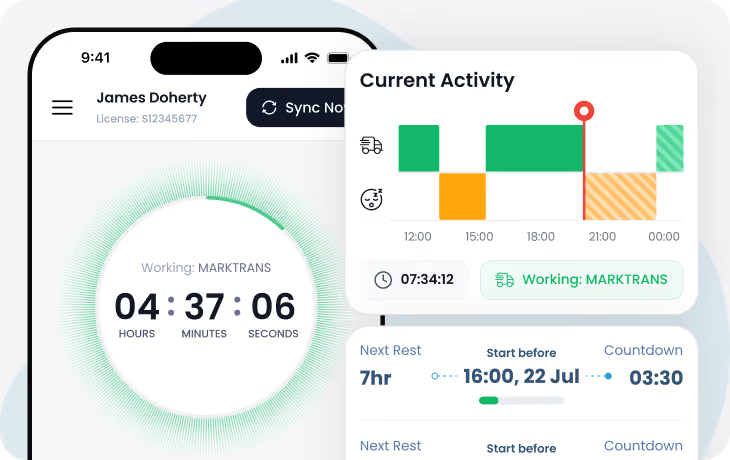
Electronic Work Diary
Digital logbook compliance for drivers, with fatigue rule enforcement and audit-ready shift records
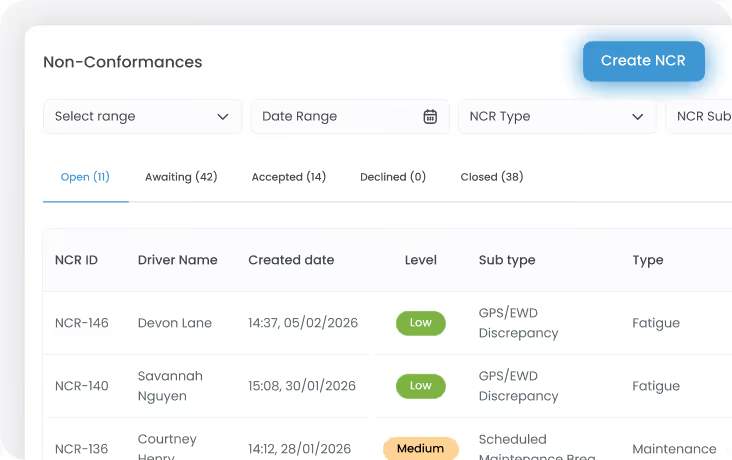
Non-Conformance Reporting
Create and track NCRs from missed or failed pre-start inspections
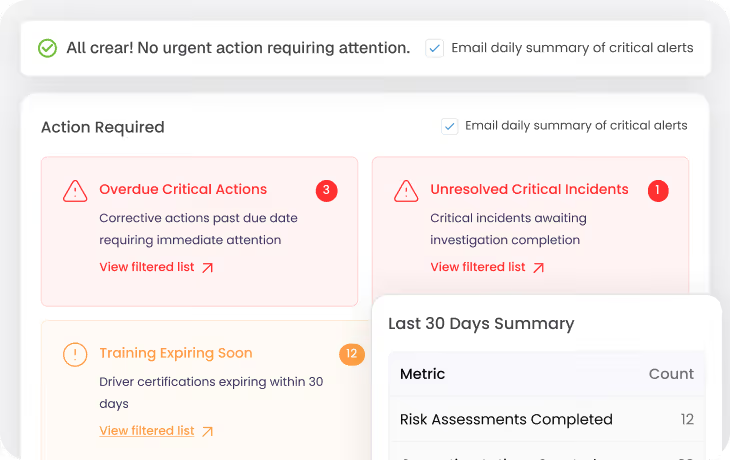
Safety Management System
Complete digital SMS platform covering all five HVNL2 outcome areas
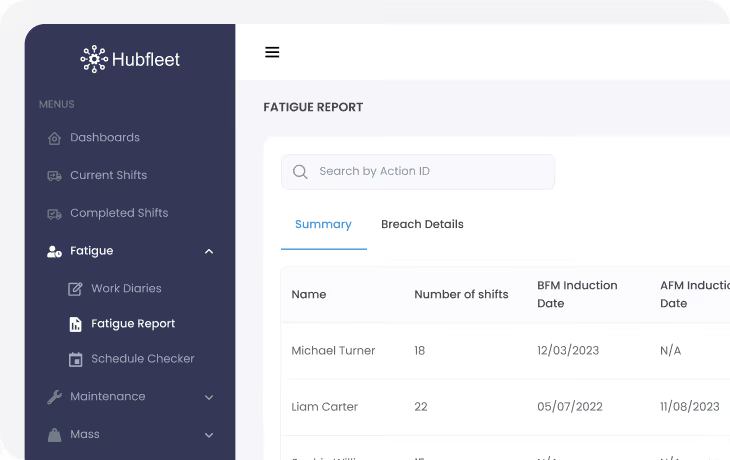
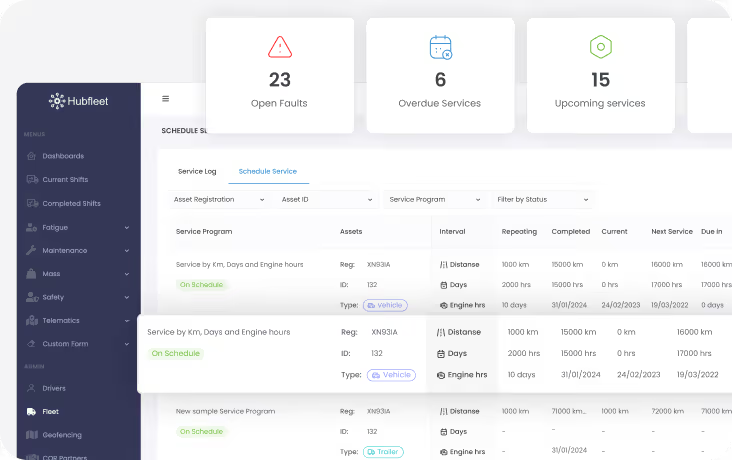
Fatigue Management
Monitor driver fatigue compliance alongside vehicle maintenance readiness
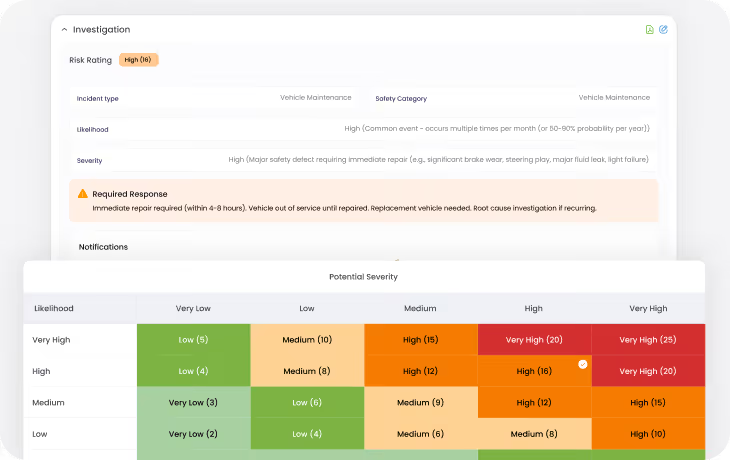
Risk Management
registers, risk assessments, and treatment tracking integrated with maintenance faults
HVNL2 Compliance Guide
Understand how the new Heavy Vehicle National Law affects your maintenance obligations
HVNL2 Compliance Guide
Understand how the new Heavy Vehicle National Law affects your maintenance obligations


Ready to build a compliant training system?

Start Free Trial
Recommended for most fleets
Best if you're ready to get drivers logging now and explore Hubfleet at your own pace.

Full platform access — every feature, no limits
Drivers can start on EWD today
Real EWD, SMS, and compliance reporting from day one
No upfront costs · No lock-in contract
Start Free Trial

Book your Demo
Best for larger fleets or complex setups
Best if you've got specific integration questions, multiple sites, or want a tailored walkthrough first.
Tailored to your fleet and use case
30 minutes with a Hubfleet specialist
See the platform mapped against your fleet's compliance obligations
Get HVNL and SMS questions answered live
Book your 30-Minute Demo
Want to see plans first?


500+ Australian operators
NHVR approved
Free trial
Australian-based support