

Your HVNL reforms Implementation Roadmap
Get operational in 4-8 weeks with Hubfleet, then build 6-12 months of operating evidence
HVNL reforms are expected to commence mid-2026, introducing mandatory Safety Management System (SMS) requirements for all heavy vehicle operators. With Hubfleet's pre-built SMS framework, you can be fully operational in weeks, not months—then spend the remaining time building the operating evidence needed to demonstrate PSOE compliance.

The Hubfleet Advantage

How to Build Your SMS in Hubfleet.
Two Paths: Manual vs. Hubfleet-Accelerated
- Months 1-3: Gap analysis, select separate EWD provider + SMS system (or manual processes)
- Months 4-6: Implement EWD, write policies from scratch, build SMS separately
- Months 7-9: Integrate disconnected systems, train staff on multiple platforms, debug workflows
- Months 10-12: Fix integration issues, duplicate data entry, collect evidence manually
- EWD and SMS systems don't communicate (separate logins, duplicate data entry)
- Expensive consultants to write policies and build integration
- Weighbridge data must be manually entered into both systems
- Staff overwhelmed by multiple disconnected platforms
- Significant integration and consulting costs
- Week 1: Gap analysis with pre-built checklist
- Weeks 2-3: Configure platform, customise templates
- Weeks 4-6: Train staff, roll out to fleet
- Weeks 7-8: Refine based on feedback, go live
- Pre-built SMS framework included
- Configure, don't build from scratch
- Intuitive mobile-first design
- Start evidence collection immediately
- $25/driver/month + GST (EWD + SMS)
Critical Dates & Timeline Strategy
- Mid-2026: HVNL reforms expected commencement date
- 3-year transition: NHVAS operators have up to 3 years to transition to new accreditation framework
- Start early: Begin implementation as soon as possible to maximise your evidence collection period
- Present: Documentation exists ✅ (Hubfleet provides this from day 1)
- Suitable: Systems fit your operation ✅ (Quick customisation in weeks 2-3)
- Operating: Consistent execution over time ⏱️ (Requires 6+ months of timestamped records)
- Effective: Systems reduce incidents and manage risks ⏱️ (Requires 6-12 months of trend data)
This is why starting early is critical—operators who wait until close to commencement will be scrambling to demonstrate operating evidence with insufficient data.
Phase 1: Fast-Track Setup (Weeks 1-8)
Phase 2: Building Operating Evidence (Months 2-12)
- Timestamped records showing daily compliance (pre-starts, fitness-for-duty, EWD)
- Hazards reported, assessed, and controls implemented
- Incidents investigated with root cause analysis and corrective actions
- Training delivered and competencies maintained
- Management reviews conducted regularly with documented decisions
- Controls verified as working through audits and spot checks
- Drivers complete pre-start checks on mobile (timestamped records)
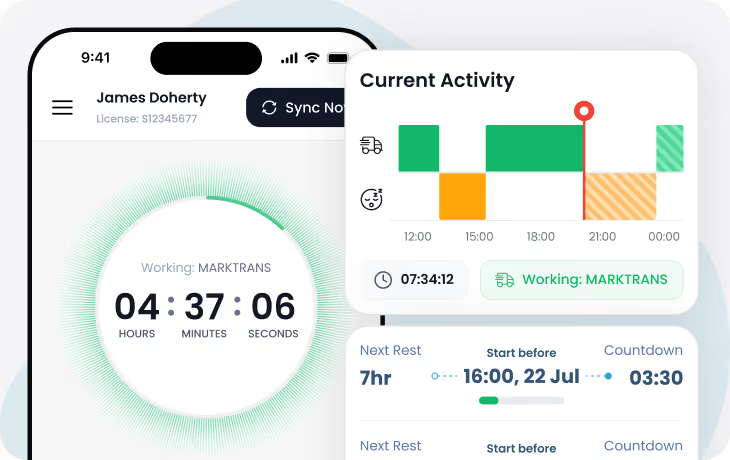
- Drivers log work and rest in EWD (automatically checked against Standard, BFM, AFM, and WA rules)
- Drivers report defects and hazards through mobile app (automatic workflow assignment)
- Fitness-for-duty declarations captured daily (trend analysis available)
- Load and mass data recorded (audit trail for CoR compliance)
- Supervisors review open defects and corrective actions
- Supervisors run team safety briefings and capture outcomes in your usual tools
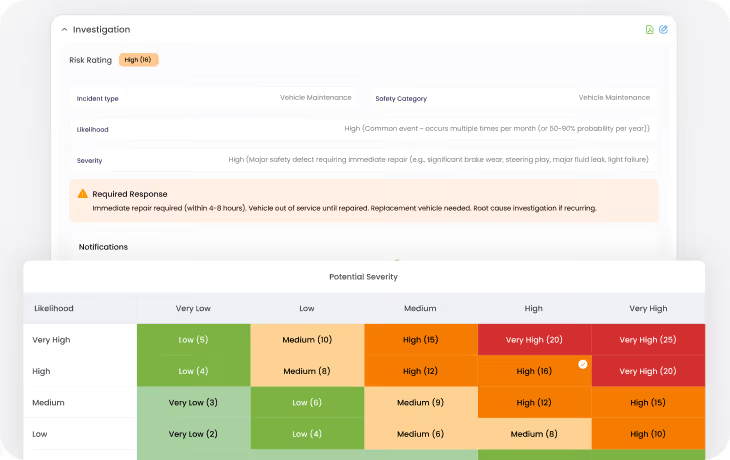
- Safety coordinator reviews new hazard reports and assigns risk assessments
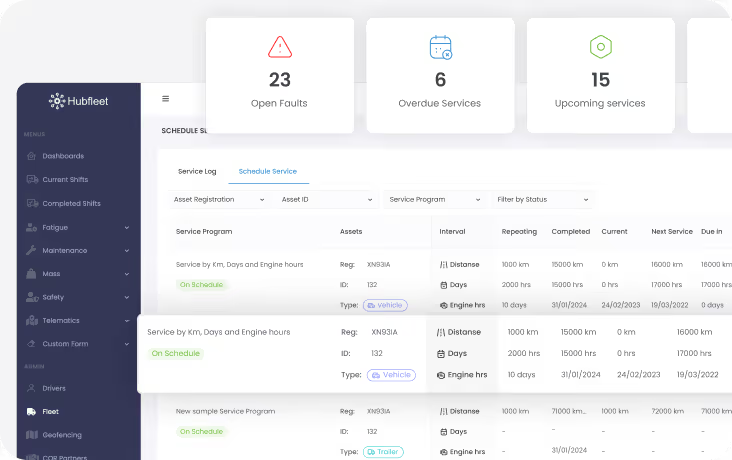
- Maintenance coordinator schedules services based on km/hours
- Management reviews SMS data for emerging issues
- Conduct monthly management review using data from Hubfleet's registers
- Review KPIs: incident rates, hazard reports, defects, training compliance, corrective action closure
- Analyse trends and identify emerging risks
- Make decisions and assign actions with accountability
- Document management review in Hubfleet (audit evidence)
- Build consistent compliance rates (>95% pre-start completion, 100% EWD compliance)
- Encourage hazard reporting (target: 1+ report per driver per month = strong safety culture)
- Close corrective actions on time (>80% closure rate)
- Maintain training currency (>95% staff with current certifications)
- Investigate all incidents with root cause analysis and effective corrective actions
What Hubfleet Provides Out-of-the-Box
Resource Requirements: Hubfleet vs. Manual
Ongoing Operations: Post Go-Live
- Pre-start checks completed on mobile
- EWD logging with automatic rule checks
- Defects and hazards reported
- Fitness-for-duty declarations captured
- All evidence timestamped and stored
- Review open defects and corrective actions
- Conduct toolbox talks (tracked in Hubfleet)
- Review new hazard reports
- Coach drivers on compliance
- Management review using KPI dashboard
- Review trends and make decisions
- Close corrective actions
- Update risk register as needed
- Internal audits on rotating schedule
- Review and update policies
- Assess control effectiveness
- Training compliance review
- Management review with senior leadership
- Set new safety objectives and KPI targets
- Review SMS against regulatory updates
- Prepare for external audit
Common Pitfalls & How Hubfleet Prevents Them

- All 5 SMS outcome areas explained
- Implementation timeline & milestones
- Fleet preparation checklist
- Gap assessment framework
- Change summary from current HVNL

- Gap analysis template (5 outcome areas)
- Pre-audit readiness checklist
- SMS implementation tracker
- PSOE evidence mapping
- Implementation timeline template

- Common auditor questions by outcome area
- Direct answers showing where evidence sits in Hubfleet
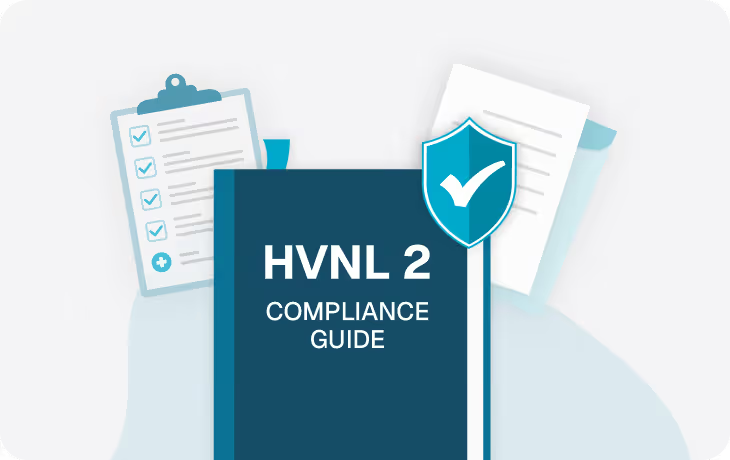
- PSOE framework explained
- Audit-day preparation checklist
- Real auditor scenarios


Don't Wait: Start Building Evidence Now
Starting early gives you the maximum time to build operating evidence—demonstrating that your SMS is not just documented, but systematically implemented and proven effective. Hubfleet gets you operational in 4-8 weeks—then you spend the remaining time building the 6-12 months of evidence you need for audit confidence. Traditional approaches take 12 months just to get operational, leaving minimal time for evidence collection. With Hubfleet, you're collecting evidence from week 8 onwards. The operators who start early will be audit-ready with confidence. The operators who wait will be scrambling to demonstrate "Operating" and "Effective" with insufficient evidence. Keep drivers safe. Keep operations compliant. Keep it simple.


Related Solutions
.avif)