Home
Solutions

Risk Management

Identify, Assess, and Control Risks Before They Become Incidents

Hubfleet's Risk Management module brings hazards, risk assessments, controls, incidents, and NCRs together in one unified register — so you can move from reactive incident handling to proactive, risk-based safety management aligned with the HVNL SMS Standard 2.

Proactive Identification | Unified Risk Register | Effectiveness Tracking | Audit-Ready

Icon
Identify hazards and assess risks consistently
Icon
Link preventive controls to reactive evidence
Icon
Prove control effectiveness at audit

What You'll Achieve

Green check mark icon inside a rounded white square.
Prevent incidents before they happen
with proactive hazard identification and risk assessment
Green check mark icon inside a rounded white square.
Track every risk in one place
with a unified risk register across all safety modules
Green check mark icon inside a rounded white square.
Prove controls are working
with effectiveness tracking linked to real incidents
Green check mark icon inside a rounded white square.
Respond faster to safety events
with consistent risk assessment and escalation workflows
Green check mark icon inside a rounded white square.
Pass HVNL reforms audits confidently
with complete evidence of risk-based decision making — see our Audit Readiness guide
Green check mark icon inside a rounded white square.
Build it step by step

Complete Risk Management System

Hubfleet's risk management system replaces spreadsheets, email chains, and disconnected incident logs with an integrated platform that identifies risks proactively, assesses them consistently, implements controls systematically, and tracks effectiveness continuously.

Icon of a document with a user profile symbol in front.
For Safety Managers
Icon
Unified risk register across all modules
Icon
Proactive hazard identification
Icon
Risk-based escalation workflows
Icon
Control effectiveness tracking
Icon
Trend analysis and reporting
Icon of a smartphone with a steering wheel in front, symbolizing a mobile driving or car control app.
For Drivers & Operators
Icon
Report hazards instantly on mobile
Icon
Document near-misses before incidents
Icon
Minimize fatigue risk with real-time work/rest tracking
Icon
See high-risk vehicle faults before every trip
User profile icon with a small gear symbol representing settings.
For Management
Icon
Real-time visibility of high risks
Icon
Evidence-based control decisions
Icon
Audit-ready risk documentation
Icon
PSOE compliance tracking
Icon
SMS Standard 2 compliance
Proactive Hazard Identification

Catch Risks Before They Become Incidents

Drivers, managers, and staff identify and report potential hazards before they cause harm. Every hazard is assessed, assigned controls, and tracked through to resolution.
The Problem We Solve:
Near-misses go unreported because there's no easy way to document them. Hazards are mentioned verbally but never formally recorded. By the time something becomes an incident, the opportunity to prevent it has passed. There's no systematic process to identify risks before they happen.
With Hubfleet:
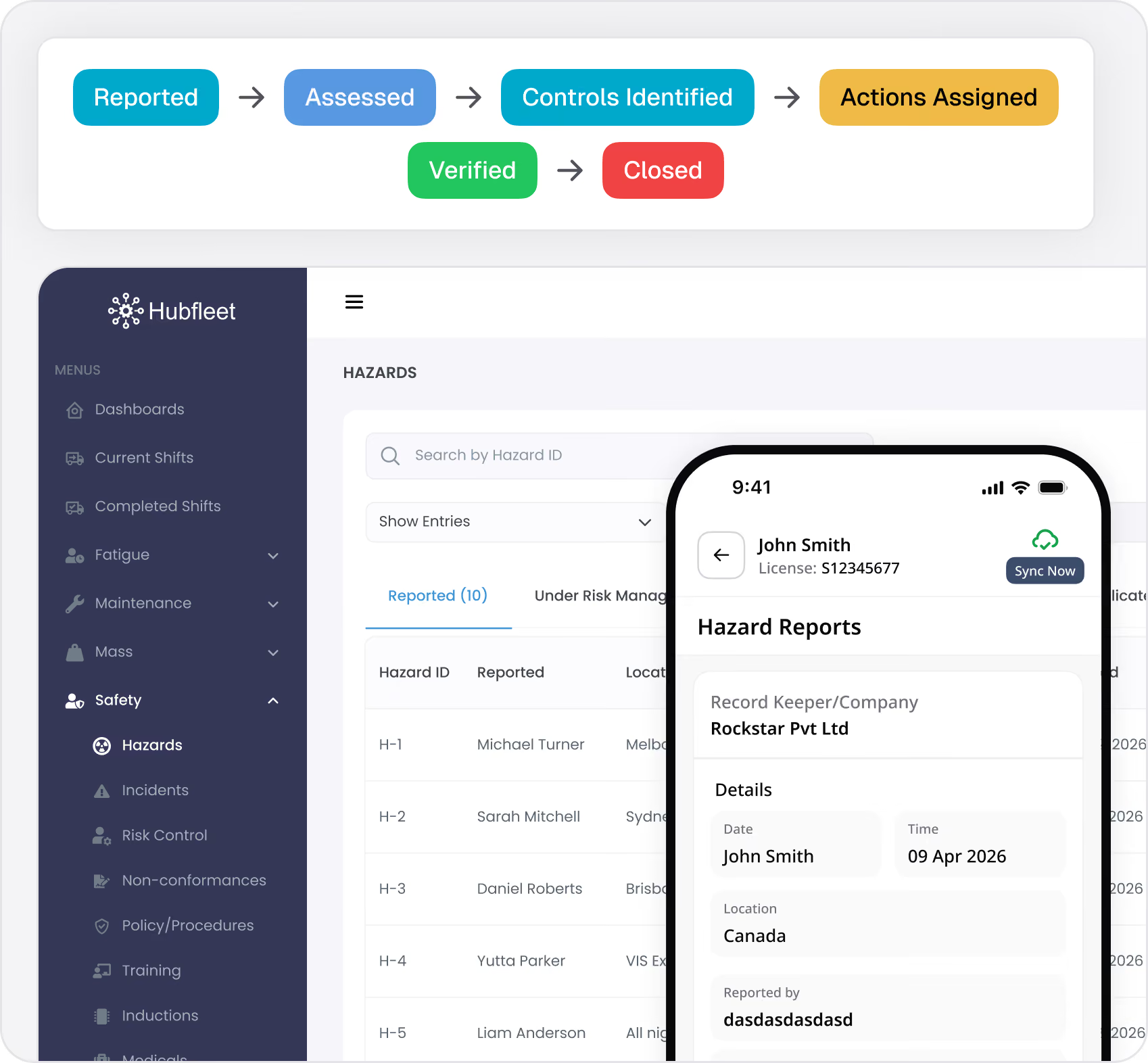
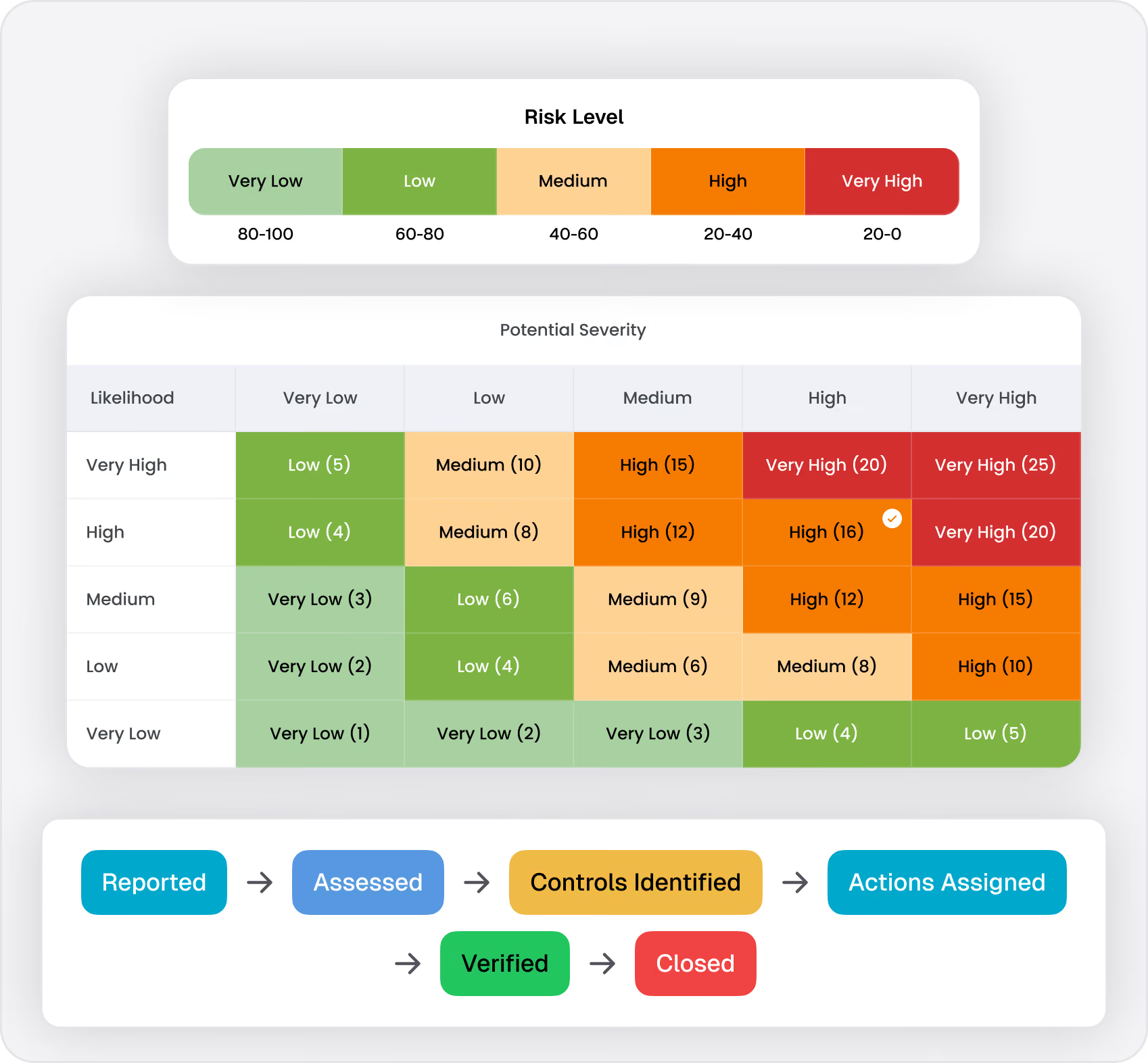
Anyone can report a hazard from mobile or web with photos and location data. Each hazard flows through a structured workflow: reported → assessed → controls identified → actions assigned → verified → closed. Nothing falls through the cracks. High-risk hazards trigger automated notifications to safety category owners. Management sees patterns across all reported hazards.
Mobile Reporting:
Drivers report hazards on the spot with photos, location tagging, and categorisation. Takes less than 2 minutes. Submissions sync instantly to the web portal for triage and response.
Proactive Culture:
Encourages reporting of potential risks, not just actual incidents. Demonstrates to auditors that your organisation actively seeks out risks rather than waiting for incidents to occur.
HVNL reforms Compliance:
Hazard identification is a core requirement of SMS Standard 2 (Risk Management). Auditors will look for evidence of proactive risk identification, not just reactive incident response.
Unified Risk Assessment

Consistent Risk Evaluation Across All Safety Events

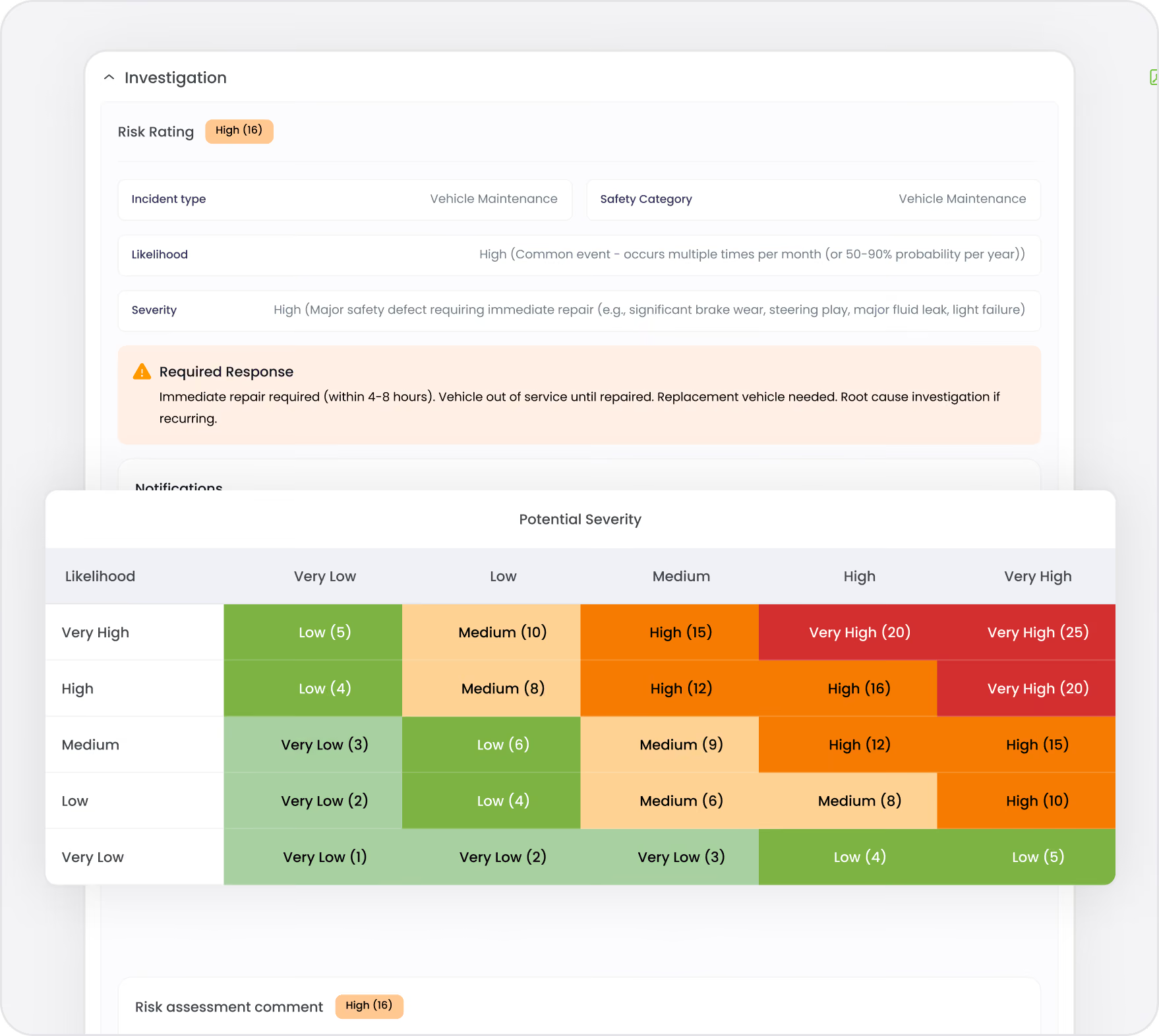
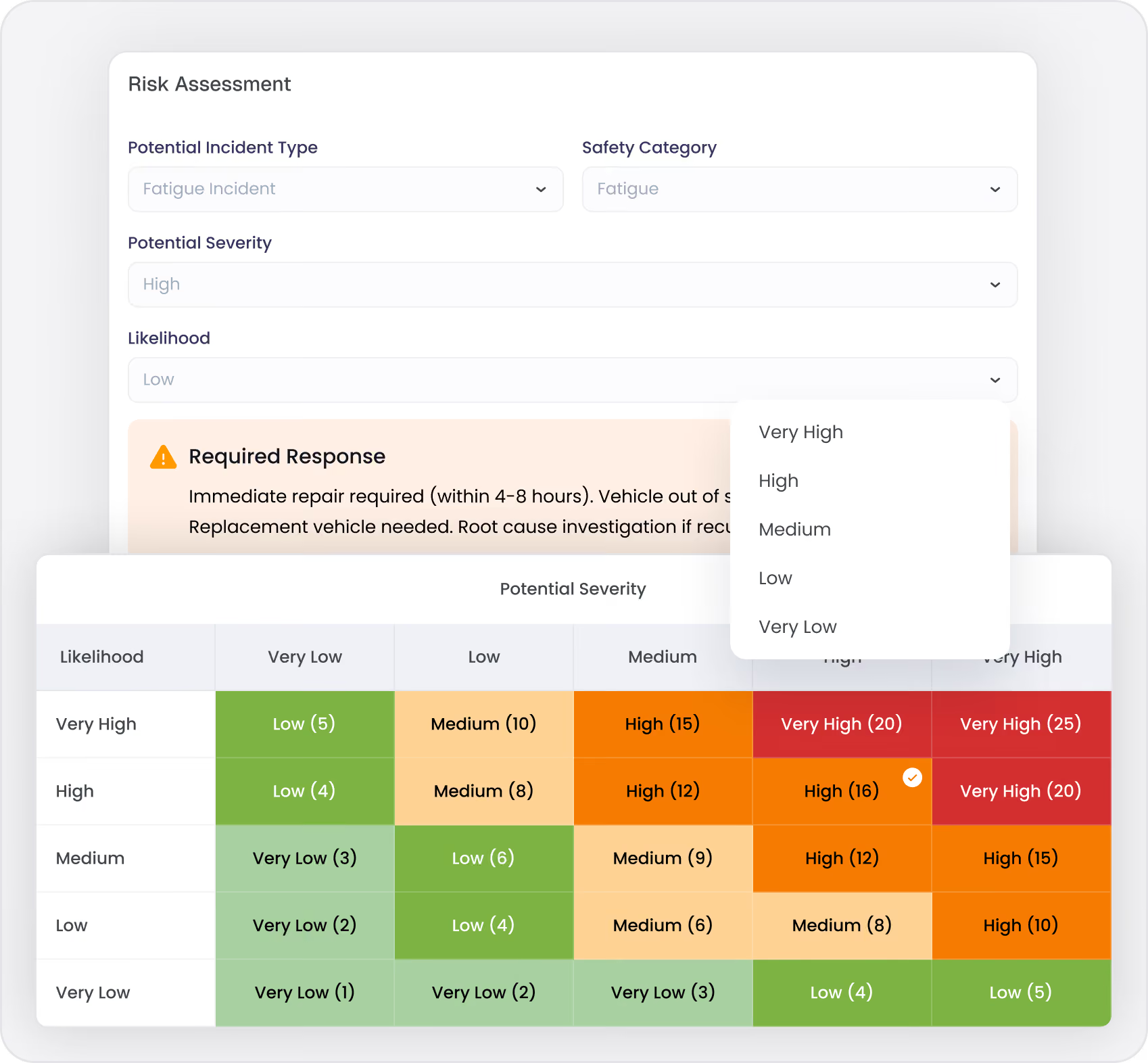
Apply a consistent risk assessment framework across all safety events — hazards, incidents, NCRs, and vehicle faults. Every event-based assessment uses a standard 5×5 risk matrix that provides both a numerical score (1-25) and a customisable risk category (e.g. Very Low, Low, Medium, High, Very High).
The Problem We Solve:
Different teams use different risk scoring methods. Incidents are assessed one way, hazards another. There's no consistent language for describing risk levels. Management can't compare risks across different safety events. Risk scores change arbitrarily, making it impossible to measure improvement over time.
With Hubfleet:
Every risk assessment uses a standard 5×5 matrix with fixed scoring methodology. Likelihood (1-5) × Severity (1-5) = Risk Score (1-25). Risk scores map to consistent categories: Very Low (1-3), Low (4-6), Medium (7-12), High (13-19), Very High (20-25). Category labels are fully customisable to match your terminology, but the scoring method stays consistent across all assessments and over time.
Measurable Improvement:
Fixed scoring methodology means you can track meaningful trends. Compare average risk scores month-over-month. Measure whether controls are reducing risk scores. Demonstrate to auditors that risks are trending down as your SMS matures. Evidence-based proof that your safety program is working.
Automated Escalation:
Risk category determines response requirements. Very High and High risks trigger immediate notifications to safety category owners and escalation contacts. Medium risks require supervisor acknowledgement. All risk assessments feed into the unified risk register for oversight and trending.
Customisable Labels:
Rename risk categories to match your organisation's terminology while maintaining the consistent 1-25 scoring underneath. Whether you call them Critical/High/Medium/Low or Extreme/Significant/Moderate/Minor, the numerical scores remain standardized for comparison and trending.
Mandatory for Incidents:
Incidents cannot move to "Under Review" without a completed risk assessment. Ensures every safety event receives proper risk evaluation before closure.
Risk Register

Single Source of Truth for All Organizational Risks

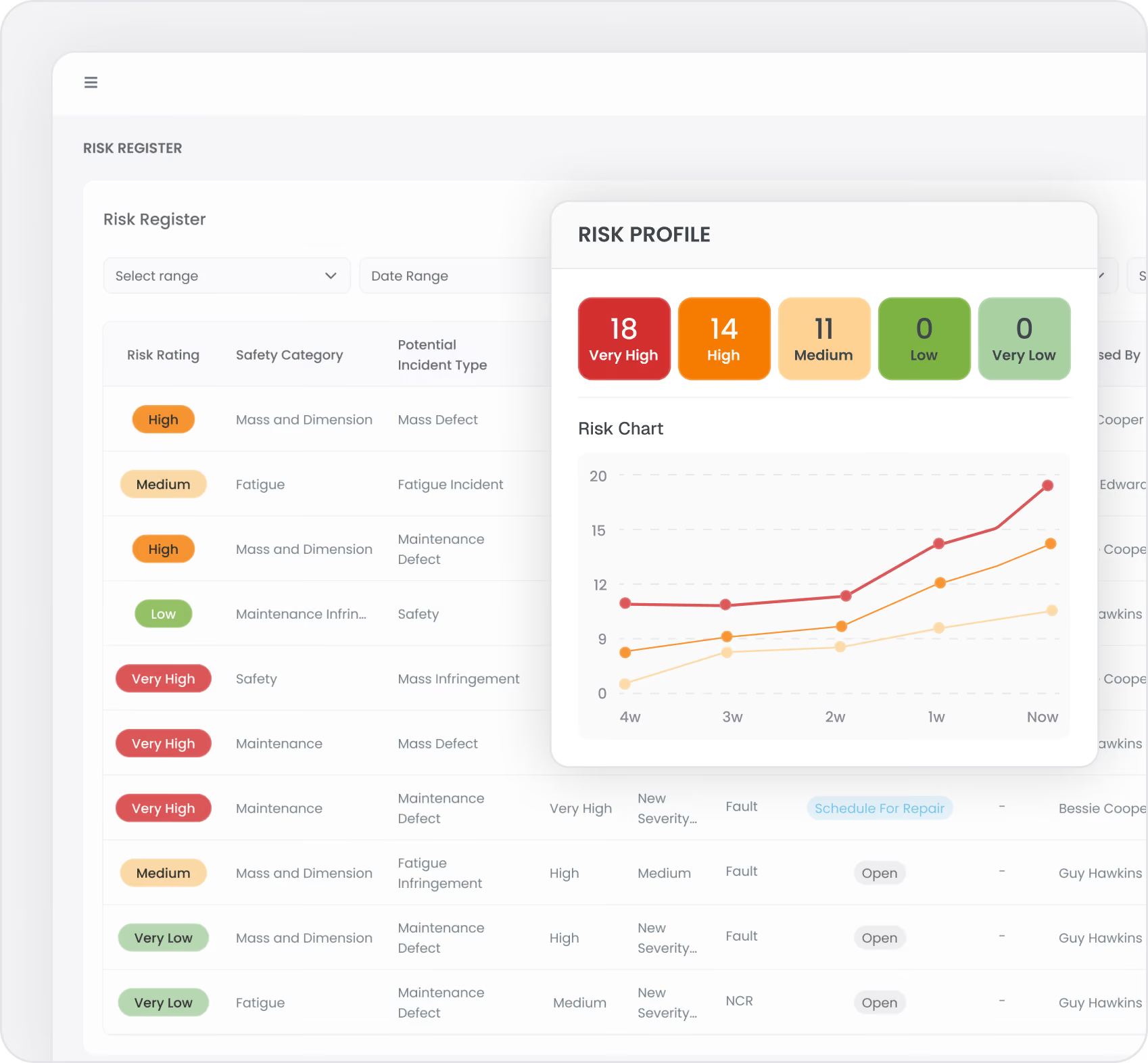
View every risk assessment across your organisation in one consolidated register. Filter by risk level, safety category, date range, or parent item type. Export for audits. Click through to see full details.
The Problem We Solve:
Risk assessments are buried in different places: incident reports, hazard logs, NCR files, maintenance records. Management has no way to see all high-risk items across the organisation. Trend analysis requires manual compilation from multiple sources. Auditors ask "show me all your high risks" and you're scrambling through different systems.
With Hubfleet:
Every event-based risk assessment — whether it came from a hazard, incident, NCR, or vehicle fault — appears in the risk register. Real-time visibility of all Critical and High risks. Filter to see Medium and Low risks. Sort by date, category, or status. Click any entry to view the full parent item with complete details and history.
Management Dashboard:
Quick view of current risk profile: how many Critical, High, Medium, Low risks are open right now. Trend analysis shows risk distribution over time. Identify recurring risk patterns. Evidence that high risks are being addressed promptly.
Audit Evidence:
Export the entire register or filtered views to CSV. Demonstrate to auditors that you have a complete, systematic view of organisational risks. Show how quickly high risks are closed. Prove risk-based decision making.
Risk Controls Library

Document What You're Doing to Reduce Risks

Build a searchable library of risk controls with effectiveness tracking. Link controls to policies, procedures, hazards, incidents, and NCRs. Track implementation status and measure effectiveness over time.
The Problem We Solve:
Controls are scattered across procedure documents, safety plans, and people's heads. You don't know which controls are actually implemented versus just documented. When incidents occur, you can't easily see if relevant controls existed or if they failed. No systematic way to measure control effectiveness.
With Hubfleet:
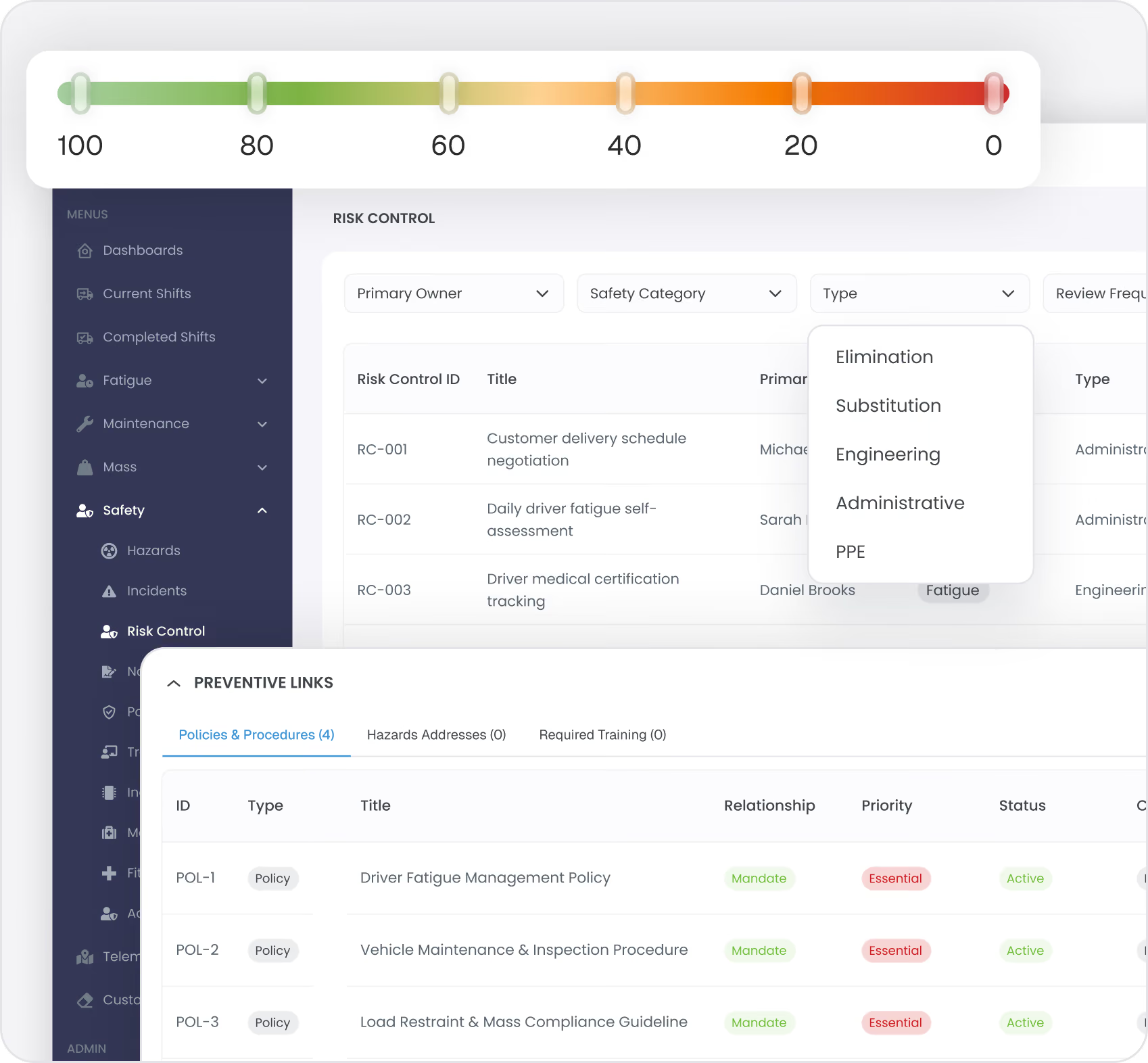
Create controls organized by the hierarchy of control types (Elimination, Substitution, Engineering, Administrative, PPE). Tag with safety categories (Fatigue, Maintenance, Mass & Dimension, Safety). Link controls to the policies that mandate them and procedures that implement them. Set the implementation status for each control. Rate effectiveness based on real-world outcomes.
Complete Traceability:
See which controls apply to specific hazards and incidents. When a hazard is identified, search the controls library and link relevant controls. If an incident occurs despite controls being in place, create an action for effectiveness review. Track patterns: if a control appears in multiple incidents, it's not effective.
Policy Integration:
Controls link to policies (which mandate them) and procedures (which implement them). Creates full evidence chain: Policy → Control → Procedure → Implementation → Effectiveness. Demonstrates to auditors how policy requirements are translated into operational controls. See how our Policies & Procedures Management module supports this.
Review Scheduling:
Set review frequencies (Quarterly, Semi-annually, Annually) for each control. High-risk controls reviewed more frequently. Review process confirms control is still appropriate and effective. Complete history of reviews and updates.
Incident Management

Structured Response to Safety Events

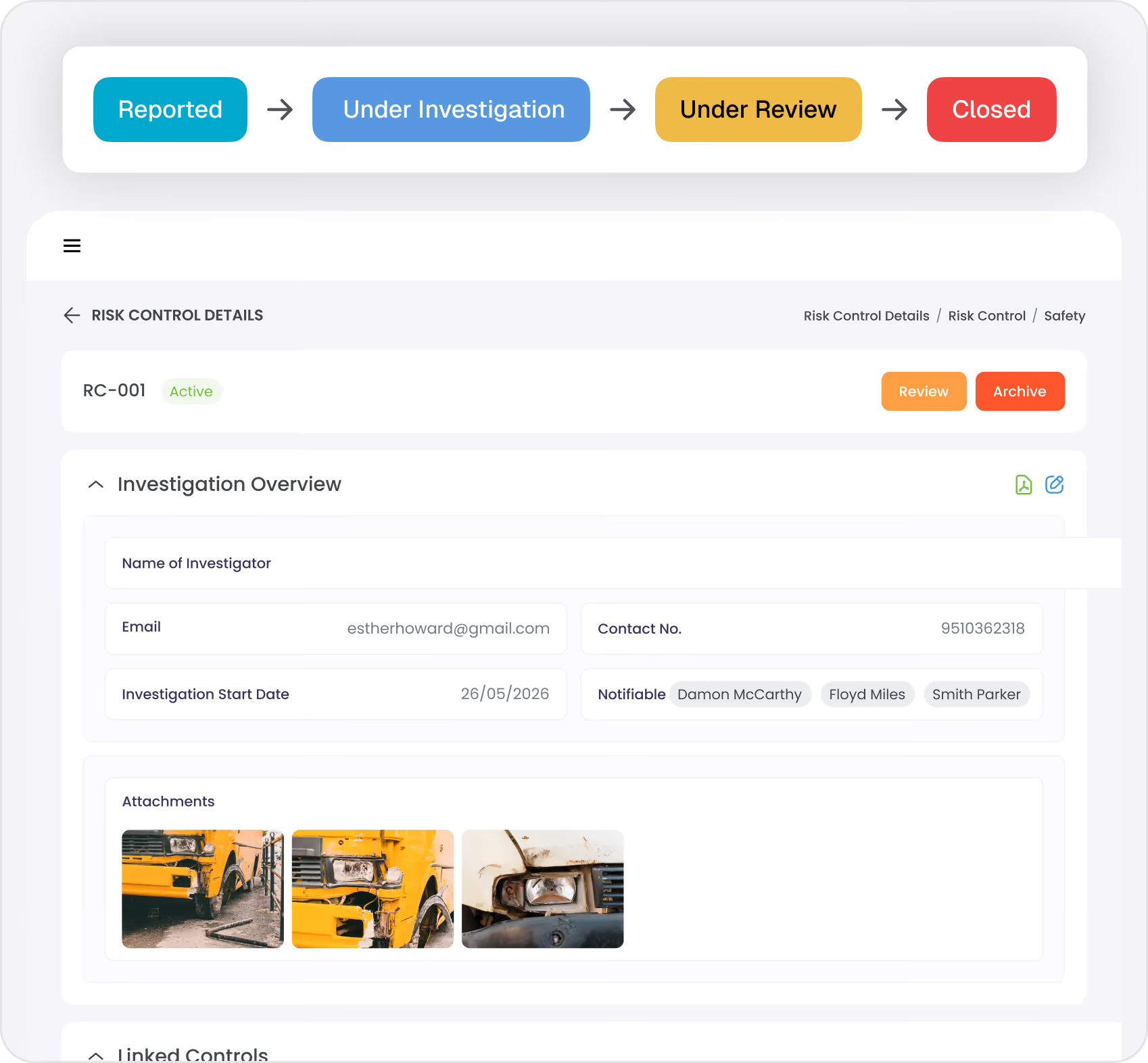
Capture incidents with photos, witness statements, and evidence. Conduct investigations with root cause analysis. Assess risk and link to controls. Assign corrective actions with deadlines. Track through to closure with complete audit trail.
The Problem We Solve:
Incidents are reported on paper forms that get lost. Investigations are incomplete or inconsistent. Root causes are never identified. Corrective actions are assigned verbally and forgotten. No way to track if actions are completed. Same incidents keep happening because lessons aren't learned.
With Hubfleet:
Incidents flow through defined stages: Reported → Under Investigation → Under Review → Closed. Each stage has specific requirements and actions. Investigation captures what happened, why it happened, and what controls failed or were missing. Risk assessment determines response priority. Corrective actions are assigned with owners, deadlines, and completion tracking.
Complete Investigation:
Document sequence of events, contributing factors, root causes, and immediate actions taken. Attach photos, witness statements, and supporting evidence. Link to existing hazards that identified this risk previously. Identify which controls were in place and why they failed.
Corrective Actions:
Assign specific, time-bound actions to prevent recurrence. Actions can involve implementing new controls, improving existing controls, or updating procedures. Track completion status with evidence of closure. History shows what actions were taken and when. Corrective actions also support your Chain of Responsibility obligations.
Pattern Analysis:
Recurring incident types flag for deeper investigation. Identify systemic issues rather than isolated events. Link multiple incidents to the same control to identify whether that control is effective or needs improvement. Evidence of continuous improvement through incident learning.
Non-Conformance Reports (NCRs)

Document and Correct Compliance Breaches

Track breaches of regulations, policies, or procedures with structured NCR workflows. Optional risk assessment for safety-critical non-conformances. Assign corrective actions and track through to closure.
The Problem We Solve:
Compliance breaches are noticed but not formally documented. Fatigue violations, maintenance non-conformances, and safety breaches go unrecorded. No systematic process to prevent recurrence. Auditors find gaps because violations aren't tracked.
With Hubfleet:
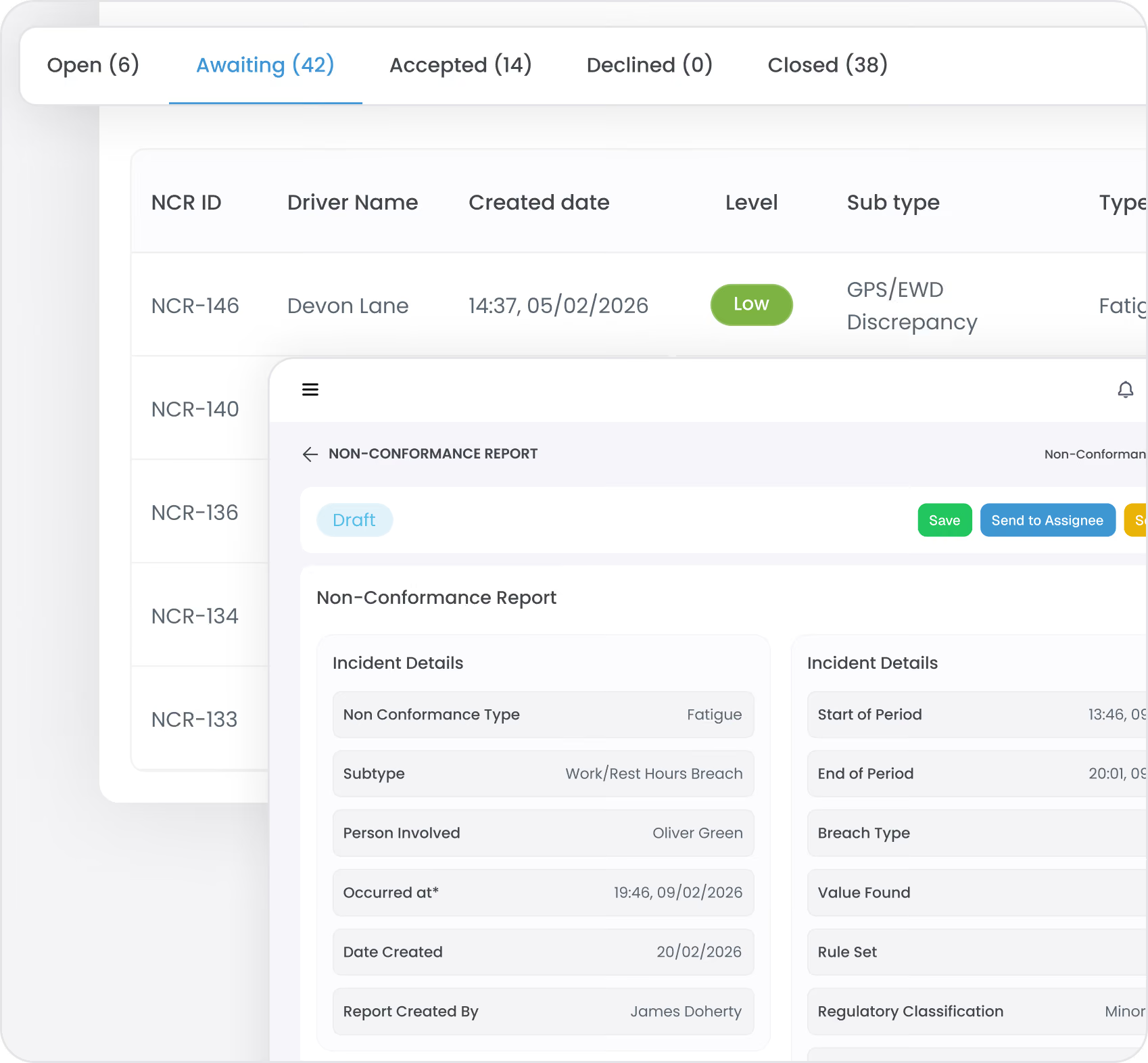
When the EWD system detects a fatigue breach, create an NCR with a single click. Manual NCRs capture other compliance issues (maintenance, mass & dimension, safety procedures). Each NCR documents what was breached, who was responsible, and what caused the non-conformance. Corrective actions prevent recurrence.
Fatigue NCRs:
One-click creation when drivers breach work/rest hour rules. Captures work hour details, breach type, and regulatory classification. Links to the specific EWD records as evidence. Tracks corrective actions and prevents repeat violations. Learn more about our Non-Conformance Reporting workflows.
Optional Risk Assessment:
Safety-critical NCRs can include risk assessment using the same framework as incidents. Helps prioritize response to high-risk non-conformances. Feeds into the unified risk register alongside hazards and incidents.
Vehicle Fault Integration

Treat Defects as Safety Hazards

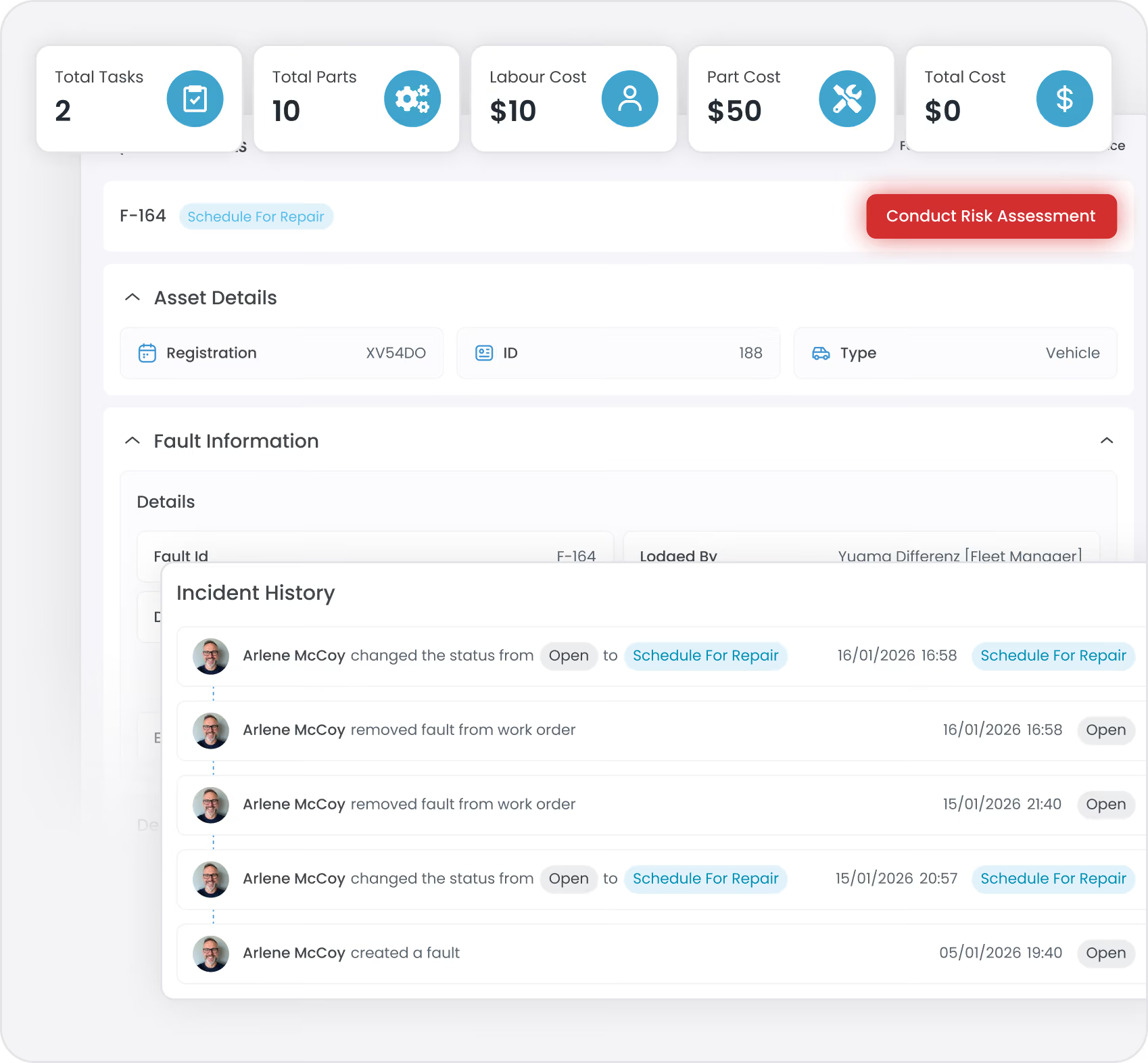
Vehicle faults aren't just maintenance issues—they're potential safety risks. Optional risk assessment for safety-critical defects. Links faults to controls and tracks effectiveness of preventive maintenance programs.
The Problem We Solve:
Vehicle defects are managed separately from safety systems. Safety-critical faults (brake failures, steering issues) aren't assessed for risk. No connection between maintenance defects and safety management. Auditors see maintenance and safety as disconnected.
With Hubfleet:
Pre-start inspection failures automatically create faults through our Maintenance Management module. Add optional risk assessment to safety-critical defects. High-risk faults trigger immediate notifications and management oversight. Link faults to maintenance controls (preventive maintenance schedules, inspection programs). Measure control effectiveness: if the same fault type keeps recurring, your preventive maintenance control isn't working.
Risk-Based Maintenance:
Not all faults require the same urgency. Risk assessment helps prioritize which defects must be addressed immediately versus scheduled for next service. Demonstrates systematic, risk-based approach to vehicle safety.
Proactive Risk Assessment

Risk-Based Decision Support Before Incidents Happen

Hubfleet doesn't just assess risks after something goes wrong. Our proactive risk tools help you identify and manage risks before they become incidents — a core requirement of HVNL reforms SMS Standard 2.
Two Complementary Approaches:
Hubfleet uses two risk assessment methodologies, each designed for different scenarios:
  • 5×5 Risk Matrix (Likelihood × Severity) — Used for event-based assessments: hazards, incidents, NCRs, and vehicle faults. Produces a score from 1-25 mapped to five risk categories.
  • 100-Point Deduction Scoring — Used for state-based and decision-based assessments: fit-for-duty checks and custom forms with optional risk blocks. Starts at 100 points and deducts based on responses. Maps to the same five risk categories with consistent labels, colours, and automated actions.
Both methodologies use the same five risk categories with consistent labels, colours, and automated actions — giving your team a unified risk language across reactive and proactive assessments.
Fit-for-Duty Risk Scoring:
Every driver completes a daily self-assessment before starting a shift. Configurable questions cover fatigue, health, medication, and fitness factors. The system calculates a fitness score and automatically approves shifts, escalates to supervisors, or blocks unsafe operations based on your configured risk thresholds.
Custom Forms with Risk Blocks:
Add optional risk scoring to any custom form — trip acceptance assessments, customer request reviews, site risk profiles, or operational decision logs. Each form calculates a risk score using the same 100-point deduction method, with configurable questions, thresholds, and automated actions tailored to the specific decision.
Why Proactive Assessment Matters for HVNL reforms:
Auditors won't just ask what you did after an incident. They'll ask what processes you have to identify and manage risks before they materialise. Proactive risk assessment demonstrates that your SMS is genuinely operating and effective — not just reactive.

Integration Across Safety Management

The Bow-Tie Model: Every Risk Control Ties Your SMS Together
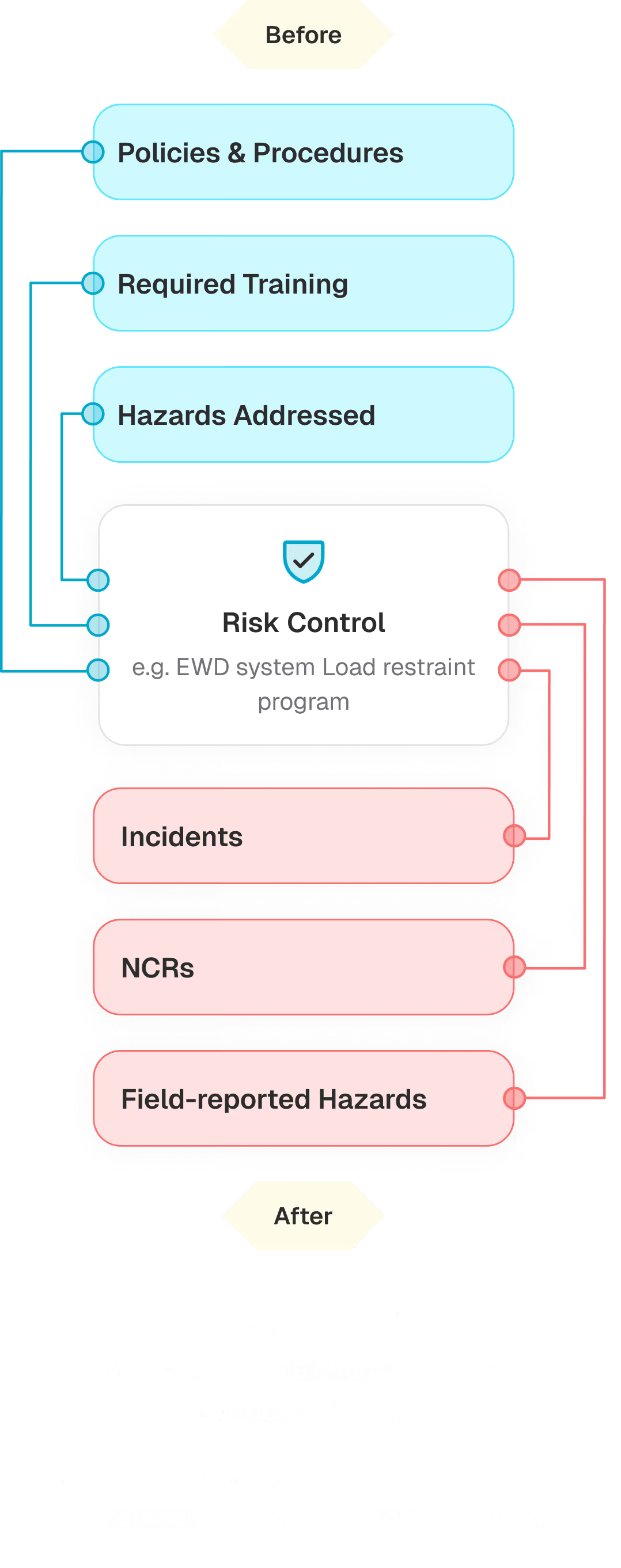
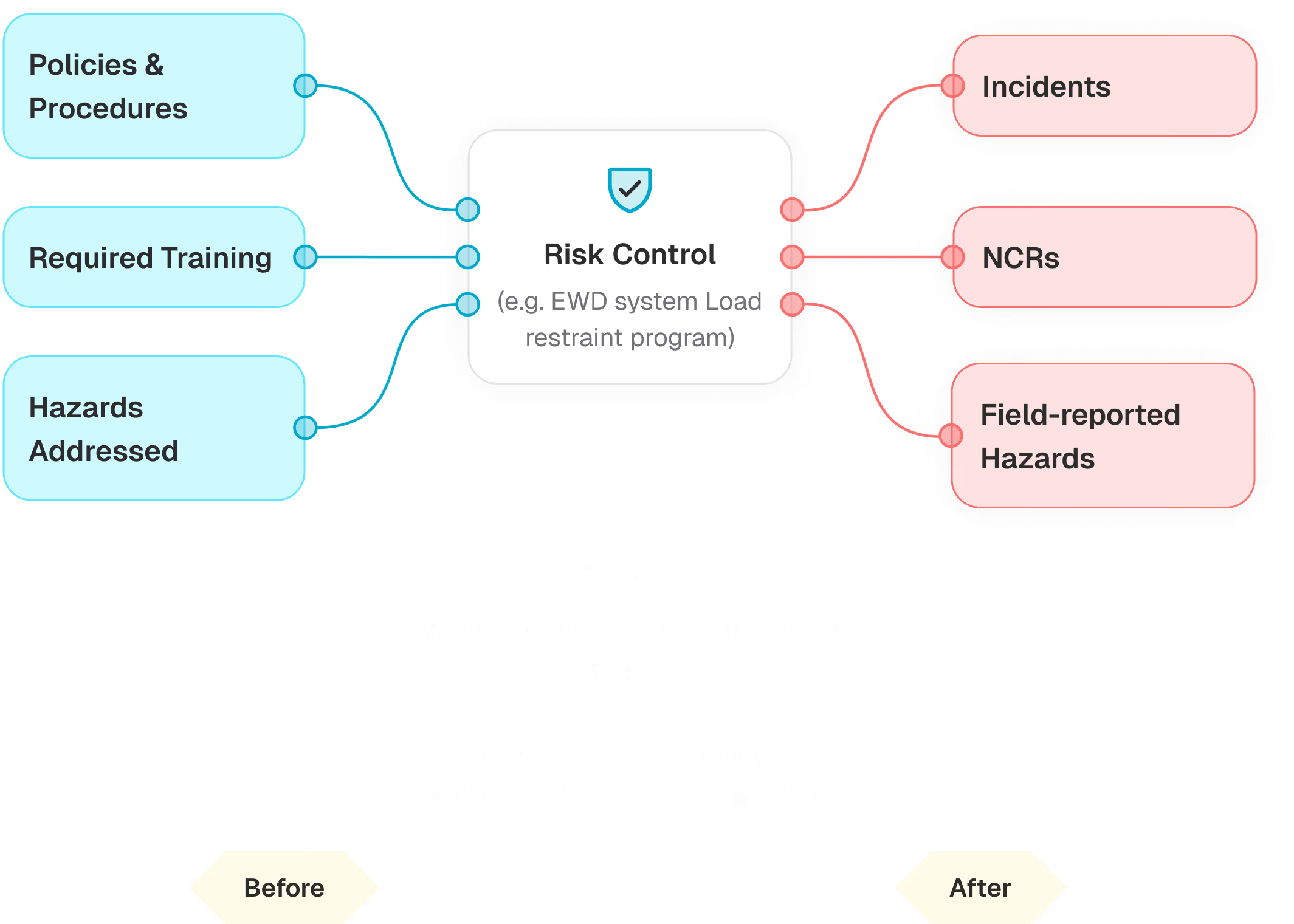
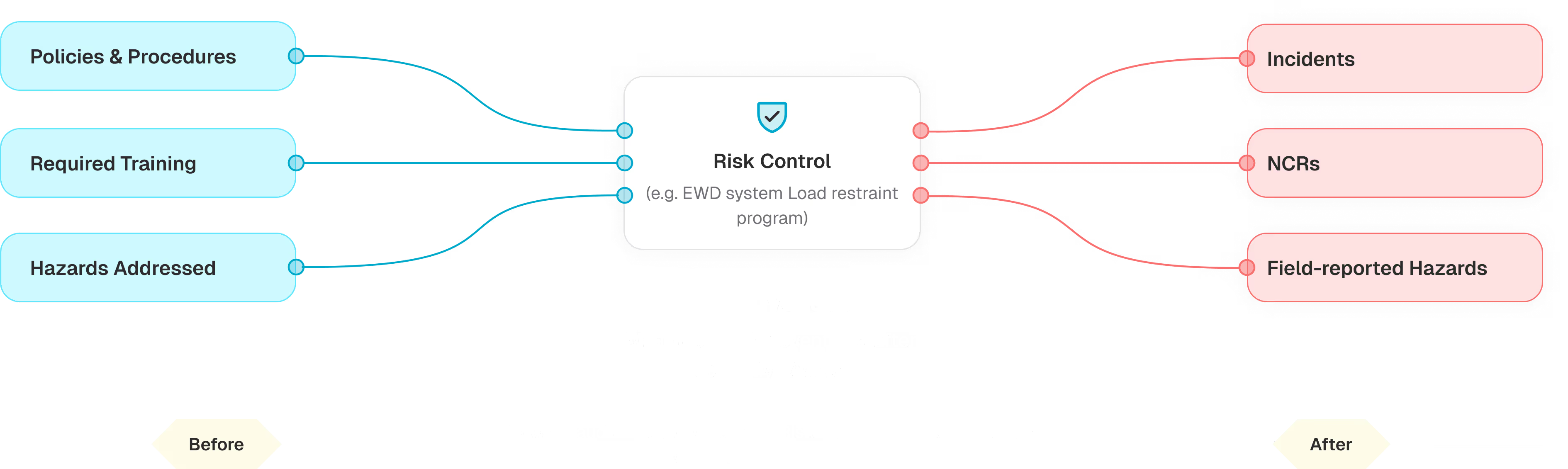
Risk management isn't standalone — it's the foundation that connects everything in your SMS. Hubfleet uses a bow-tie model where every Risk Control sits at the centre, supported by preventive links on one side and tested by reactive evidence on the other. The power of Hubfleet's controls library is the complete traceability it creates.
The Three Zones of the Bow-Tie
Preventive Links — Before the Event
What you put in place to stop the event happening.
  • Policies & Procedures — policy mandates the control; procedure implements it
  • Required Training — builds the competency to operate it
  • Hazards Addressed — proactive identification of what could go wrong
Example: A load restraint program (the control) backed by a load restraint policy, driver training, and a register of load-related hazards.
The Risk Control — The Knot
The operational control at the centre of the bow-tie.
  • Implementation status — documented evidence the control is in place
  • Review schedule — when it was last checked and when nex
  • Linked evidence — preventive inputs and reactive outputs that prove it works
Example: The EWD system in our Risk Controls — backed by fatigue policies and driver training (preventive); tested by fatigue NCRs and incidents (reactive).
Reactive Links — After the Event
The real-world evidence that tells you whether the control is working.
  • Incidents — did the control prevent harm?
  • Non-Conformance Reports (NCRs) — are breaches occurring?
  • Field-reported Hazards — are risks still emerging?
Example: A fatigue NCR triggers an effectiveness review of the EWD control — and the related policies, procedures, and training behind it.
One Bow-Tie, Two Unified Registers
Every reactive item — incidents, NCRs, and field-reported hazards — automatically feeds two registers in parallel, giving management a single source of truth for both the risks you carry and the work underway to control them.
Risk Register
What is the risk?
A consolidated view of every risk assessment across the organisation, ranked by severity. Filter by risk level, safety category, date range, or parent item. Export for audits in one click.

Corrective Actions Register
What are we doing about it?
A unified view of every action assigned from hazards, incidents, and NCRs — with owners, due dates, and completion status. Demonstrates continuous improvement to auditors.

The PSOE Outcome — Audit-Ready by Design
This is what the whole bow-tie is for.
The controls library, risk register, and corrective actions register together produce the four pieces of evidence auditors look for under HVNL SMS Standard:
  • Present — the system exists and is documented
  • Suitable — appropriate for your operations and risk profile
  • Operating — actively used, with hazards reported and risks assessed
  • Effective — measurable risk reduction and continuous improvement
No scrambling, no rebuilding from spreadsheets — your day-to-day operations are your audit trail.
Safety Categories tie it all together:
Consistent categorisation across all modules (Fatigue, Maintenance, Mass & Dimension, Safety) with configurable category owners who receive notifications for their areas — enabling specialist oversight and accountability across every link in the bow-tie.

HVNL reforms Compliance Benefits

Hubfleet's risk management directly addresses HVNL reforms SMS Standard 2 (Risk Management) requirements. See the full breakdown in our SMS Requirements Explained guide:
Blue triangular warning sign with an exclamation mark in the center.
SMS Standard 2: Hazard Identification
Proactive hazard reporting from all staff, systematic hazard register, evidence of seeking out risks rather than waiting for incidents
Blue clipboard with a checkmark and a warning triangle symbol.
SMS Standard 2: Risk Assessment
Consistent risk assessment methodology, documented likelihood and severity, evidence-based risk ratings, audit trail of all assessments
SMS Standard 2: Risk Controls
Hierarchy of controls applied, controls linked to specific risks, implementation tracking, effectiveness measurement, continuous improvement
Blue document icon with a magnifying glass symbolizing research or evidence review.
PSOE Evidence (Present, Suitable, Operating, Effective):
Icon
Present: Risk management system exists and is documented
Icon
Suitable: Appropriate for your operations and risk profile
Icon
Operating: Evidence of active use (hazards reported, risks assessed, controls implemented)
Icon
Effective: Incident trends, control effectiveness ratings, continuous improvement demonstrated
Audit-Ready:
Unified risk register provides single-point access to all risk evidence. Export filtered views for specific time periods or risk categories. Complete history and traceability for every risk decision. See our Audit Preparation Guide for what auditors will ask for.
Get Started in Days, Not Months
Free guides, tools, and frameworks to start preparing for HVNL today — built by Australian compliance specialists and trusted by 500+ fleets.
Blue binder or folder with three horizontal black lines on the front cover.
HVNL Compliance Guide
What HVNL means for your fleet — explained in plain English
  • All 5 SMS outcome areas explained
  • Implementation timeline & milestones
  • Fleet preparation checklist
  • Gap assessment framework
  • Change summary from current HVNL
Read the Guide
HVNL Compliance Toolkit
Free downloadable templates to start preparing today.
  • Gap analysis template (5 outcome areas)
  • Pre-audit readiness checklist
  • SMS implementation tracker
  • PSOE evidence mapping
  • Implementation timeline template
Get the Free Toolkit
Audit Preparation Guide
The questions NHVR auditors ask — and where to find your answers.
  • Common auditor questions by outcome area
  • Direct answers showing where evidence sits in Hubfleet
  • PSOE framework explained
  • Audit-day preparation checklist
  • Real auditor scenarios
Read the Audit Guide

Frequently asked questions

How is this different from just tracking incidents?  
We include proactive hazard identification (before incidents occur), a unified risk register across all safety events, a controls library with effectiveness tracking, and complete integration with policies and procedures. Traditional incident tracking is reactive only.
Can we customise the risk matrix to our risk appetite?  
Yes. Customise the category labels (rename Very Low/Low/Medium/High/Very High to match your terminology), define custom likelihood and severity descriptors, and set response requirements for each risk level. The underlying 5×5 scoring methodology (1-25) stays consistent to ensure measurable improvement tracking over time.
What if drivers don't report hazards?  
Mobile reporting is fast (under 2 minutes), includes photos and location for context, and doesn't require extensive form-filling. Our customers see significant increases in hazard reporting once staff realize how easy it is and that their reports are actually actioned.
How does the risk register help with audits?  
Auditors will ask "Show me all your high-risk items from the last 12 months." The risk register answers this instantly with one filtered view. Export to CSV or PDF for audit evidence. Click through to any item to see complete details and history.
Can we import existing hazards and incidents?  
Yes. We'll work with you to migrate historical safety data into Hubfleet with proper categorisation and risk ratings. Maintains your audit trail and enables trending from day one.
Ready to move beyond reactive incident tracking?
Get the Free Toolkit

Risk Management & Safety Management System

Risk Management is part of Hubfleet’s complete Safety Management System, designed for Australian heavy vehicle operators preparing for HVNL reforms.

Stylized blue paper airplane icon with shadow on transparent background.
Start Free Trial
Recommended for most fleets
Best if you're ready to get drivers logging now and explore Hubfleet at your own pace.
Icon
Full platform access — every feature, no limits
Icon
Drivers can start on EWD today
Icon
Real EWD, SMS, and compliance reporting from day one
Icon
No upfront costs · No lock-in contract
Start Free Trial
Icon of a calendar with blue top binder and dark gray date display area.
Book your Demo
Best for larger fleets or complex setups
Best if you've got specific integration questions, multiple sites, or want a tailored walkthrough first.
Icon
Tailored to your fleet and use case
Icon
30 minutes with a Hubfleet specialist
Icon
See the platform mapped against your fleet's compliance obligations
Icon
Get HVNL and SMS questions answered live
Book your 30-Minute Demo
Want to see plans first?
Icon
500+ Australian operators
Icon
NHVR approved
Icon
Free trial
Icon
Australian-based support