Home
Solutions

HVA / NHVAS

Get accredited under the new Heavy Vehicle Accreditation scheme — with a Safety Management System that's already audit-ready.

From 1 August 2026, the National Heavy Vehicle Accreditation Scheme (NHVAS) is replaced by the new Heavy Vehicle Accreditation (HVA) scheme. Hubfleet gives you the Safety Management System, PSOE evidence, and operational records that HVA-approved auditors need to see — across General Safety Accreditation (GSA), GSA – Maintenance Assurance Program, ACA – Fatigue and ACA – Mass.

SMS Standard 2026 Aligned | PSOE Audit-Ready | NHVR Approved EWD

Icon
Free trial available
Icon
No upfront costs or lock-in contracts
Icon
 Full platform access from day one

Why heavy vehicle operators choose Hubfleet for HVA / NHVAS

Green check mark icon inside a rounded white square.
SMS Standard 2026 Aligned
Every module maps to the Safety Management System Standard that underpins GSA
Green check mark icon inside a rounded white square.
PSOE Evidence, Automatically
Present, Suitable, Operating and Effective evidence generated as a by-product of daily operations
Green check mark icon inside a rounded white square.
All Tiers Supported
GSA, GSA-MAP, ACA-Fatigue and ACA-Mass in one platform
Green check mark icon inside a rounded white square.
Alternative Compliance Hours Ready
Supports the NHVR's pre-defined Alternative Compliance rule sets, with operator-configured accreditation profiles on the roadmap
Green check mark icon inside a rounded white square.
Audit-Ready in Seconds
Generate audit-ready evidence packs for entry, initial compliance, and ongoing compliance audits
Green check mark icon inside a rounded white square.
NHVR-Approved EWD Built In
Work/rest recording, breach detection, and GPS cross-check across all rule sets

What is the HVA scheme?

The Heavy Vehicle Accreditation (HVA) scheme is the new national accreditation framework introduced with 2026 HVNL amendments. It takes effect on 1 August 2026 and progressively replaces the existing National Heavy Vehicle Accreditation Scheme (NHVAS).
Unlike NHVAS — which was organised around three separate modules (Mass, Maintenance, Fatigue) each audited in isolation — the HVA scheme is built on top of a single, integrated Safety Management System (SMS). Every operator starts with General Safety Accreditation (GSA), which is a whole-of-business assessment against the Safety Management System Standard 2026. From there, operators can add optional accreditations that unlock specific regulatory concessions.
For a deeper explanation of the SMS Standard itself, see SMS Requirements Explained. For how it connects to broader HVNL obligations under the reforms, see HVNL Reform Compliance Guide. For a plain-English overview of the wider reform package, see the HVNL Reform Compliance Toolkit.

The HVA Scheme — Tiered Model

The HVA scheme is a tiered accreditation model. GSA is mandatory. Everything else builds on top of it.
Tier
Status
What it unlocks
Assessed against
GSA — General Safety Accreditation
Mandatory entry point
Recognition as an accredited operator; eligibility to add ACAs
SMS Standard 2026 (core)
GSA-MAP — Maintenance Assurance Program
Optional add-on
Exemption from annual inspections (QLD & NSW); required for some PBS combinations
SMS Standard 2026, Schedule 2
ACA – Fatigue — Alternative Compliance Accreditation, Fatigue
Optional add-on (requires GSA)
Tailored work/rest hours within legislated outer limits
SMS Standard 2026, Schedule 1
ACA – Mass — Alternative Compliance Accreditation, Mass
Optional add-on (requires GSA)
Access to Higher Mass Limits (HML) and certain PBS combinations
SMS Standard 2026, Schedule 3
GSA — General Safety Accreditation

The mandatory foundation for every HVA operator

What GSA requires:
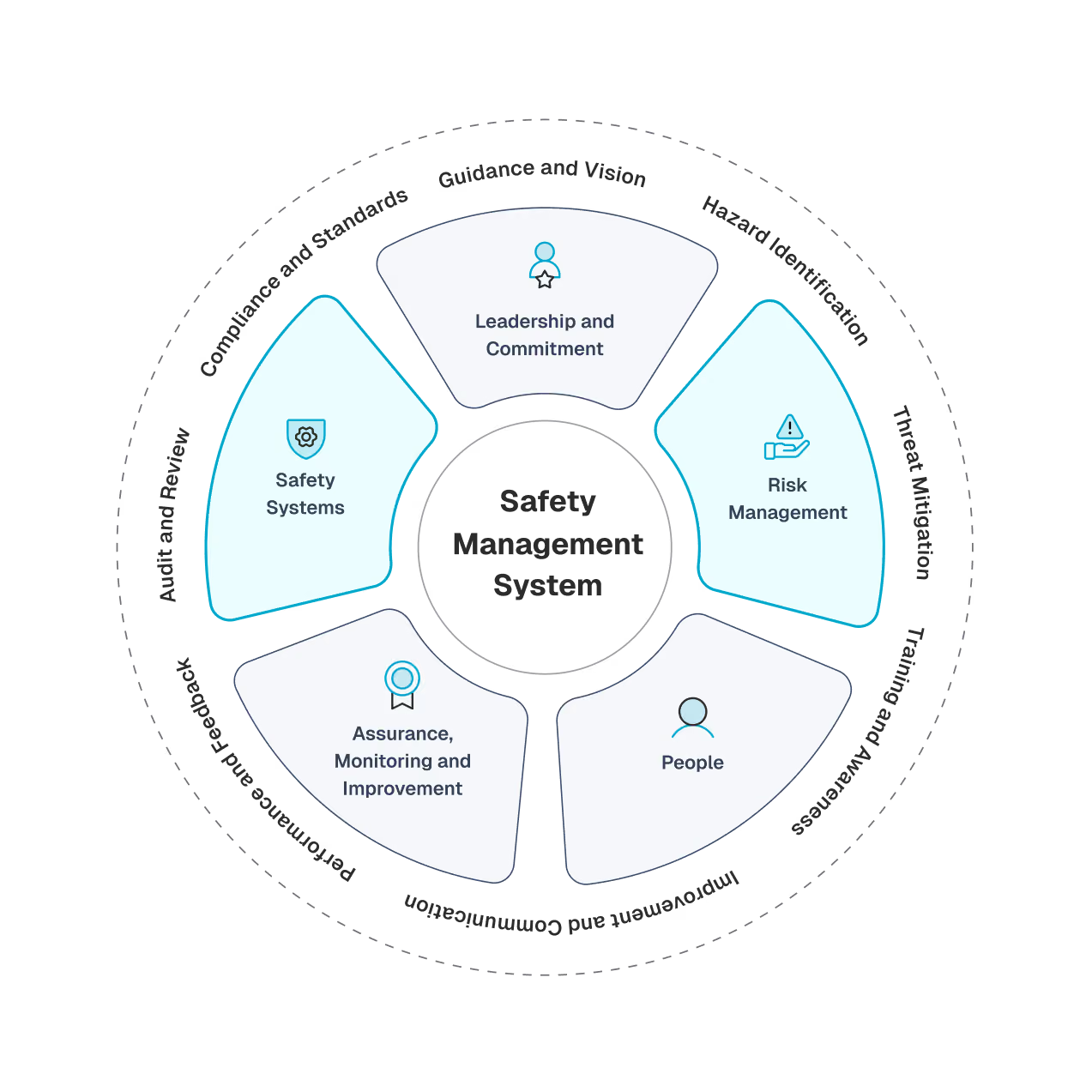
GSA is granted after an approved auditor confirms your Safety Management System complies with the SMS Standard 2026. It's a whole-of-business assessment against the five SMS outcome areas — Leadership and Commitment, Risk Management, People, Assurance, Monitoring and Improvement, and Safety Systems — the same outcome areas that underpin the mandatory SMS under the HVNL reforms.
With Hubfleet:
Hubfleet is built directly around the SMS Standard 2026. Every workflow — from fatigue and pre-starts to incident reporting and internal review — generates the operational evidence auditors need to see. See Safety Management System for the full SMS solution.
GSA readiness features:
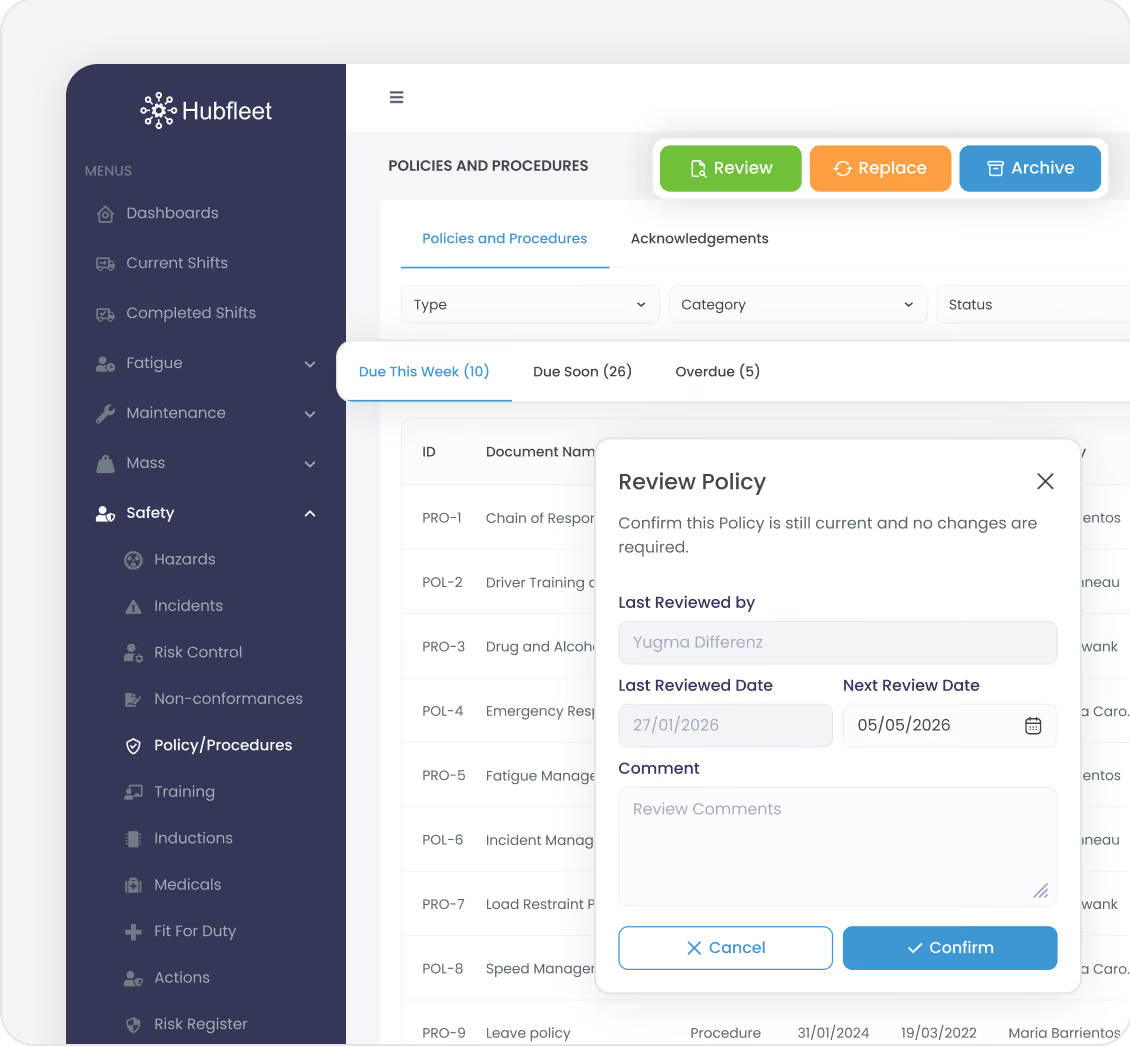
  • Policy library aligned to SMS Standard clauses, with acknowledgement tracking
  • Role-based responsibilities and delegations across the operation
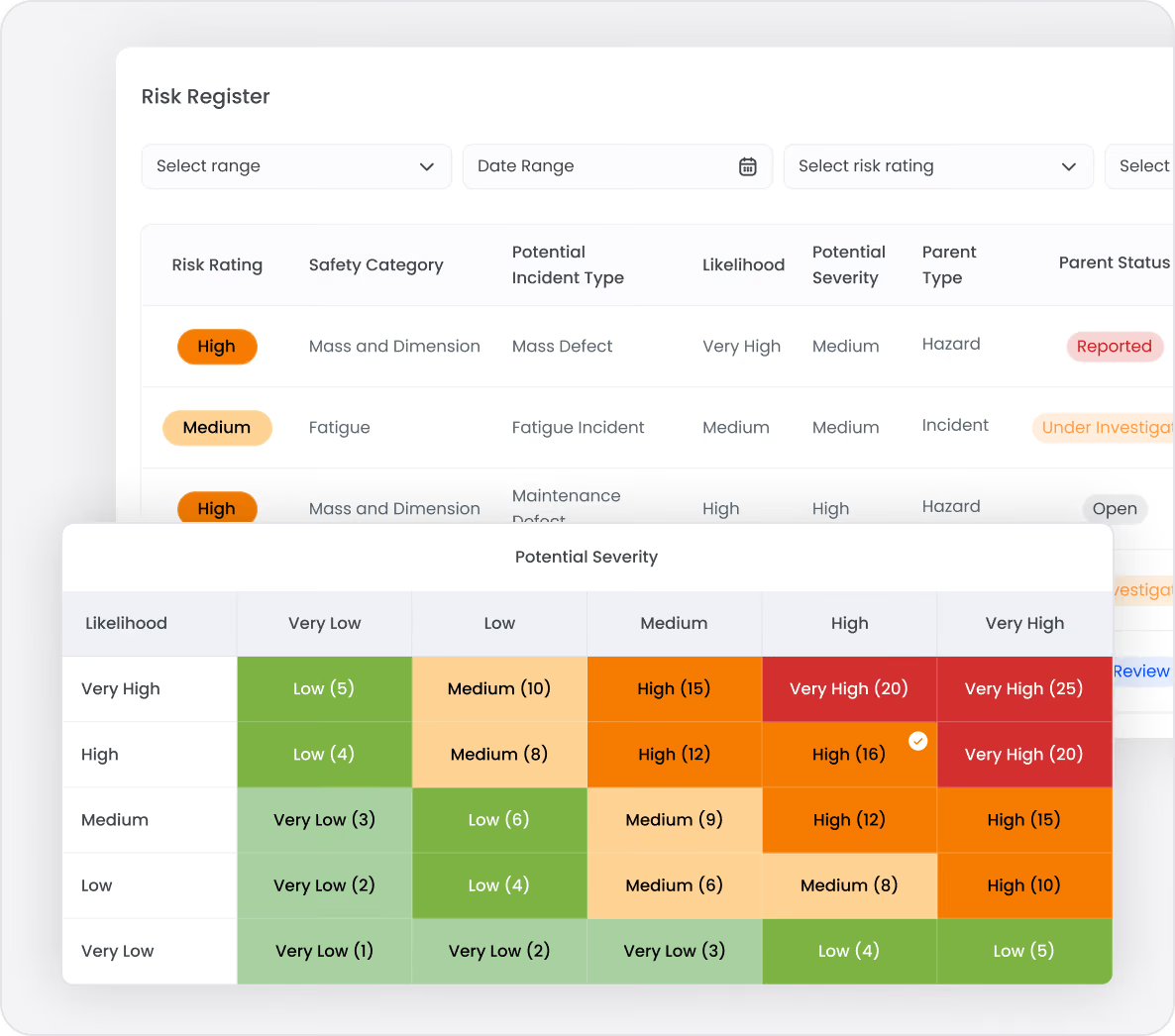
  • Risk register with hazard identification, controls, and review cycles
  • Training and competency records per employee and role
  • Incident and non-conformance workflows with root-cause analysis and corrective actions
  • Internal audit schedule and self-assessment templates
PSOE evidence, automatically:
Because SMS activity happens in Hubfleet daily, every clause of the SMS Standard has evidence attached that it is Present, Suitable, Operating and Effective — the exact assessment framework auditors use. See PSOE Evidence Framework Guide: Demonstrating SMS Compliance Under the HVNL Reforms for the full evidence framework.

SMS Outcome Areas — Built Into Every Workflow

The SMS Standard 2026 is organised around five outcome areas. Hubfleet's platform is built directly around them, so day-to-day activity is also PSOE evidence.
SMS outcome area
What auditors look for
Where Hubfleet delivers it
Leadership and Commitment
Documented policy, accountable executive, safety objectives cascaded through the business
Policy library with acknowledgement tracking, role-based responsibilities, executive dashboards
Risk Management
Hazard identification, risk assessments, controls, and review cycles proportionate to the operation
Risk register with hazard-control-review lifecycle, fatigue RCSM support, mass exception workflows
People
Competency, training records, medical fitness, and role assignment
Training and competency tracking (incl. TLIF0030 / TLIF0031), medical assessment expiry alerts, role-based access
Assurance, Monitoring and Improvement
Internal audits, non-conformance handling, corrective actions, trend analysis
Internal audit scheduler, NCR workflow with root-cause and CAR tracking, breach and incident dashboards
Safety Systems
Documented procedures for fatigue, mass, maintenance, incident reporting, and operational activities
Integrated modules for EWD, mass, maintenance, pre-starts, incident reporting — all in one system
See Safety Management System for the full SMS solution and SMS Requirements Explained for a deep dive on the Standard itself.
GSA – MAP (Maintenance Assurance Program)

Skip annual inspections in QLD & NSW — with the evidence to back it up

What GSA-MAP requires:
GSA-MAP is an optional add-on that provides additional assurance around vehicle maintenance and safety. In Queensland and New South Wales, operators with GSA-MAP are exempt from the annual inspections that form part of the registration process. GSA-MAP is also mandatory for some Performance Based Standards (PBS) combinations — check your Vehicle Approval.
The specific requirements are set out in Schedule 2 of the SMS Standard 2026: Maintenance Accreditation Requirements.
With Hubfleet:
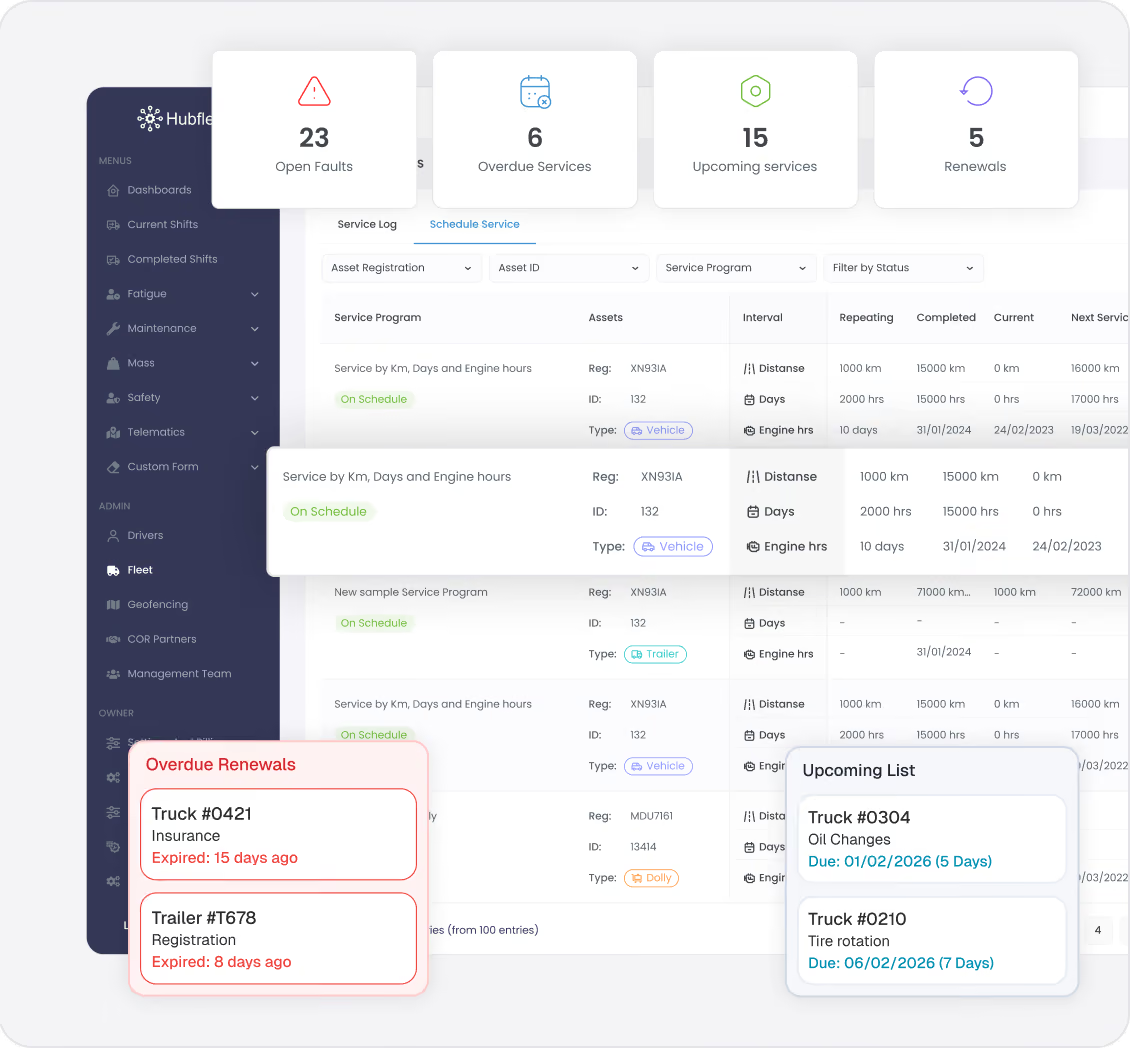
Hubfleet's maintenance module gives you a defensible maintenance system — service programs, fault management, and inspection records — with the evidence trail GSA-MAP auditors expect. See Maintenance Management for the full solution, and Maintenance Management for the HVNL reforms for HVNL reform context.
Maintenance assurance features:
  • OEM-aligned service programs per vehicle, trailer, and combination
  • Kilometre-, hour-, and time-based service schedules with approaching/urgent/overdue alerts
  • Work orders with parts, labour, and sign-off tracking
  • Pre-start inspections replacing paper checks — with photo evidence and GPS stamps
  • Fault-to-work-order workflow, including critical-defect grounding
  • Complete maintenance history exportable for MAP audit review
ACA – Fatigue

Tailor work and rest hours to your operation — safely and defensibly

What ACA – Fatigue requires:
ACA – Fatigue lets operators tailor work and rest hours to the needs of their business, provided they demonstrate robust fatigue risk management. Operators either:
  • Perform a risk assessment of proposed hours using the Risk Classification System Matrix (RCSM), or
  • Use templated Alternative Compliance Hours developed by the NHVR (already risk-assessed).
Legislated outer limits:
  • Solo drivers: max 15.5 hours work in a 24-hour period, min 7 hours rest
  • Two-up: max 14 hours work in a 24-hour period, min 5 hours rest
ACA – Fatigue requires GSA. Drivers must complete TLIF0030 — Apply a fatigue risk management system, and schedulers/managers must complete TLIF0031 — Administer a fatigue risk management system. Drivers also require periodic medical examination assessments against AustRoads Assessing Fitness to Drive.
With Hubfleet:
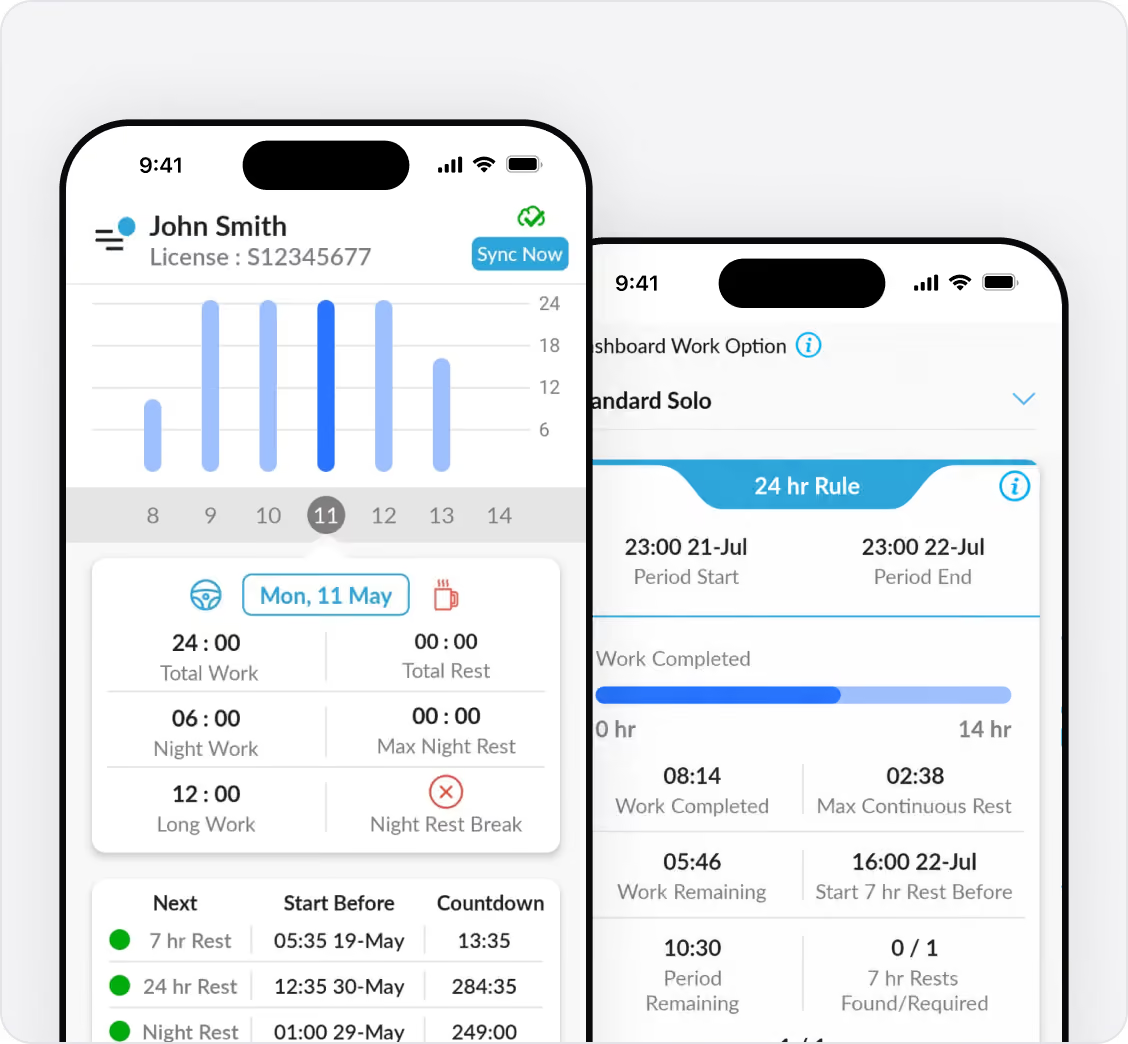
Hubfleet is an Electronic Work Diary (EWD) that supports Standard Hours, BFM, AFM, WA Solo and WA Two-up rule sets — plus the NHVR's pre-defined Alternative Compliance rule sets — with real-time breach detection and automatic evidence capture.
ACA – Fatigue features:
  • Assign the appropriate NHVR pre-defined Alternative Compliance rule set per driver group (operator-configured accreditation profiles on the product roadmap)
  • Real-time enforcement of the active rule set at shift start and during operation
  • Real-time breach detection and pre-shift schedule checks
  • GPS cross-check comparing declared rest against telematics data
  • Training and competency tracking for TLIF0030 / TLIF0031 with renewal alerts
  • Medical assessment tracking per driver, with expiry alerts
  • Auto-generated fatigue non-conformance reports
For a deeper look at how alternative compliance sits alongside standard hours, see Fatigue Management Alternative Compliance and Fatigue Management Best Practices.
ACA – Mass

Unlock Higher Mass Limits — with proof your mass systems are working

What ACA – Mass requires:
ACA – Mass provides additional assurance that mass responsibilities and activities are being effectively managed. It's required for certain notices and permit-based schemes — including Higher Mass Limits (HML) and some PBS combinations.
The specific requirements are set out in Schedule 3 of the SMS Standard 2026.
With Hubfleet:
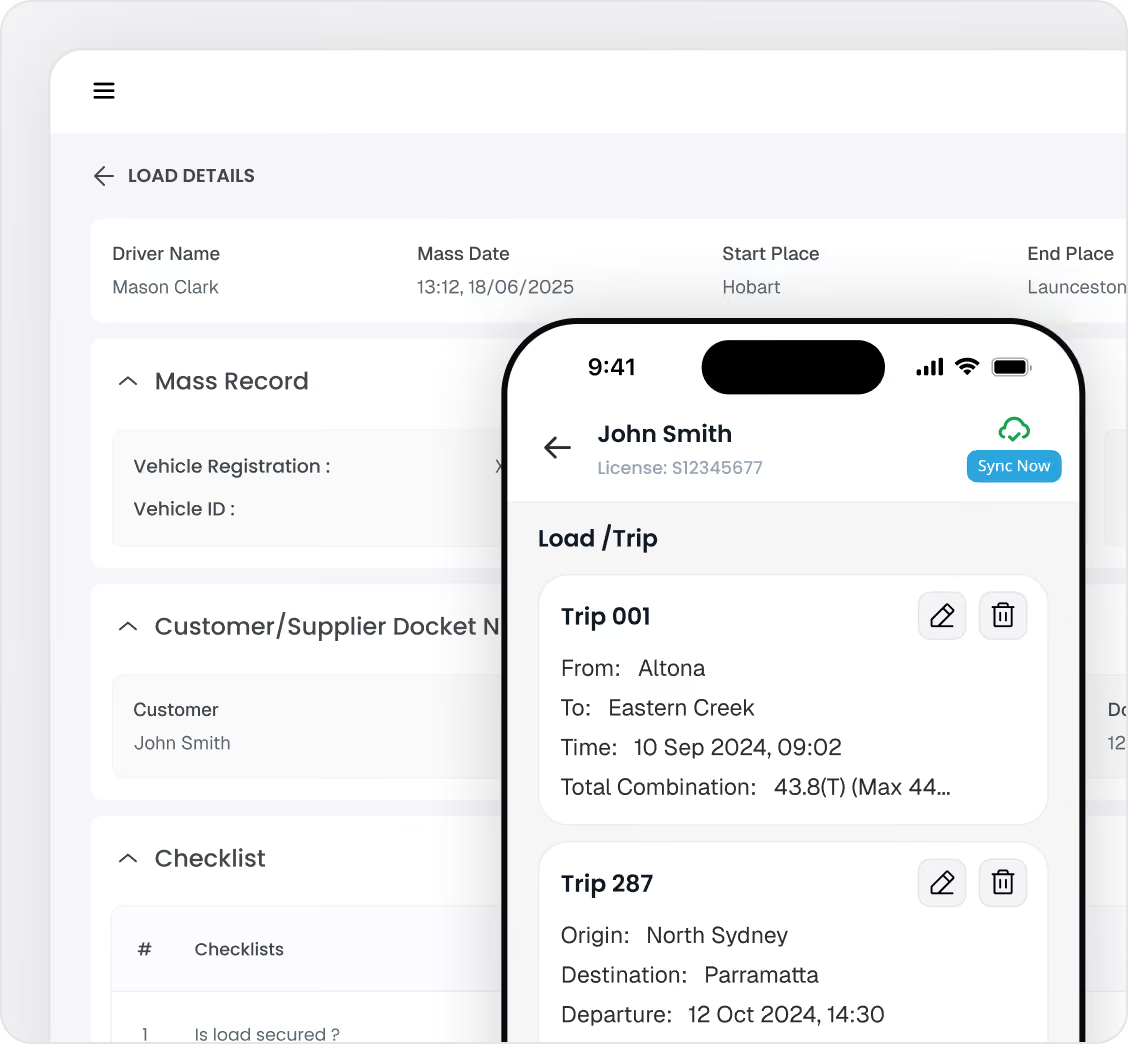
Hubfleet's mass management supports operators across GML, CML, HML, and ACA – Mass with digital records, scheme validation, and full exception workflows. See Mass Management for the full solution, and Mass Management & Permit Compliance for HVNL Reform context.
ACA – Mass features:
  • Axle group configurations with per-scheme mass limits (GML / CML / HML)
  • Automatic scheme validation on every load entry
  • Measurement method recording — weighbridge, load docket, or calculated
  • Photo evidence of weighbridge readings attached to load records
  • Over-mass exception workflow with escalation and corrective actions
  • Full mass compliance history per vehicle and combination — audit-ready

Accreditation Process — Where Hubfleet Fits

Getting accredited under the HVA scheme follows five clear steps. Hubfleet supports each one — so the SMS you build to apply is the same SMS that runs your operation day-to-day.
Step
What you do
Where Hubfleet fits
1. Develop your SMS
Build the policies, procedures, roles, and risk controls that satisfy the SMS Standard 2026 (and any ACA schedules you're pursuing).
Policy library, risk register, role-based responsibilities, and training records — mapped to SMS Standard clauses.
2. Implement in your operation
Roll the SMS out to drivers, schedulers, and workshop staff. Start capturing operational evidence — shifts, pre-starts, load records, incidents.
EWD, pre-start app, mass records, maintenance work orders, incident reporting — evidence generated as a by-product of daily work.
3. Entry audit
Engage an HVA-approved auditor to confirm your SMS is Present and Suitable. Submit the audit report to the NHVR.
Generate a PSOE-structured evidence pack — clause-by-clause proof — direct from the platform for auditor review.
4. Accreditation granted
The NHVR grants GSA (plus any ACAs) for a period of up to 3 years, with conditions and audit schedule set.
Track accreditation expiry, ACA scope, and NHVR conditions inside Hubfleet with reminders and renewal alerts.
5. Ongoing compliance
Run your SMS daily. Complete internal reviews annually. Prepare for the initial compliance audit and the pre-expiry compliance audit.
Live PSOE dashboards, internal audit scheduler, NCR/CAR workflow, and one-click audit packs keep you audit-ready year-round.

The PSOE Audit Method — And Why It Matters

HVA scheme audits use the Present, Suitable, Operating and Effective (PSOE) method. This is a significant shift from NHVAS-era, document-focused audits.
PSOE Criterion
What auditors check
How Hubfleet evidences it
Present
The required SMS element exists in your business
Policy library, procedures, and configuration all held in one place — easy to demonstrate.
Suitable
The element is proportionate to your operation and its risks
Risk register, ACA hours configuration, and role-based responsibilities show fit-to-purpose design.
Operating
The element is used in day-to-day operations, not just written down
Daily EWD shifts, pre-starts, load records, incident reports — operational evidence generated automatically.
Effective
The element is producing the intended safety outcome
Breach trends, NCR closure rates, incident reduction — dashboards that show outcomes over time.
Entry audits confirm your SMS is Present and Suitable. Subsequent audits confirm it is Operating and Effective. If PSOE can be demonstrated at entry (with at least 6 months of verifiable evidence and no major non-conformances), the initial compliance audit may be waived.

Hubfleet is built to make all four PSOE criteria demonstrable from day one. For a deep-dive on how to structure your evidence, see PSOE Evidence Framework Guide: Demonstrating SMS Compliance Under the HVNL Reforms.

Audit Types & Timeline

Accreditation periods are typically 2 years, with up to 3 years possible based on your non-conformance history. Audits are staged across the accreditation lifecycle.
Audit type
When
Purpose
Entry audit
On application
Confirm SMS is Present and Suitable before accreditation is granted
Initial compliance audit
6–7 months after grant (10–11 months if an ACA is added within 5 months)
Confirm SMS is Operating and Effective in daily use. May be waived if PSOE demonstrated at entry.
Compliance audit
Between 9 months and 1 month before expiry
Confirm SMS continues to Operate Effectively; required to renew accreditation
Internal review
Annually (operator-led)
Self-assessment against SMS Standard, ACA requirements, and NHVR conditions
Triggered / spot check / desktop
As required
Risk-based or random assurance activities initiated by the NHVR
Other rules worth knowing:
  • Auditor rotation — the same auditor cannot assess your SMS for more than 2 consecutive accreditation periods (or a cumulative 5 years). A different, unaffiliated auditor must complete at least one full period before they can return.
  • Audit validity — audit reports are valid for 9 months from the date completed.
  • Late compliance audit — a 3-month grace window applies after expiry; miss that and accreditation is cancelled.
  • Corrective Action Requests (CARs) — must be closed within 3 months (extensions require an action plan). Major CARs must close before the audit report can be accepted.
  • Over-mass exception workflow with escalation and corrective actions
  • Full mass compliance history per vehicle and combination — audit-ready
For guidance on preparing for these audits, see Audit Readiness and Audit Preparation Guide.

HVA vs NHVAS — What's Changing

NHVAS (current, pre-1 Aug 2026)
HVA scheme (from 1 Aug 2026)
Structure
Three separate modules (Mass, Maintenance, Fatigue) each audited in isolation
Integrated Safety Management System (GSA) with optional ACA add-ons
Audit focus
Document- and compliance-focused
PSOE method — evidence that systems are Present, Suitable, Operating and Effective
Fatigue module
Basic Fatigue Management (BFM), Advanced Fatigue Management (AFM)
Standard Hours + ACA – Fatigue (RCSM risk-assessed hours)
Mass module
Mass Management Module (for HML)
ACA – Mass (for HML and certain PBS)
Maintenance module
Maintenance Management Module
GSA – MAP (Maintenance Assurance Program)
Accreditation grants
NHVR granting new NHVAS accreditations
NHVR grants HVA scheme accreditations only; NHVAS operators transition progressively
Standard
NHVAS Business Rules & Standards
Safety Management System Standard 2026
Get Started in Days, Not Months
Free guides, tools, and frameworks to start preparing for HVNL today — built by Australian compliance specialists and trusted by 500+ fleets.
Blue binder or folder with three horizontal black lines on the front cover.
HVNL Compliance Guide
What HVNL means for your fleet — explained in plain English
  • All 5 SMS outcome areas explained
  • Implementation timeline & milestones
  • Fleet preparation checklist
  • Gap assessment framework
  • Change summary from current HVNL
Read the Guide
HVNL Compliance Toolkit
Free downloadable templates to start preparing today.
  • Gap analysis template (5 outcome areas)
  • Pre-audit readiness checklist
  • SMS implementation tracker
  • PSOE evidence mapping
  • Implementation timeline template
Get the Free Toolkit
Audit Preparation Guide
The questions NHVR auditors ask — and where to find your answers.
  • Common auditor questions by outcome area
  • Direct answers showing where evidence sits in Hubfleet
  • PSOE framework explained
  • Audit-day preparation checklist
  • Real auditor scenarios
Read the Audit Guide

Common Questions from WA Operators

What's happening to NHVAS?
From 1 August 2026, the NHVR no longer has authority to grant new NHVAS accreditations. NHVAS is being progressively replaced by the new HVA scheme, which is built on the Safety Management System Standard 2026. Existing NHVAS operators will transition to the HVA scheme over time; the NHVR has published transition guidance for current holders.
Do I still need NHVAS if I'm getting ready for HVA?
If you already hold NHVAS accreditation, keep maintaining it until your transition to the HVA scheme is completed. The best investment you can make right now is building your Safety Management System against the 2026 Standard — that work carries directly into GSA under the HVA scheme.
What is GSA and who needs it?
General Safety Accreditation (GSA) is the mandatory entry point to the HVA scheme. Any operator wanting to be accredited — or wanting to add ACA – Fatigue, ACA – Mass, or GSA – MAP — must first achieve GSA. It's granted after an audit confirms your SMS complies with the Safety Management System Standard 2026.
What is the PSOE audit method?
PSOE stands for Present, Suitable, Operating and Effective. It's the framework HVA-approved auditors use to assess each element of your SMS. Entry audits check that systems are Present and Suitable. Subsequent audits check they are Operating and Effective. See our PSOE Evidence Framework Guide: Demonstrating SMS Compliance Under the HVNL Reforms for a complete evidence-mapping approach.
Can Hubfleet operate as an NHVR-approved EWD under ACA – Fatigue?
Yes. Hubfleet is an NHVR-approved Electronic Work Diary. Under ACA – Fatigue, Hubfleet supports the NHVR's pre-defined Alternative Compliance rule sets today (within the legislated outer limits of 15.5/7 solo and 14/5 two-up), with operator-configured accreditation profiles on the product roadmap. Driver competency (TLIF0030) and scheduler/manager competency (TLIF0031) are tracked with renewal alerts.
Do I need GSA – MAP?
GSA – MAP is optional, but valuable if you (a) operate in QLD or NSW and want exemption from annual inspections, or (b) run PBS combinations that require it (check your Vehicle Approval). Hubfleet's maintenance module is built to satisfy Schedule 2 of the SMS Standard.
How long does HVA accreditation last?
Accreditation periods are typically 2 years, and can be granted for up to 3 years based on your non-conformance history. Compliance audits are conducted between 9 months and 1 month before expiry. Miss the deadline and there's a 3-month grace window — after that, accreditation is cancelled.
What if my ACA is added part-way through my accreditation period?
If you add an ACA within 5 months of your original grant of accreditation, the initial compliance audit is pushed out to 10–11 months (and cannot be waived), and the expiry date stays the same. If you add an ACA more than 5 months after the original grant, it triggers a new accreditation period with its own entry audit.
Does Hubfleet also cover WAHVA?
Yes. Hubfleet is one of the few platforms that supports both national accreditation (HVA / NHVAS) and Western Australia's WAHVA scheme in a single system — including WA-specific fatigue rule sets. See WAHVA Compliance.

Ready to Get HVA Accredited?

Join Australian heavy vehicle operators using Hubfleet to prepare for the HVA scheme and manage NHVAS transition.

Stylized blue paper airplane icon with shadow on transparent background.
Start Free Trial
Recommended for most fleets
Best if you're ready to get drivers logging now and explore Hubfleet at your own pace.
Icon
Full platform access — every feature, no limits
Icon
Drivers can start on EWD today
Icon
Real EWD, SMS, and compliance reporting from day one
Icon
No upfront costs · No lock-in contract
Start Free Trial
Icon of a calendar with blue top binder and dark gray date display area.
Book your Demo
Best for larger fleets or complex setups
Best if you've got specific integration questions, multiple sites, or want a tailored walkthrough first.
Icon
Tailored to your fleet and use case
Icon
30 minutes with a Hubfleet specialist
Icon
See the platform mapped against your fleet's compliance obligations
Icon
Get HVNL and SMS questions answered live
Book your 30-Minute Demo
Want to see plans first?
Icon
500+ Australian operators
Icon
NHVR approved
Icon
Free trial
Icon
Australian-based support