

Your Complete Guide to HVNL Reform Compliance
Last Updated: February 2026 | Expected Commencement: Mid-2026
What You'll Learn
This guide explains everything Australian heavy vehicle operators need to know about the upcoming HVNL reforms now in force, including the new Safety Management System requirements, flexible fatigue rules, and how to prepare your business for compliance.

Understanding the 5 mandatory SMS outcome areas
Key changes under the 2026 HVNL amendments
Step-by-step compliance preparation checklist
Timeline and implementation priorities
How Hubfleet supports HVNL reform readiness
What are the HVNL reforms?
The Heavy Vehicle National Law (HVNL) is undergoing its most significant reform since inception. The 2026 HVNL amendments represent a fundamental shift from prescriptive, module-based compliance to outcome-focused safety management.
Key changes include:
- New Safety Management System (SMS) Standard replacing the current NHVAS modules
- Flexible fatigue management with Alternative Compliance Hours
- Risk-based accreditation tiers instead of fixed scheme types
- Effectiveness-focused auditing using PSOE assessment criteria
- Updated mass and dimension limits with streamlined permit requirements
The reforms aim to reduce regulatory burden while improving safety outcomes through systematic risk management.
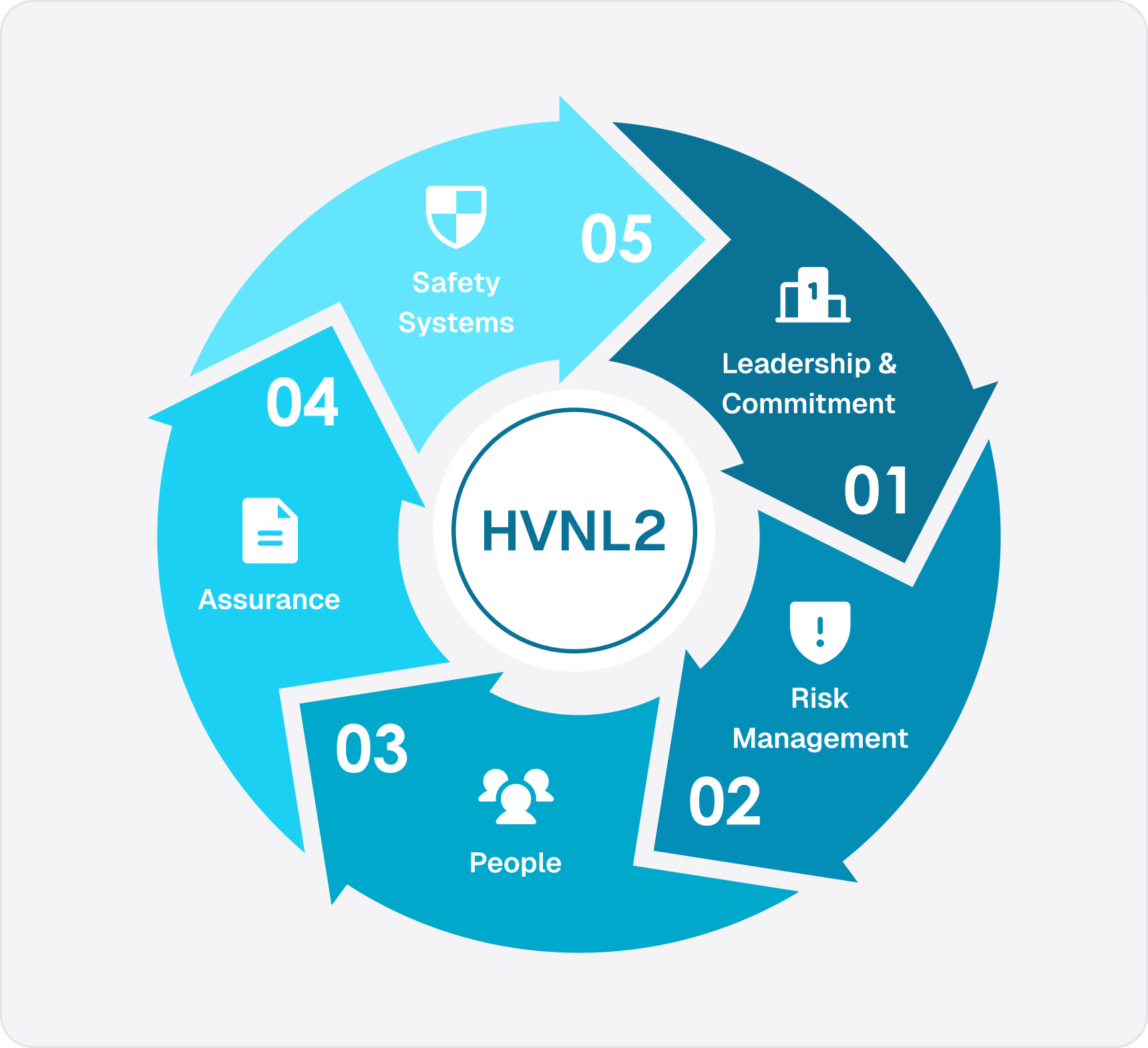
The 5 SMS Outcome Areas
The HVNL reforms introduce a new SMS Standard with 5 mandatory outcome areas. Every heavy vehicle operator will need to demonstrate capability in each area.
- Leadership & Commitment — Active safety leadership and culture
- Risk Management — Systematic hazard identification and control
- People — Competency, fitness-for-duty, training
- Assurance, Monitoring and Improvement — Auditing and continuous improvement
- Safety Systems — Policies, procedures, documentation
Each area is detailed below.
SMS Standard

Leadership & Commitment
What it means:
Senior management must demonstrate active safety leadership and create a positive safety culture.
Key requirements:
- Documented organizational structure with assigned safety roles
- Senior management involvement in SMS reviews
- Safety objectives and KPI tracking
- Protection from reprisal for safety reporting
- Resource allocation for safety activities
- Evidence of safety culture (surveys, feedback)
Evidence examples:
- Board/management meeting minutes discussing safety
- Safety policy signed by senior management
- Safety KPI dashboards reviewed quarterly
- Budget allocations for safety training and equipment
Risk Management
What it means:
Systematic identification, assessment, and control of safety risks across your operations.
Key requirements:
- Hazard identification and reporting system
- Risk assessment methodology (likelihood × severity)
- Risk register documenting all identified risks
- Control effectiveness tracking and review
- Incident investigation and root cause analysis
- Trend analysis to identify emerging risks
Evidence examples:
- Risk register showing all assessed risks
- Hazard reports submitted by drivers/staff
- Incident investigation reports with corrective actions
- Controls library linked to specific risks
- Risk review schedules and completion records
People
What it means:
Ensuring all personnel are competent, fit for duty, and understand their safety responsibilities.
Key requirements:
- Recruitment and induction processes
- Competency assessments for all roles
- Training needs analysis and delivery
- Medical fitness verification
- Fitness-for-duty monitoring
- Communication and consultation processes
Evidence examples:
- Training records and certificates
- Medical certificate repository
- Competency assessment checklists
- Induction completion records
- Daily fitness-for-duty checks
- Toolbox talk attendance records
Assurance, Monitoring and Improvement
What it means:
Monitoring, measuring, and continuously improving your safety management system.
Key requirements:
- Performance monitoring and KPI tracking
- Internal audits and inspections
- Management review cycles
- Corrective action management
- Continuous improvement processes
- Effectiveness measurement
Evidence examples:
- Safety KPI dashboards (breach rates, incidents, compliance %)
- Internal audit schedules and findings
- Corrective action register with closure tracking
- Annual SMS review reports
- Trend charts showing improvement over time
Safety Systems
What it means:
Documented policies, procedures, and operational systems that embed safety into daily operations.
Key requirements:
- Safety policies covering all risk areas
- Standard operating procedures
- Emergency response procedures
- Chain of Responsibility compliance
- Integration with business operations
- Document and records management
Evidence examples:
- Policy library with version control
- Procedure manuals for high-risk tasks
- Chain of Responsibility documentation
- Emergency response plans tested annually
- Document register showing review schedules
How the 5 Areas Connect
The SMS is not 5 separate checklists — the outcome areas are designed to work together as an integrated system.
Leadership sets the direction and resources. Risk Management identifies what needs to be controlled. People ensures staff are competent to execute. Safety Systems embeds the controls into daily operations. Assurance measures whether it's all actually working.
Auditors will look for these connections — evidence that your SMS is a living system, not a collection of standalone documents.
Major Changes from Current HVNL
Area
Current State
HVNL Requirement
Safety Management
Module-based NHVAS accreditation (separate modules for Mass, Maintenance, Fatigue)
Integrated SMS Standard covering all 5 outcome areas in a unified framework
Fatigue Rules
Fixed rules: Standard Hours, BFM, or AFM with prescribed work/rest limits
Flexible Alternative Compliance Hours within outer limits (max 15.5hr work, min 7hr rest)
Accreditation
Fixed scheme types (Basic, Intermediate, Advanced) with module combinations
Risk-based tiers (Baseline and Alternative) based on operator's risk profile and controls
Auditing
Compliance checking: "Do you have this?" (Yes/No)
PSOE effectiveness rating: Present, Suitable, Operating, Effective (scored assessment)
Evidence
Prescribed formats and mandatory documents
Flexible evidence types demonstrating systematic management
Mass Limits
Current general access limits (e.g., tri-axle semi 42.5t)
Increased limits aligned with CML (e.g., tri-axle semi 45.5t) and 20m length limit
Split Rest
Allowed in BFM/AFM with varying rules
Solo drivers only — permitted for problems with sleep, unforeseen circumstances, or emergencies. Minimum 6hrs continuous / 8hrs total rest. Cannot be pre-scheduled. Two-up drivers not eligible.
NHVAS → HVA: Accreditation Transition Guide
From mid-2026, the National Heavy Vehicle Accreditation Scheme (NHVAS) will be progressively replaced by the new Heavy Vehicle Accreditation (HVA) scheme. This is one of the most significant structural changes under HVNL — moving from prescriptive, module-based accreditation to a risk-based safety management framework.
What's Changing
Area
NHVAS (Current)
HVNL Requirement
Scheme Name
National Heavy Vehicle Accreditation Scheme (NHVAS)
Heavy Vehicle Accreditation (HVA)
Managed By
NHVR
NHVR
Structure
Separate modules: Mass, Maintenance, Fatigue (BFM/AFM)
Two-tiered: General Safety Accreditation + Alternative Compliance Accreditation
Core Requirement
Module-specific compliance checklists
Integrated Safety Management System (SMS) covering all 5 outcome areas
Fatigue Options
Standard Hours, BFM, AFM (fixed rule sets)
Baseline Hours + Alternative Compliance Hours (flexible, risk-based)
Audit Approach
Yes/No compliance checks
PSOE effectiveness assessment (Present, Suitable, Operating, Effective)
Transition Timeline

Mid-2026 (targeting 1 July):
HVA scheme commences alongside amended HVNL — subject to Ministerial approval of Standards
Parallel period:
NHVAS and HVA will operate side by side during the transition
Up to 3 years:
Existing NHVAS operators have up to three years to transition to HVA
Option for early movers:
Operators can complete their NHVAS audit before commencement and remain on the current framework until their next audit cycle
Re-Applying After Cancellation or Refusal
The Ministerial Guidelines (s11) set clear rules for operators who have had accreditation cancelled or refused:
Scenario
Consequence
Cancelled — failure to submit required audits
Re-entry at the Regulator's discretion
Cancelled — non-compliance with road transport law
Must demonstrate at least 12 months free of relevant breaches before re-applying
Application refused
Minimum 6-month wait before lodging a new application
All re-applications after cancellation
Full re-assessment against suitability criteria (criminal history, compliance history, audit results)
Sanctions
The Guidelines (s12) introduce a severity-based approach to sanctions:
- The Regulator must consider the severity of the public risk arising from non-compliance when determining sanctions
- Sanctions are graduated — minor issues won't attract the same response as systemic safety failures
- Available sanctions include amendment, suspension, or cancellation of accreditation
- Your accreditation compliance history (previous 5 years of amendments, suspensions, cancellations) is considered in all future accreditation decisions
Accreditation Renewal Periods
- Performance-based renewal periods (s10) — operators with strong compliance history may receive longer accreditation periods
- Renewal applications must be submitted between 6 months and 1 month before expiry
- Renewal audits must be conducted within the 9-month to 1-month window before expiry
- At renewal, the Regulator considers your full compliance history, audit results, and SMS effectiveness
HVA Accreditation Pathways
Tier 1: General Safety Accreditation
The baseline tier — available to all operators
- Demonstrates a functioning SMS meeting the SMS Standard
- Covers all 5 outcome areas (Leadership, Risk Management, People, Assurance, Safety Systems)
- Operates under Baseline fatigue hours (12hr work / 7-day limits)
- Suitable for operators with straightforward, predictable schedules
- Lower administrative burden than Alternative Compliance
Tier 2: Alternative Compliance Accreditation
For operators needing greater flexibility
- Everything in General Safety Accreditation, plus additional risk controls
- Access to Alternative Compliance Hours (up to 15.5hr work day within approved schedules)
- Requires NHVR approval of operator-specific fatigue schedules
- Proposed fatigue schedules assessed using the RCSM (Risk Classification System Matrix) during accreditation
- Higher evidence and monitoring requirements
Additional Accreditation Pathways
In addition to the core tiers, HVA introduces specific accreditation pathways for operators who need to demonstrate compliance in maintenance or mass management. These build on the General Safety Accreditation SMS and add domain-specific requirements.
Maintenance Accreditation (Division 3 / SMS Schedule 2)
For operators demonstrating systematic vehicle maintenance management
- Requires SMS compliance against Schedule 2 of the SMS Standard
- Covers pre-start inspections, defect management, scheduled maintenance, and vehicle safety systems
- Builds on General Safety Accreditation with maintenance-specific evidence requirements
- Demonstrates a systematic approach to keeping vehicles safe and roadworthy
Who needs it:
- Operators seeking formal recognition of maintenance management capability
- Operators who currently hold NHVAS Maintenance Management accreditation
- Fleets where vehicle condition is a key safety risk
ACA-Mass Accreditation (Division 4 / SMS Schedule 3)
For operators seeking access to higher mass limits
- Requires SMS compliance against Schedule 3 of the SMS Standard
- Covers weighing procedures, load restraint, mass monitoring, and overloading prevention
- Accredited operators can access increased mass limits aligned with Concessional Mass Limits (e.g., tri-axle semi from 42.5t to 45.5t)
- Replaces the current NHVAS Mass Management module
Who needs it:
- Operators who want to access higher mass limits under HVNL
- Operators who currently hold NHVAS Mass Management accreditation
- Any operator where maximising payload is commercially important
How the pathways fit together: General Safety Accreditation is the foundation — all operators need it. From there, you can add Alternative Compliance (for fatigue flexibility), Maintenance Accreditation (for formal maintenance recognition), and/or ACA-Mass (for higher mass limits) depending on your operational needs. You can hold multiple accreditations simultaneously.
What Operators Need to Do
- Understand your current position — Review your existing NHVAS accreditation modules and expiry dates
- Decide your timing — Complete your current NHVAS audit before commencement to buy time, or transition early
- Build your SMS — Map your existing NHVAS module documentation to the 5 SMS outcome areas and identify gaps
- Choose your tier — Assess whether General Safety Accreditation or Alternative Compliance suits your operations
- Start collecting evidence — PSOE audits require evidence of systems that are operating and effective over time — this can't be rushed
How Hubfleet Helps with the Transition
Hubfleet's platform is designed around the new HVA framework from the ground up. Your existing Hubfleet data — EWD records, maintenance logs, pre-start inspections, NCRs, training records — already maps to the SMS evidence requirements. For operators transitioning from NHVAS, Hubfleet bridges the gap between module-based compliance and outcome-focused safety management, with pre-built templates, risk registers, and audit-ready evidence bundles covering all 5 outcome areas.
How the pathways fit together: General Safety Accreditation is the foundation — all operators need it. From there, you can add Alternative Compliance (for fatigue flexibility), Maintenance Accreditation (for formal maintenance recognition), and/or ACA-Mass (for higher mass limits) depending on your operational needs. You can hold multiple accreditations simultaneously.
Alternative Compliance Hours Explained
One of the most significant changes is the introduction of Alternative Compliance Hours for fatigue management.
How It Works
Baseline (replaces Standard Hours):
- Available to all operators by default
- Work limit: 12 hours per day, 72 hours per 7 days
- Rest requirements: Minimum 7 hours continuous rest
Alternative Compliance (replaces BFM/AFM):
- Requires NHVR approval and demonstrated risk controls
- Work limit: Up to 15.5 hours per day (operator-specific schedule within limits)
- Rest requirements: Minimum 7 hours continuous rest
- Operator defines schedule based on their specific operations
Key Features
Risk Classification System Matrix (RCSM)
- Used during the accreditation application process to assess the relative fatigue risk of proposed work schedules
- Scores schedules across 3 dimensions and 7 principles: work-related rest breaks, recovery breaks, and reset breaks
- Risk levels: Baseline (0), Low (1), Medium (2), High (3) — higher scores indicate higher fatigue risk
- Higher-risk schedules require stronger SMS controls and may require a safety case
Split Rest Restrictions
- Solo drivers only — two-up drivers are not eligible for split rest
- Only allowed for problems with sleep, unforeseen circumstances, or emergencies
- Cannot be pre-scheduled in rosters
- Minimum 6 hours continuous rest in at least one block, 8 hours total rest
- Usage tracked and reviewed for patterns
Flexibility Within Limits
- Operators design schedules that suit their operations
- Must stay within maximum work and minimum rest limits
- Controls required based on risk assessment
- Regular effectiveness reviews required
PSOE Audit Assessment
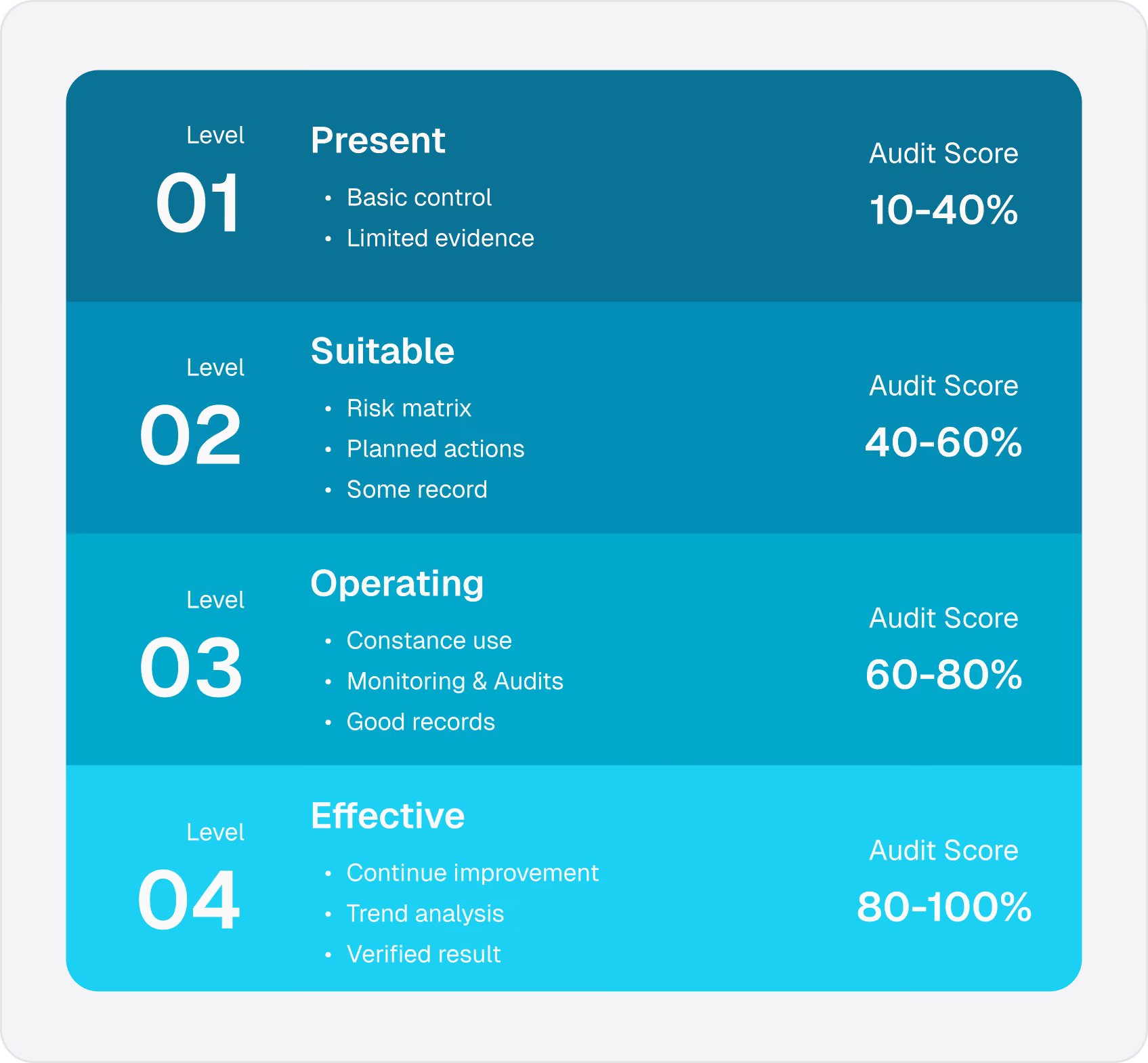
HVNL introduces a new audit methodology: PSOE (Present, Suitable, Operating, Effective).Instead of simple yes/no compliance checks, auditors will assess:

Present
Do you have this documented?
- Is there a policy or procedure?
- Is it formally documented?
- Is it accessible to relevant staff?
Rating: Yes / No

Suitable
Is it appropriate for your operations?
- Is it tailored to your specific risks?
- Does it address your operational context?
- Is it based on risk assessment?
Rating: Not Suitable / Partially Suitable / Fully Suitable

Operating
Are people actually using it?
- Is it implemented consistently?
- Do staff follow procedures?
- Is there evidence of routine use?
Rating: Not Operating / Partially Operating / Fully Operating

Effective
Is it achieving the safety outcome?
- Are safety metrics improving?
- Are incidents reducing?
- Is the control preventing the targeted risk?
Rating: Not Effective / Partially Effective / Fully Effective
Non-conformances will be classified as:
• Major: Significant safety risk or systemic failure (e.g., no fitness-for-duty checks conducted)
• Minor: Isolated deviation or documentation gap (e.g., one missing training record)
Major non-conformances require immediate corrective action and can affect accreditation status.
Why PSOE matters for your business:
Under HVNL, simply having a policy on the shelf is no longer enough. Auditors will score how well your systems actually work in practice. Operators who can demonstrate all four levels — Present, Suitable, Operating, and Effective — will achieve the highest audit ratings and maintain accreditation with confidence.
The key shift: evidence of effectiveness over time, not just documentation. This is why starting early matters — you need 6-12 months of operational data to demonstrate the "Operating" and "Effective" levels.
Download the Full Checklist
We've created a comprehensive, printable HVNL Compliance Checklist with a Hubfleet Accelerator column showing how to compress 12+ months of implementation into weeks. Share it with your safety manager, operations manager, and leadership team.
Download HVNL Compliance Checklist
Your HVNL Compliance Checklist
The checklist covers 4 phases with 30+ action items across leadership, risk management, people systems, fatigue management, audit preparation, and commencement readiness — plus a Hubfleet Accelerator column showing how each step is compressed from months to weeks.
It also includes a PSOE Evidence Scorecard so you can rate your SMS against all 5 outcome areas.
What's in the checklist:
- Phase 1 — Understanding & Assessment: Leadership commitment, gap analysis, policy framework
- Phase 2 — Core Implementation: Risk management, people systems, operational procedures, fatigue management
- Phase 3 — Performance Monitoring: KPI dashboards, audit preparation, continuous improvement, documentation
- Phase 4 — Commencement Readiness: Staff training, system testing, final verification
Implementation Timeline
The Hubfleet Accelerator:
Weeks, Not Months
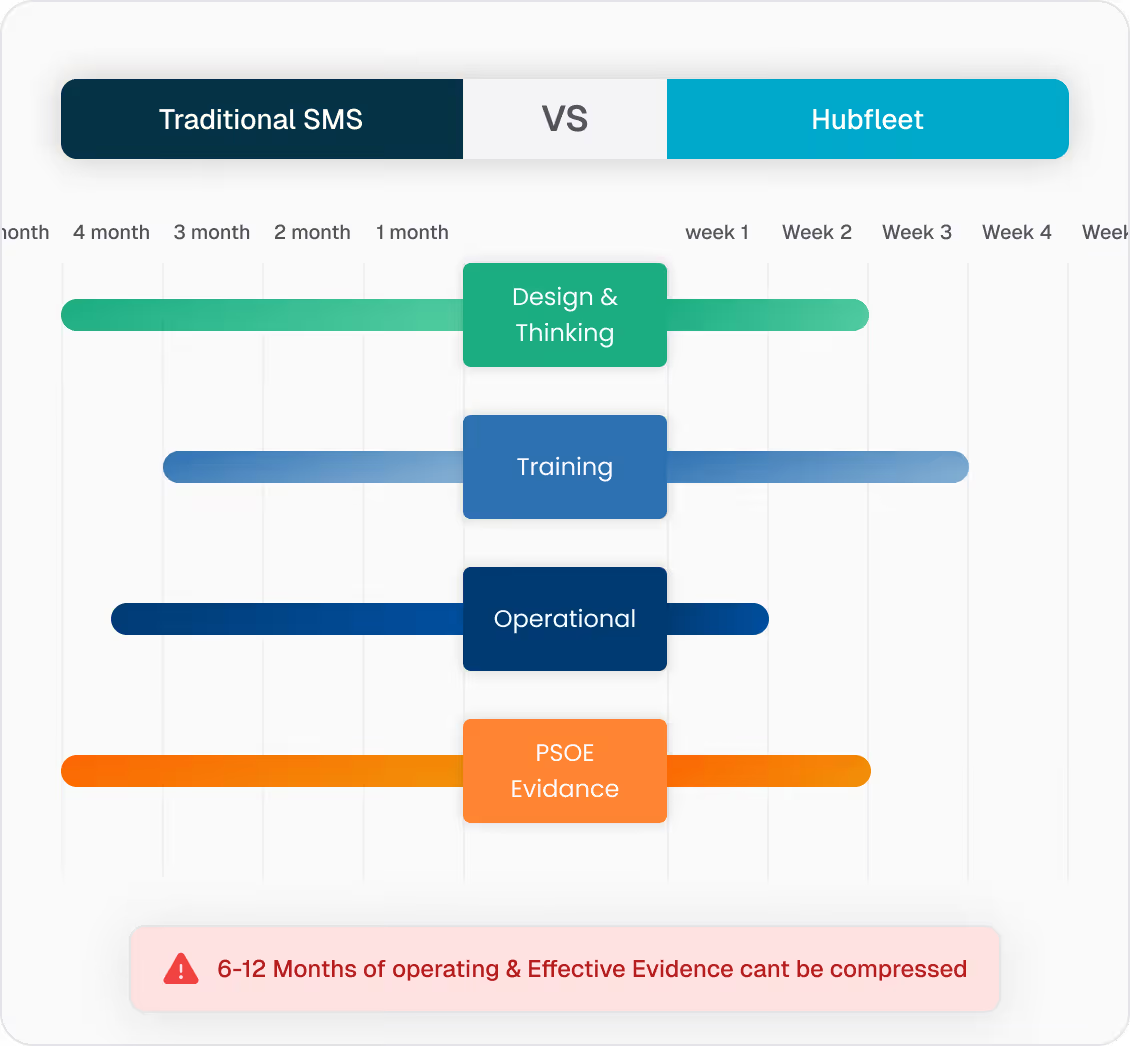
The timeline below reflects building an SMS from scratch using manual processes, consultants, and paper-based systems. With Hubfleet's pre-built HVNL compliance framework, you can compress months of setup into weeks:
- System setup & configuration: 2-4 weeks (not 3-6 months)
- Driver & supervisor training: 1-2 weeks (not months of manual development)
- Full SMS operational: 4-8 weeks from sign-up
- Audit-ready evidence collecting automatically from day one
The only timeline you can't compress is PSOE "Operating" and "Effective" evidence — that requires 6-12 months of real operational data. Start now and your SMS is collecting evidence while competitors are still planning.
The numbers speak for themselves:
- Traditional SMS build: 12-18 months with consultants, spreadsheets, and manual processes
- With Hubfleet: 4-8 weeks to a fully operational SMS
- Audit prep: 30 minutes vs 4-6 weeks of manual compilation
- The one thing you can't compress: 6-12 months of PSOE "Operating" and "Effective" evidence — which is why starting now is critical
See the detailed phase-by-phase breakdown below.
Implementation Timeline: Traditional vs Hubfleet
Phase
Traditional Approach
HVNL Requirement
System design & setup
3-6 months (manual processes, consultant engagement, spreadsheet systems)
2-4 weeks (pre-built SMS framework, policy templates, risk register templates, inspection checklists ready to customise)
Training & rollout
2-3 months (developing training materials, classroom sessions, manual competency tracking)
1-2 weeks (intuitive mobile app, in-app guidance, drivers operational within hours of download)
Fully operational SMS
6-9 months
4-8 weeks
Evidence collection for PSOE
6-12 months (manual record-keeping, retrospective evidence gathering)
6-12 months (same timeline — but evidence collects automatically from day one with GPS-verified, timestamped records)
Audit preparation
4-6 weeks of manual document compilation
30 minutes (one-click export of audit-ready evidence bundles)
Total time to compliance-ready
12-18 months
4-8 weeks to operational + 6-12 months evidence = ready in half the time
The Bottom Line: Operators who start with Hubfleet today (February 2026) will be fully operational within weeks and collecting PSOE evidence months before HVNL commencement. Operators building from scratch may still be in the design phase when compliance becomes mandatory.
Industry & Topic Guides
HVNL applies to every heavy vehicle operator, but every industry has unique compliance challenges. We've created in-depth guides tailored to specific sectors and compliance topics.
Industry Guides
Deep-dive compliance guides for your specific sector — each covers industry-specific risks, SMS integration, implementation roadmaps, ROI analysis, and case studies.
- Agriculture & Livestock Transport — Seasonal peaks, animal welfare vs fatigue, remote operations, grain mass management
- Interstate Linehaul — Cross-border compliance, multi-day trips, remote connectivity, timezone management
- Bus & Coach Operations — Passenger transport, scheduled services, driver welfare, public safety
- Construction & Earthmoving— Site access, oversize loads, multi-employer coordination, project-based operations
- Urban & Metro Delivery — Last-mile delivery, traffic congestion, multi-drop fatigue, fleet diversity
- Waste & Recycling — Repetitive routes, early starts, compactor operations, public interaction
- Western Australia & Cross-Border — WA-specific regulations, HVNL transition, cross-border permit complexity
Topic Guides
Focused guides on specific HVNL compliance areas — useful for any industry.
- HVNL Reform Regulatory Analysis — Comprehensive legislative breakdown and side-by-side comparison
- Fatigue Management Best Practices — Alternative Compliance, RCSM, roster design, breach prevention
- Maintenance Management — Vehicle safety systems, defect management, pre-start inspections
- Mass Management & Permits— Mass limits, weighing, oversize/overmass permits
- Implementation Roadmap — Step-by-step HVNL preparation timeline
- Training & Competency Assessment — Driver training, fitness-for-duty, competency frameworks
- SMS Implementation Cost Guide — Budgeting, ROI analysis, cost comparison
Common Implementation Challenges
Challenge 1:
Evidence Organization
Problem
Operators have safety processes but can't prove them to auditors.
Solution:
- Implement digital document management
- Tag documents to SMS requirements
- Create audit-ready evidence bundles
- Train staff on documentation standards
Challenge 2:
Transitioning from Modules to SMS
Problem
Current NHVAS accreditation is module-based; SMS is outcome-focused.
Solution:
- Map existing modules to 5 SMS outcome areas
- Identify gaps where modules don't cover outcomes
- Integrate separate systems into unified SMS
- Show connections between outcome areas
Challenge 3:
Demonstrating Effectiveness
Problem
Having policies is not enough; must prove they work.
Solution:
- Define KPIs for each SMS outcome area
- Collect baseline data before commencement
- Track trends month-over-month
- Use data to drive continuous improvement
Challenge 4:
Resource Constraints
Problem
Small operators struggle with time and expertise for SMS implementation.
Solution:
- Start with highest-priority outcome areas
- Use industry templates and examples
- Leverage technology for automation
- Consider consultant support for gap areas
Challenge 5:
Alternative Compliance Application
Problem
Uncertainty about qualifying for Alternative Compliance Hours.
Solution:
- Assess your risk profile honestly
- Document existing controls thoroughly
- Show evidence of control effectiveness
- Start with Baseline if unsure, upgrade later
How Hubfleet Supports HVNL Compliance
Hubfleet is purpose-built to support the new HVNL requirements with an integrated digital SMS platform — designed to get you compliant fast. Features below represent Hubfleet's HVNL-ready platform, with SMS capabilities rolling out ahead of mid-2026 commencement.
Implementation Speed: 4-8 weeks to a fully operational SMS — not 6-12 months. Pre-built HVNL policy templates, risk registers, inspection checklists, and training modules mean you configure and customise, not build from scratch.






Evidence Management
- Auto-generated evidence bundles mapped to SMS requirements
- Audit-ready exports organized by outcome area
- Complete audit trail for all safety decisions and changes
- PSOE self-assessment tool to test your readiness
Gap Analysis Tool
- - Interactive checklist of all SMS evidence requirements
- - Status indicators: Met, Partial, Missing
- - Visual heat map showing compliance coverage
- - Readiness score with actionable recommendations
See your compliance status at a glance
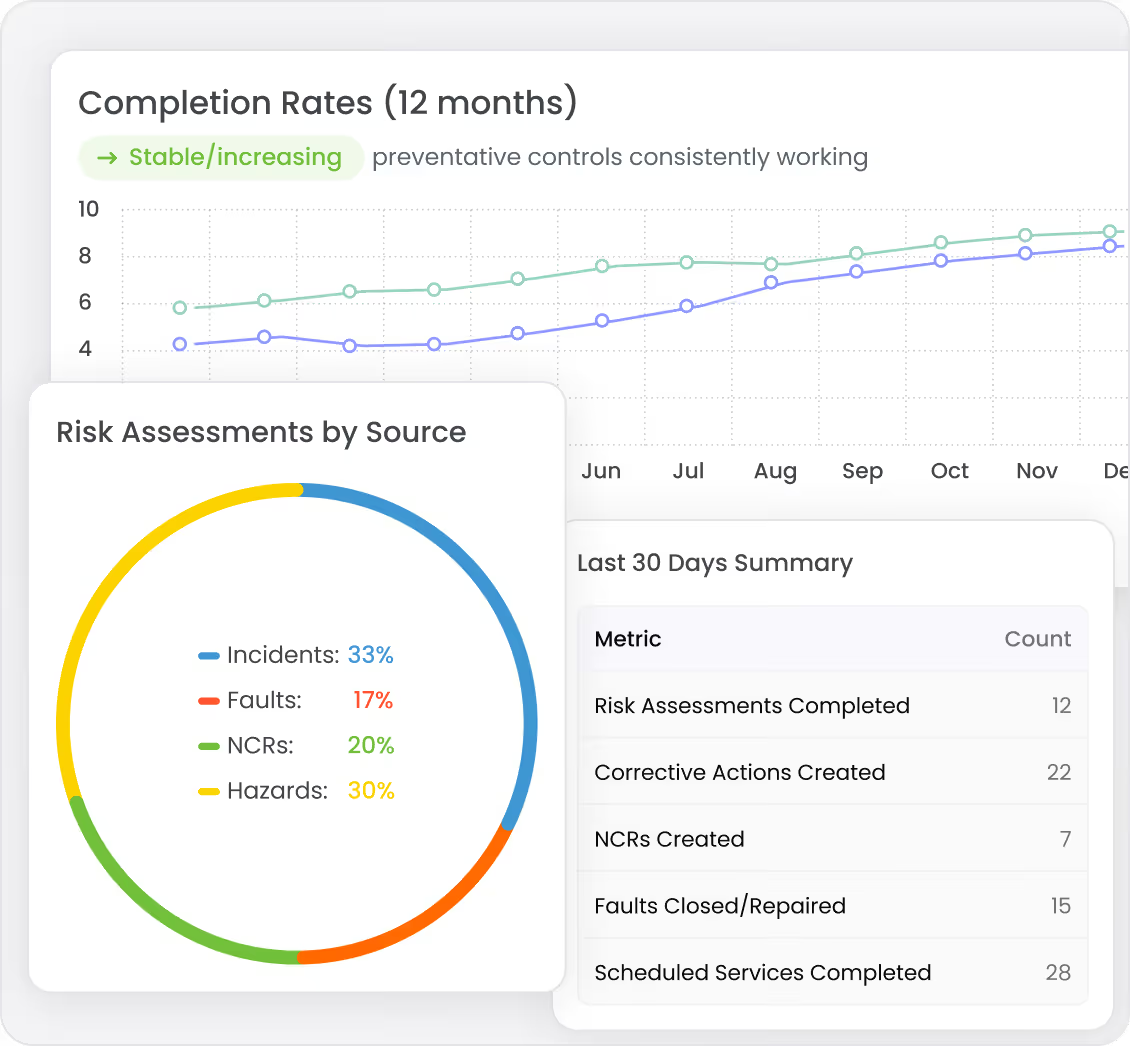
Hubfleet's SMS dashboard gives you real-time visibility across all 5 outcome areas. Track KPIs, monitor audit readiness, and export evidence bundles — all from one screen. No more digging through folders or chasing paperwork before an audit.
- Real-time compliance score across all 5 SMS areas
- Automated evidence collection from day one
- One-click audit-ready export bundles
- PSOE self-assessment to track your maturity
Frequently asked questions
When does HVNL commence?
Expected mid-2026. Final commencement date to be confirmed by the Australian Government.
Do I need to get new accreditation?
Existing NHVAS accreditations will transition to the new framework. The transition process and any required updates will be communicated by NHVR as commencement approaches.
Can I keep using BFM/AFM?
BFM and AFM as we know them will be replaced by Alternative Compliance Hours. If you currently use BFM/AFM, you'll likely qualify for Alternative Compliance by demonstrating your existing controls.
How much will SMS implementation cost?
Costs vary by fleet size and current systems. Key investments include:
- Digital SMS platform (if not already using)
- Staff training time
- Policy development (if using consultants)
- Internal audit costs
Many existing safety practices can be leveraged; the focus is on documentation and systematic management rather than building from scratch.
- Digital SMS platform (if not already using)
- Staff training time
- Policy development (if using consultants)
- Internal audit costs
Many existing safety practices can be leveraged; the focus is on documentation and systematic management rather than building from scratch.
What if I'm not ready by commencement?
Operators must comply from day one. NHVR will provide transition guidance and may offer grace periods for minor issues, but major non-conformances can affect your ability to operate. Start preparing now to avoid rushed implementation.
Can small fleets meet SMS requirements?
Yes. SMS scales to fleet size and risk profile. A small operator with simple operations needs less complex systems than a large multi-site operator. The key is having systematic management appropriate to your risks.
Do I need Alternative Compliance or is Baseline enough?
Use Baseline if:
- You operate within 12hr work / 7-day week limits
- You have simple, predictable schedules
- You want minimal administrative burden
Consider Alternative Compliance if:
- You need flexibility for longer work days
- You operate in specialized industries (mining, agriculture)
- You have demonstrated risk controls
- You're willing to implement RCSM and additional monitoring
- You operate within 12hr work / 7-day week limits
- You have simple, predictable schedules
- You want minimal administrative burden
Consider Alternative Compliance if:
- You need flexibility for longer work days
- You operate in specialized industries (mining, agriculture)
- You have demonstrated risk controls
- You're willing to implement RCSM and additional monitoring
Where can I get help?
- NHVR: Official guidance, information sessions, consultation documents
- Industry associations: Sector-specific advice and templates
- Consultants: Gap analysis, SMS design, audit preparation
- Technology providers: Digital systems like Hubfleet for SMS management
- Industry associations: Sector-specific advice and templates
- Consultants: Gap analysis, SMS design, audit preparation
- Technology providers: Digital systems like Hubfleet for SMS management
Get Started in Days, Not Months
Free guides, tools, and frameworks to start preparing for HVNL today — built by Australian compliance specialists and trusted by 500+ fleets.

HVNL Compliance Guide
What HVNL means for your fleet — explained in plain English
- All 5 SMS outcome areas explained
- Implementation timeline & milestones
- Fleet preparation checklist
- Gap assessment framework
- Change summary from current HVNL
Read the Guide

HVNL Compliance Toolkit
Free downloadable templates to start preparing today.
- Gap analysis template (5 outcome areas)
- Pre-audit readiness checklist
- SMS implementation tracker
- PSOE evidence mapping
- Implementation timeline template
Get the Free Toolkit

Audit Preparation Guide
The questions NHVR auditors ask — and where to find your answers.
- Common auditor questions by outcome area
- Direct answers showing where evidence sits in Hubfleet
- PSOE framework explained
- Audit-day preparation checklist
- Real auditor scenarios
Read the Audit Guide

Stay Updated
HVNL guidance is evolving as we approach commencement. Stay informed:
Subscribe to our HVNL newsletter for monthly updates
Join our webinar series covering each SMS outcome area
Access our blog for implementation tips and case studies
Download the Hubfleet Help Centre for detailed product guidance
Questions about HVNL compliance?

Start Free Trial
Recommended for most fleets
Best if you're ready to get drivers logging now and explore Hubfleet at your own pace.

Full platform access — every feature, no limits
Drivers can start on EWD today
Real EWD, SMS, and compliance reporting from day one
No upfront costs · No lock-in contract
Start Free Trial

Book your Demo
Best for larger fleets or complex setups
Best if you've got specific integration questions, multiple sites, or want a tailored walkthrough first.
Tailored to your fleet and use case
30 minutes with a Hubfleet specialist
See the platform mapped against your fleet's compliance obligations
Get HVNL and SMS questions answered live
Book your 30-Minute Demo
Want to see plans first?
500+ Australian operators
NHVR approved
Free trial
Australian-based support
Disclaimer: This guide provides general information about HVNL reforms based on available consultation documents and draft regulations as of February 2026. Requirements may change before final commencement. Always refer to official NHVR guidance and seek legal/compliance advice for your specific circumstances. Your legal obligations remain your own.