


Home
Solutions

Non-Conformance Reporting (NCR)

Close the Loop on Every Safety Event — Systematically

Hubfleet's NCR module turns every flagged fatigue breach, GPS discrepancy, failed pre-start, or mass record issue into a documented, closed-loop investigation — with one-click creation, automatic evidence capture, driver acceptance, and corrective action tracking ready for HVNL reforms audits.
One-Click NCR Creation | Automatic Evidence Capture | Driver Acceptance | Audit-Ready
Icon
Raise an NCR in one click from any flagged event
Icon
 Investigate with full context — breach data, GPS, pre-start, mass
Icon
Prove corrective actions worked with a complete audit trail

Turn every non-conformance into a documented improvement:

Icon
One-click + NCR button next to any flagged event — breach, GPS discrepancy, missed pre-start, or mass record
Icon
Context-specific evidence pulled in automatically — work/rest data, GPS location, speed, breach reasons
Icon
Structured investigation workflow with risk rating, corrective actions, and closeout
Icon
Driver acknowledgment and acceptance built into every NCR
Icon
Audit-ready evidence demonstrating systematic response to non-conformance
Icon of a document with a user profile symbol in front.
For Safety Managers
Icon
Investigate non-conformances with full context — breach data, work diary history, GPS records
Icon
Track corrective actions through to completion and verify effectiveness
Icon
Demonstrate a systematic closed-loop process to auditors
Icon
Identify recurring non-conformance patterns across drivers, routes, or shifts
Icon of a smartphone with a steering wheel in front, symbolizing a mobile driving or car control app.
For Drivers & Operators
Icon
Receive clear notification when an NCR is raised against your record
Icon
Review the details and accept the NCR directly in the mobile app
Icon
Understand what happened, why it matters, and what corrective actions are required
Icon
Maintain a transparent record of your response and acknowledgment
Icon of a user silhouette with a small gear symbol representing user settings.
For Management
Icon
See how your organisation responds when controls fail — not just that they failed
Icon
Use NCR data to measure whether corrective actions are reducing repeat incidents
Icon
Meet HVNL Reform Compliance Guide Outcome Area 4 requirements for systematic safety processes
Icon
Demonstrate due diligence with a complete investigation trail for every event
Learn more about executive obligations under HVNL reforms
For Transport Executives
See the full setup playbook
How to Build Your SMS in Hubfleet
What Triggers an NCR?

One-Click NCR Creation — Integrated Across Your Modules

The Problem We Solve:
When a safety control fails — a driver breaches fatigue limits, a GPS cross-check reveals a discrepancy, or a vehicle fails a pre-start inspection — most operators handle it informally. A phone call, a verbal warning, maybe a note in a spreadsheet. There's no structured process, no documented investigation, and no evidence that the issue was properly addressed. When auditors ask "what did you do about it?", there's nothing to show.
With Hubfleet:
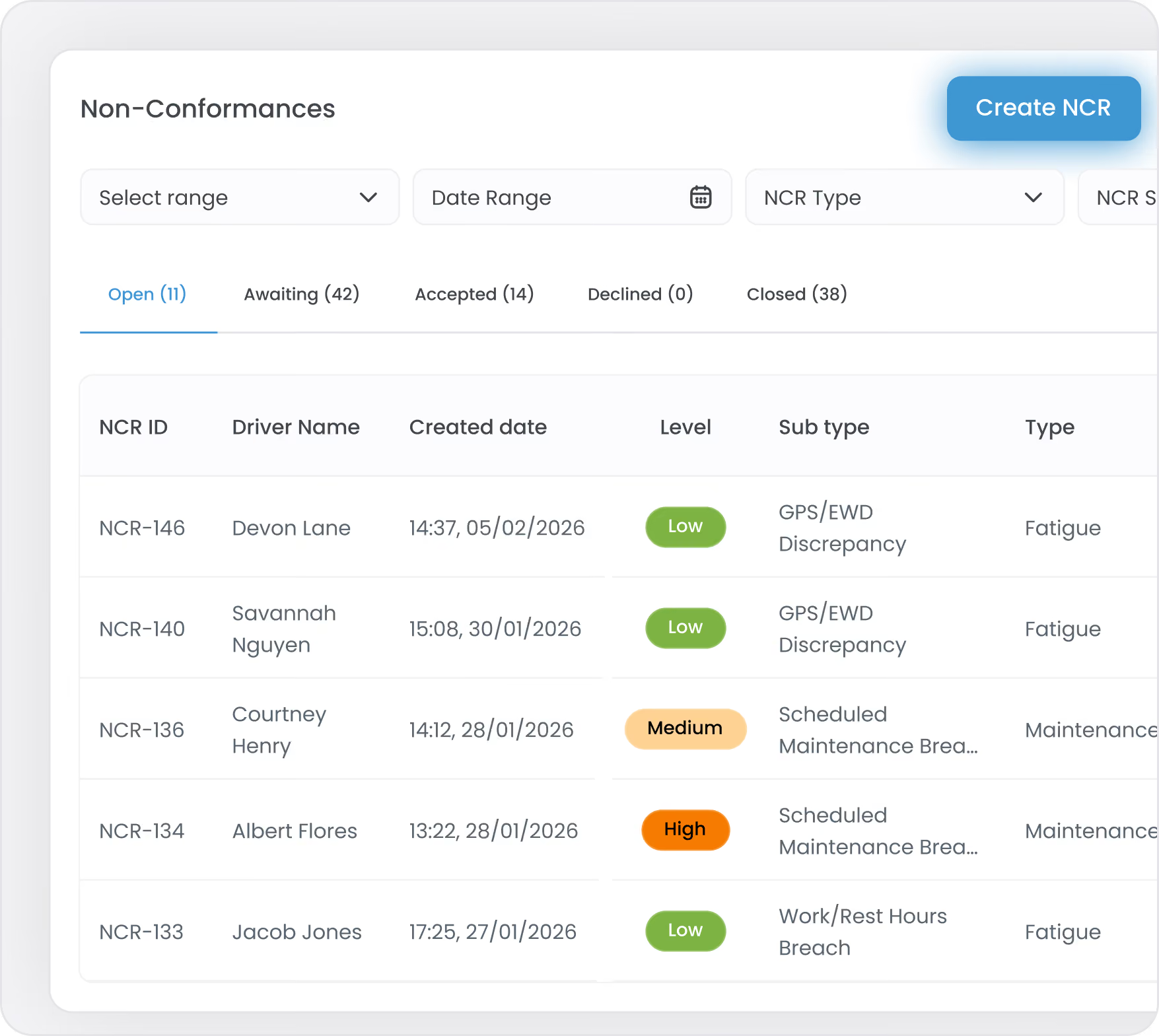
Hubfleet flags non-conformances across your connected modules. When you see a flagged event, click the + NCR button right next to it. Hubfleet instantly creates the NCR and pulls in all context-specific evidence automatically — no copying, no cross-referencing, no searching for data.
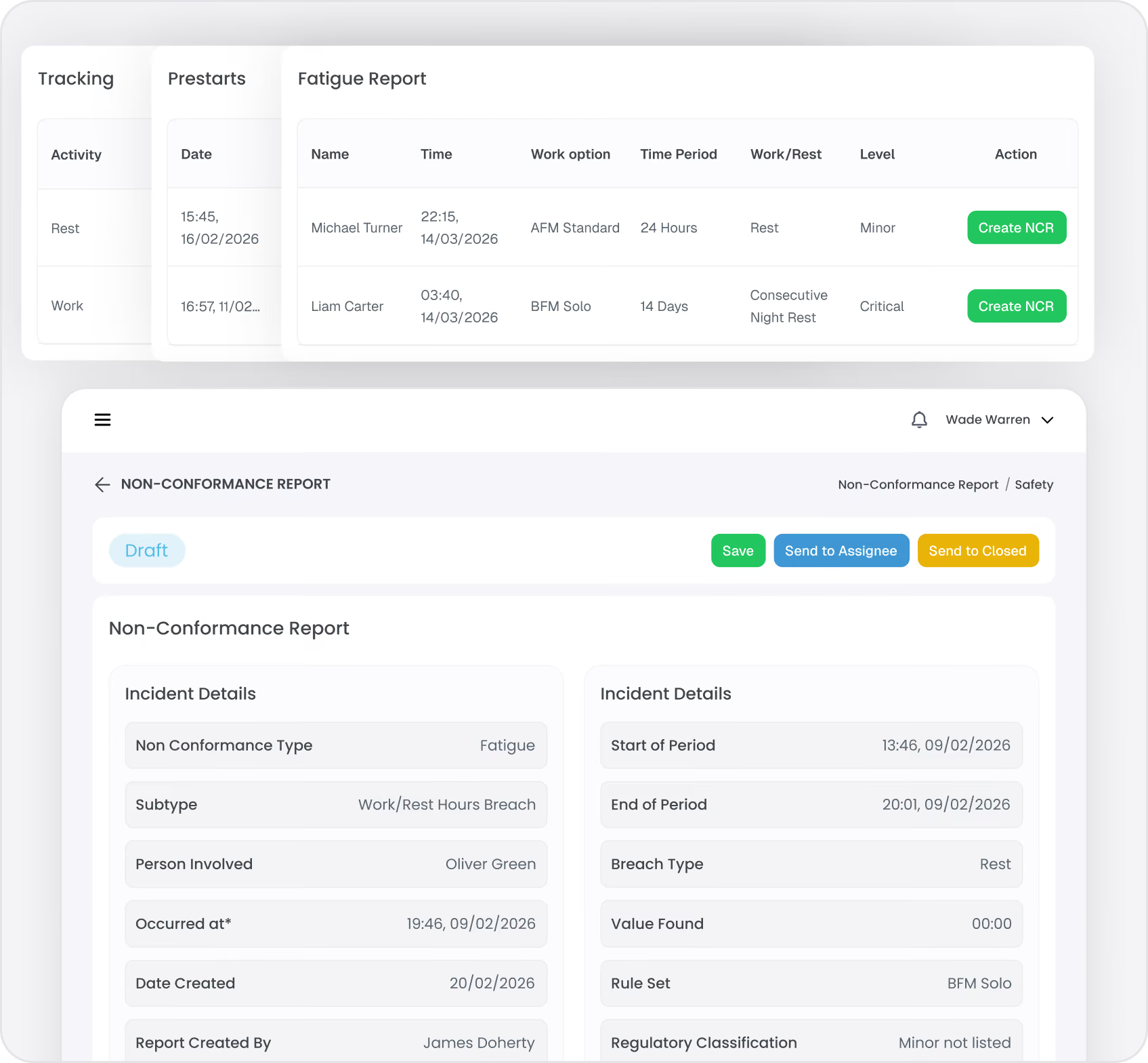
Click + NCR next to any fatigue breach. The NCR is pre-populated with the breach level, the rule set the driver was operating under, and the complete work/rest pattern leading up to the breach. Investigators can see exactly what happened — not just that a breach occurred, but why it occurred and whether existing controls (schedule checking, shift-start simulations, alerts) failed to prevent it.
Click + NCR next to any GPS cross-check discrepancy — whether a driver moved while recorded as resting, or declared and actual locations don't match. The NCR is created with the driver's declared status, GPS timeline, speed, and location data attached, providing objective evidence for investigation rather than relying on verbal explanations.
Pre-Start Inspections (Maintenance Management)
Click + NCR next to a failed pre-start item. The NCR is linked to the specific vehicle, the defect identified, and the inspection record — connecting maintenance non-conformances to the vehicle and fleet management systems.
Click + NCR next to a mass record issue. Load details, weighbridge data, and vehicle information are linked directly. Mass non-conformances — overloading events, dimension breaches, or load restraint failures — are documented with full context from the mass record.
General Safety Issues:​
Not every non-conformance comes from a system-flagged event. Safety managers can create NCRs manually for any safety concern — policy violations, procedural failures, near-misses, or other issues identified through observation or reporting. These NCRs follow the same structured workflow. While evidence isn't pulled in automatically, users can add free-text descriptions and upload documents and photos directly to the NCR as supporting evidence.
Every NCR is created with source data attached — the specific event record, GPS log, pre-start result, mass record, or uploaded evidence. Investigators don't need to go searching for context; it's all linked from the moment the NCR is created.
The NCR Workflow

From Detection to Resolution — Every Step Documented

A Closed-Loop Process:
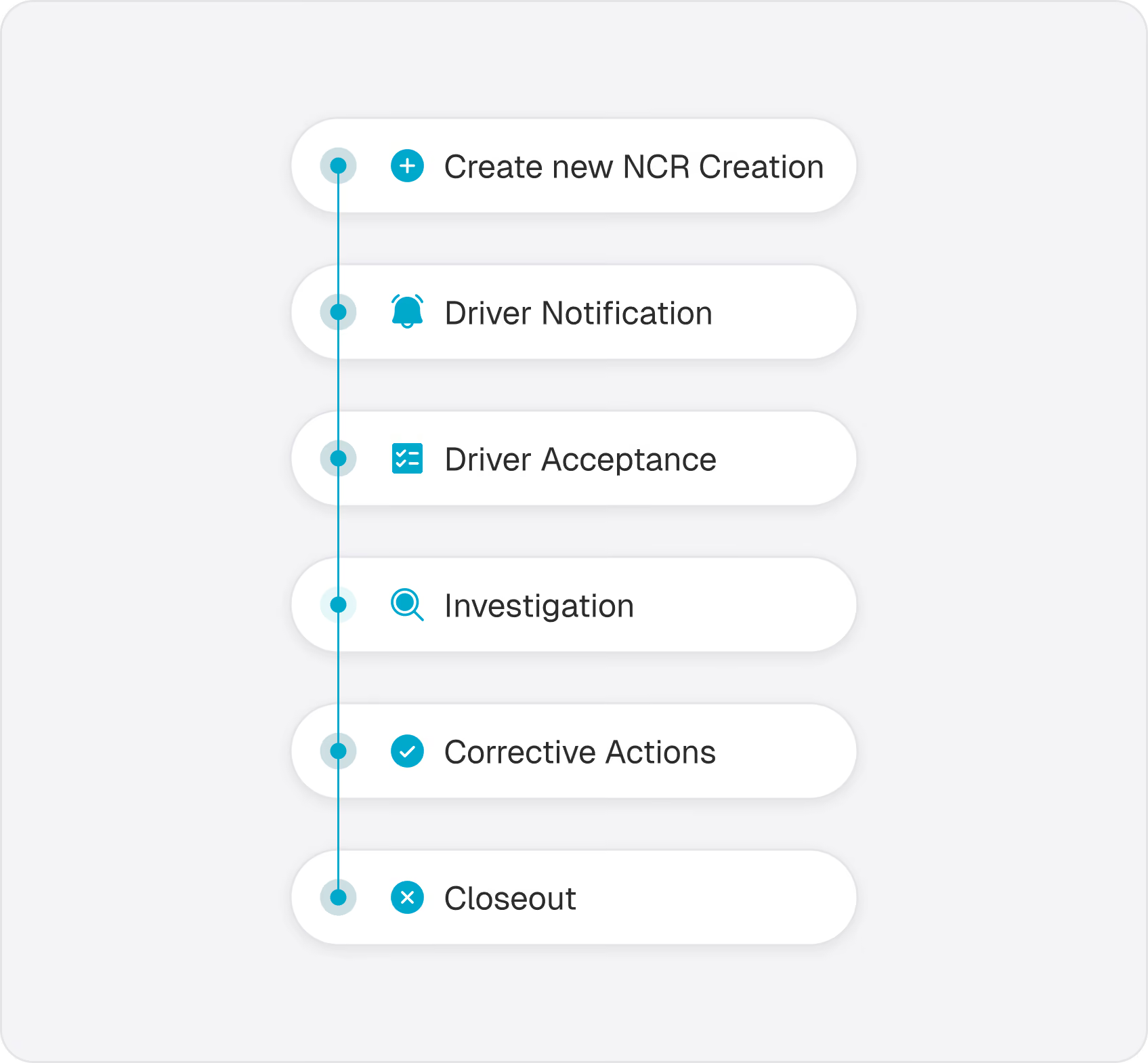
Hubfleet's NCR workflow ensures every non-conformance follows the same structured path from identification through to closeout. Each step is timestamped and recorded, creating a complete audit trail.
1. Creation
A safety manager clicks + NCR next to a flagged event in the web portal — or creates one manually from scratch. Either way, the NCR is populated with full context: what happened, when, which driver or vehicle was involved, and all source data from the triggering event. Each NCR includes a risk rating to prioritise investigation and response.
2. Driver Notification
The driver is notified of the NCR through the mobile app. They can see the details of the non-conformance — what was detected, when it occurred, and what evidence is attached.
3. Driver Acceptance
The driver reviews the NCR and accepts it, acknowledging the non-conformance. This step is critical for audits — it demonstrates that the driver was informed and engaged in the process, not just disciplined after the fact.
4. Investigation
Safety managers investigate the root cause. Was it a scheduling issue? A training gap? An unavoidable operational circumstance? The investigation is documented within the NCR with findings and contributing factors.
5. Corrective Actions
Based on the investigation, corrective actions are assigned — retraining, roster adjustments, process changes, or other measures. Each corrective action is tracked with an owner and completion status, and recorded in the Actions Register.
6. Closeout
Once corrective actions are completed and verified, the NCR is closed. The complete record — from trigger to resolution — is retained for audit evidence and trend analysis.

HVNL reforms Compliance: Why NCRs Matter

The Regulatory Expectation for Systematic Non-Conformance Management

Under HVNL reforms, having safety controls in place is only part of the picture. Auditors also want to see what happens when those controls fail. NCRs are the mechanism that demonstrates your organisation identifies non-conformances, investigates root causes, implements corrective actions, and verifies they work. Without a systematic NCR process, you can't demonstrate the "Operating" and "Effective" elements of PSOE.

Blue shield icon with a gray checkmark inside, symbolizing safety or security.
Outcome Area 4: Safety Systems & Processes (Safety Management System)
NCRs are a core safety system under HVNL reforms:
  • Documented Processes: A repeatable, structured workflow for handling every non-conformance — not ad hoc responses
  • Operational Controls: Flagged events with one-click NCR creation ensure non-conformances aren't missed or ignored
  • Record Keeping: Complete audit trail from trigger through investigation to closeout
  • Continuous Improvement: NCR trend data feeds back into risk assessments and control reviews
Blue gauge icon with a triangular warning symbol and an exclamation mark in the center.
Outcome Area 2: Risk Management
NCRs close the loop on risk controls:
  • Control Effectiveness: If breaches keep occurring despite schedule checking and alerts, NCR data shows your controls need strengthening
  • Hazard Identification: Recurring NCR patterns reveal systemic hazards (specific routes, shift types, or operational pressures)
  • Risk Review: NCR trends provide objective data for periodic risk assessment reviews
Icon of three blue human figures surrounding and connected to a central circle, representing a team or network.
Outcome Area 3: People & Competency
NCRs support workforce management:
  • Training Needs: NCR investigations often identify training gaps — these feed directly into Training & Competency Assessment (SMS add-on)
  • Driver Engagement: The acceptance step ensures drivers are part of the process, not just subject to it
  • Competency Evidence: Corrective actions linked to retraining demonstrate you address individual competency gaps
PSOE (Present, Suitable, Operating, Effective) Checklist
Icon of a document with a shield symbol in front, representing document security or protection.
Present
Systematic NCR process covering fatigue breaches, GPS discrepancies, pre-start failures, mass record issues, and general safety concerns  
Blue gear icon with a shield symbol indicating security or protection.
Suitable
Integrated with the modules that generate non-conformances — NCRs carry full context from source
Two overlapping gear icons, one large blue gear behind a smaller black gear.
Operating
Flagged events, one-click NCR creation with automatic evidence capture, driver notifications, and structured investigation workflow ensure consistent use
Arrow hitting the bullseye of a blue target.
Effective
Corrective action tracking, closeout verification, and trend analysis demonstrate non-conformances are being resolved and reduced over time
Audit Readiness : Evidence You Can Generate
Comprehensive NCR reports for audits:
Icon
Total NCRs raised by type, source, and time period
Icon
Investigation completion rates and average time to resolution
Icon
Corrective actions implemented and their outcomes
Icon
Driver acknowledgment and acceptance built into every NCR
Icon
Trend analysis showing whether non-conformance rates are improving
Icon
Links to source records (breach data, GPS logs, pre-start results) for every NCR
Get Started in Days, Not Months
Free guides, tools, and frameworks to start preparing for HVNL today — built by Australian compliance specialists and trusted by 500+ fleets.
Blue binder or folder with three horizontal black lines on the front cover.
HVNL Compliance Guide
What HVNL means for your fleet — explained in plain English
  • All 5 SMS outcome areas explained
  • Implementation timeline & milestones
  • Fleet preparation checklist
  • Gap assessment framework
  • Change summary from current HVNL
Read the Guide
HVNL Compliance Toolkit
Free downloadable templates to start preparing today.
  • Gap analysis template (5 outcome areas)
  • Pre-audit readiness checklist
  • SMS implementation tracker
  • PSOE evidence mapping
  • Implementation timeline template
Get the Free Toolkit
Audit Preparation Guide
The questions NHVR auditors ask — and where to find your answers.
  • Common auditor questions by outcome area
  • Direct answers showing where evidence sits in Hubfleet
  • PSOE framework explained
  • Audit-day preparation checklist
  • Real auditor scenarios
Read the Audit Guide

Common Questions

What types of events generate NCRs?
Hubfleet flags events like @Fatigue Management breaches, @Real-Time Telematics discrepancies, failed @Maintenance Management, and @Mass Management record issues. Click + NCR next to any flagged event to create an NCR with all relevant evidence pulled in automatically. NCRs can also be created manually by safety managers for any non-conformance — the + NCR button simply speeds up the process and ensures evidence is attached from the start.
Do drivers have to accept NCRs?
Yes. We'll import historical service records to maintain accurate maintenance tracking from day one.
How do NCRs connect to fatigue breach data?
Yes. We'll import historical service records to maintain accurate maintenance tracking from day one.
What corrective actions can be assigned from an NCR?
Yes. We'll import historical service records to maintain accurate maintenance tracking from day one.
Is there reporting for audit purposes?
Yes. We'll import historical service records to maintain accurate maintenance tracking from day one.
Do we need NCRs if we already have Incident Reports?
Yes. We'll import historical service records to maintain accurate maintenance tracking from day one.

Ready to Close the Loop on Non-Conformance?

Stylized blue paper airplane icon with shadow on transparent background.
Start Free Trial
Recommended for most fleets
Best if you're ready to get drivers logging now and explore Hubfleet at your own pace.
Icon
Full platform access — every feature, no limits
Icon
Drivers can start on EWD today
Icon
Real EWD, SMS, and compliance reporting from day one
Icon
No upfront costs · No lock-in contract
Start Free Trial
Icon of a calendar with blue top binder and dark gray date display area.
Book your Demo
Best for larger fleets or complex setups
Best if you've got specific integration questions, multiple sites, or want a tailored walkthrough first.
Icon
Tailored to your fleet and use case
Icon
30 minutes with a Hubfleet specialist
Icon
See the platform mapped against your fleet's compliance obligations
Icon
Get HVNL and SMS questions answered live
Book your 30-Minute Demo
Want to see plans first?
Icon
500+ Australian operators
Icon
NHVR approved
Icon
Free trial
Icon
Australian-based support