

Fatigue Management Best Practices for HVNL reforms
Practical guide to integrating fatigue management across your SMS, designing safer rosters, and implementing fitness-for-duty processes
HVNL reforms replaces BFM and AFM with a unified Alternative Compliance Hours framework integrated into mandatory Safety Management Systems. This page covers the practical side: how to embed fatigue management across your SMS, what controls to implement by operator size, how to design safer rosters, and how to run effective fitness-for-duty processes.

Legislative Background
This guide focuses on practical implementation — what to do, not what the law says. For the regulatory framework, see:
- HVNL Reform Regulatory Analysis — Full legislative breakdown with side-by-side comparisons and penalty analysis
- Fatigue Management Alternative Compliance — Alternative Compliance Hours, outer limits, RCSM, split rest controls, and pre-defined rule sets
- HVNL Reform Compliance Guide — Implementation timeline, 5 SMS outcome areas, and compliance checklist
Part 1
SMS Integration — Fatigue Management Across All 5 Outcome Areas
HVNL reforms requires fatigue management to be systematically integrated across all 5 SMS outcome areas, not treated as standalone module.
SMS Outcome Area 1: Leadership and Commitment
What HVNL reforms Requires:
Senior management must demonstrate visible commitment to fatigue risk management through safety objectives, resource allocation, policy ownership, and cultural leadership.
Fatigue-Specific Leadership Actions:
- Safety Objectives: Set measurable fatigue management objectives (e.g., "Reduce fatigue breaches by 50% within 12 months," "Achieve 95% roster compliance with RCSM Low/Medium risk ratings," "Zero high-risk fatigue incidents"). Track progress monthly in management reviews.
- Resource Allocation: Provide adequate resources for fatigue management — EWD system, scheduling software, roster design expertise, fatigue training programs, driver rest facilities. Budget for fatigue controls (accommodation, relief drivers, schedule buffers).
- Policy Ownership: CEO/Director personally signs and champions Fatigue Management Policy. Policy covers all work/rest rules (Baseline and Alternative Compliance), RCSM requirements, fitness-for-duty obligations, driver rights to refuse unsafe work.
- Cultural Leadership: Management visibly prioritizes safety over schedule pressure. "No reprisal" policy for drivers reporting fatigue or refusing to drive when impaired. Fatigue incidents investigated without blame focus — root cause analysis identifies system failures, not driver failures.
- Management Review: Quarterly reviews of fatigue metrics, breach trends, roster risk scores, RCSM outcomes, incident analysis. Management accountable for corrective actions when fatigue trends deteriorate.[4]
Example Documentation:
- Fatigue Management Policy signed by CEO with annual review date
- Safety objectives with fatigue-specific metrics and targets
- Budget allocation for EWD, scheduling tools, rest facilities, training
- Management meeting minutes showing fatigue discussed quarterly
- Safety culture survey results tracking driver confidence in reporting fatigue
SMS Outcome Area 2: Risk Management
What HVNL reforms Requires:
Systematic process to identify fatigue hazards, assess risks, implement controls, and evaluate control effectiveness.
Fatigue Hazard Identification:
Conduct comprehensive fatigue hazard analysis covering:
- Work scheduling: Long shifts, consecutive shifts without adequate rest, early starts/late finishes, night shifts, rotating rosters, unpredictable schedules, on-call requirements
- Route characteristics: Long-distance interstate, monotonous highways, night driving, high-traffic urban, remote routes with limited rest facilities
- Driver factors: New drivers lacking fatigue awareness, aging drivers with changing sleep needs, drivers with multiple jobs, drivers with diagnosed sleep disorders
- Operational pressures: Just-in-time delivery windows, penalty clauses for delays, customer time pressures, driver pay structures incentivizing long hours
Risk Assessment — RCSM Integration:
HVNL reforms mandates Risk Classification System Matrix (RCSM) for Alternative Compliance operations. RCSM is assessed at accreditation time and during SMS audits — it classifies roster patterns by fatigue risk based on factors including (see Alternative Compliance Hours for full RCSM methodology):
Risk Factor
Assessment Criteria
Hours of Work
Work hours in previous 24hr, 7-day cumulative, 14-day cumulative
Time of Day
Circadian rhythm factors (night work 10pm-6am highest risk)
Recent Rest
Quality and duration of last rest period, time since last major rest break
Cumulative Fatigue
Consecutive shifts, inadequate recovery periods, sleep debt accumulation
RCSM Risk Levels and Required Controls:
Low Risk: Standard controls adequate (EWD monitoring, daily fitness checks, standard vehicle safety features).
Medium Risk: Enhanced monitoring required (supervisor pre-trip contact, mid-trip check-in, telematics monitoring, fatigue awareness briefing before departure).
High Risk: Additional controls or approval needed (relief driver available, enhanced rest facilities, route/schedule redesign considered, manager approval before trip proceeds).
Very High Risk: Trip redesign or prohibition (schedule must be modified to reduce risk, or trip cancelled if controls cannot adequately mitigate risk).[1][3]
Medium Risk: Enhanced monitoring required (supervisor pre-trip contact, mid-trip check-in, telematics monitoring, fatigue awareness briefing before departure).
High Risk: Additional controls or approval needed (relief driver available, enhanced rest facilities, route/schedule redesign considered, manager approval before trip proceeds).
Very High Risk: Trip redesign or prohibition (schedule must be modified to reduce risk, or trip cancelled if controls cannot adequately mitigate risk).[1][3]
Control Hierarchy:
Apply hierarchy of controls to fatigue risks:
- Elimination (Most Effective): Eliminate long shifts by redesigning routes with driver changeovers. Eliminate night driving by moving to daytime operations. Eliminate split rest by providing adequate continuous rest periods.
- Substitution: Substitute consecutive long shifts with alternating short/long patterns. Substitute solo operations with two-up driving for ultra-long hauls. Substitute tight delivery windows with flexible time slots.
- Engineering Controls: Install fatigue monitoring technology (in-cab cameras, lane departure warnings). Provide ergonomic sleeper berths meeting ADR 42 standards. Upgrade vehicles with climate control, noise reduction, suspension comfort.
- Administrative Controls: Implement roster risk assessment before schedule publication. Set maximum shift limits below outer safety limits (e.g., 13hr instead of 15.5hr). Schedule mandatory reset breaks (30+ hours including two night rests). Provide prescreened rest facilities with quality accommodation.
- Personal Protective Equipment / Behaviors (Least Effective): Train drivers in fatigue recognition and self-assessment. Encourage healthy sleep hygiene and lifestyle. Provide fitness-for-duty self-assessment tools.[1]
Control Effectiveness Review:
Measure whether fatigue controls are working by comparing outcomes before and after implementation — breach rates, incident trends, RCSM risk score changes, driver feedback, and telematics patterns. Focus on the metrics your systems can currently capture and expand measurement as reporting capabilities improve.
For specific fatigue controls to implement across roster design, technology, operations, and workplace conditions, see Part 3: Fatigue Risk Mitigation — Practical Controls.
For specific fatigue controls to implement across roster design, technology, operations, and workplace conditions, see Part 3: Fatigue Risk Mitigation — Practical Controls.
Operationalising Fatigue Risk Controls
Knowing what controls you need is only half the challenge — you also need a way to manage, link, and prove those controls are working. This is where a structured Risk Controls Library connects the legislation (what HVNL reforms requires) to daily operations (what your team actually does).
The Problem: Controls Exist But Can't Be Proven
Most operators have fatigue controls documented somewhere — a roster policy in a Word doc, a fitness-for-duty procedure in a shared drive, training records in a spreadsheet. But when an auditor asks "Show me that your night-work fatigue controls are Present, Suitable, Operating, and Effective," operators struggle to connect the dots. The controls exist on paper but there's no traceability from the policy that mandates them, through to the real-world events that test them.
Preventive Linking — The Planning Side
Each fatigue risk control should link upstream to the items that support it:
- Policies → The Fatigue Management Policy that mandates the control (e.g., "All Alternative Compliance trips require RCSM assessment before dispatch")
- Procedures → The operational procedure that implements it (e.g., "Roster Risk Assessment Procedure" describing how schedulers run RCSM scores)
- Training → The competency that enables it (e.g., TLIF0006 for schedulers, fatigue awareness training for drivers)
- Planned Hazards → The proactively identified risks the control addresses (e.g., "Cumulative fatigue from consecutive night shifts")
This preventive chain shows auditors that your controls aren't ad-hoc — they're driven by documented policy, implemented through clear procedures, and supported by trained personnel.
Reactive Linking — The Evidence Side
Each control should also link downstream to real-world events that test whether it's working:
- Incidents → A fatigue-related near-miss or incident linked to the control that should have prevented it. If the control was in place and the incident still occurred, that's a signal the control needs strengthening.
- Field-Reported Hazards → Drivers reporting fatigue concerns on specific routes or roster patterns — linked to the controls covering those risks.
- Non-Conformance Reports (NCRs) → Breaches despite controls (e.g., a driver skipping a fitness-for-duty check, a scheduler publishing a roster without RCSM assessment).
But simply linking an incident to a failed control only tells half the story — it shows what went wrong, not whether you fixed it. Best practice adds a two-stage effectiveness assessment to each reactive link:
- Effectiveness at time of event — How did the control perform when tested? (Not Effective, Partially Effective, Effective)
- Effectiveness following corrective actions — After you investigated, took corrective action, and improved the control, how effective is it now?
This second rating is what transforms a reactive link from a record of failure into evidence of continuous improvement. An auditor seeing "Control Failed → Corrective action: tightened fitness threshold → Post-action effectiveness: Effective" can follow the complete improvement cycle. That's the PSOE "Effective" evidence most operators can't produce.
The reactive side is what proves effectiveness — the hardest PSOE rating. A control with strong preventive links and reactive links showing improving post-action effectiveness tells a clear story: the control is working and getting better.
The reactive side is what proves effectiveness — the hardest PSOE rating. A control with strong preventive links and reactive links showing improving post-action effectiveness tells a clear story: the control is working and getting better.
Example: "Pre-Shift Fitness-for-Duty Assessment" Control
Link Type
Linked Item
What It Proves
Policy
Fatigue Management Policy
Control is mandated, not optional
Procedure
Fitness-for-Duty Procedure
Clear process exists for carrying out the control
Training
TLIF0005 + Fatigue Awareness
Drivers are competent to self-assess
Incident
Driver fatigue near-miss (Feb 2026)
Effectiveness at event: Not Effective — driver answered honestly but threshold was too lenient. Post-action: Effective — threshold tightened, no further incidents in 3 months
NCR
3 drivers skipped checks over 2 weeks
Effectiveness at event: Not Effective — compliance gap. Post-action: Effective — corrective action issued, closed, no further NCRs
This two-way chain — from policy down to real-world outcomes and back — is exactly the evidence structure NHVR auditors assess under PSOE. See Risk Controls for how Hubfleet operationalises this preventive-reactive linking model, and PSOE Evidence Framework Guide: Demonstrating SMS Compliance Under HVNL reforms for detailed guidance on building audit-ready evidence.
SMS Outcome Area 3: People
What HVNL reforms Requires:
Ensure all personnel (drivers, schedulers, managers) have competencies for their roles, and drivers are fit for duty.
Competency Requirements:
Drivers: Must complete TLIF0005 Apply a fatigue risk management system (or equivalent approved training). Covers work/rest rules, fatigue science, self-assessment, diary keeping, rights and responsibilities under CoR.
Schedulers: Must complete TLIF0006 Administer a fatigue risk management system (or equivalent approved training). Covers roster design, fatigue risk factors, RCSM application, compliance monitoring, corrective actions when breaches occur.
Supervisors: Same as schedulers plus leadership training on creating safety culture, handling driver fatigue reports without reprisal, incident investigation.
Refresher Training: Initial competency can become outdated. Provide refresher training every 2-3 years covering legislative changes (HVNL reforms transition), new fatigue science research, lessons learned from incidents, system improvements.[7]
Schedulers: Must complete TLIF0006 Administer a fatigue risk management system (or equivalent approved training). Covers roster design, fatigue risk factors, RCSM application, compliance monitoring, corrective actions when breaches occur.
Supervisors: Same as schedulers plus leadership training on creating safety culture, handling driver fatigue reports without reprisal, incident investigation.
Refresher Training: Initial competency can become outdated. Provide refresher training every 2-3 years covering legislative changes (HVNL reforms transition), new fatigue science research, lessons learned from incidents, system improvements.[7]
Fitness-for-Duty System:
HVNL reforms expands fitness duty beyond fatigue to all impairments (physical, psychological, medical, substance). Best practice uses a risk-scored assessment rather than binary yes/no checklists — drivers complete multiple-choice questions covering sleep, medication, illness, injury, stress, and substance use, with each response carrying a point deduction proportional to risk. The cumulative fitness score maps to configurable risk thresholds that trigger graduated automated actions (auto-approve, supervisor escalation, manager approval, or shift block). See Part 4 for the full risk-scored methodology and Fit for Duty for Hubfleet's implementation.
Medical Monitoring: Track medical certificate expiry dates (per Austroads: 3-year for drivers under 49, annual for 50+). Flag drivers with conditional licenses or diagnosed sleep disorders for enhanced monitoring. Require medical clearance for return to work after extended illness or injury.[7][1]
Driver Empowerment: HVNL reforms empowers drivers to cease driving for any fitness reason without fear of reprisal. No-reprisal policy is essential for honest self-assessment — see Part 4: No-Reprisal Policy for full requirements.
Medical Monitoring: Track medical certificate expiry dates (per Austroads: 3-year for drivers under 49, annual for 50+). Flag drivers with conditional licenses or diagnosed sleep disorders for enhanced monitoring. Require medical clearance for return to work after extended illness or injury.[7][1]
Driver Empowerment: HVNL reforms empowers drivers to cease driving for any fitness reason without fear of reprisal. No-reprisal policy is essential for honest self-assessment — see Part 4: No-Reprisal Policy for full requirements.
SMS Outcome Area 4: Assurance, Monitoring and Improvement
What HVNL reforms Requires:
Monitor fatigue management performance, conduct internal audits, and drive continuous improvement to verify controls are working.
Performance Monitoring:
Real-Time Monitoring: EWD system provides live visibility of driver work/rest status across fleet. Alerts when drivers approach breach thresholds (e.g., 1 hour remaining work time, night rest due in 4 hours). Controllers can proactively intervene before breaches occur.
Compliance Reporting: Generate regular reports covering breach counts, roster risk profiles, and fitness-for-duty outcomes. The specific metrics you track will depend on your operation size and the reporting capabilities of your SMS platform — start with what you can measure today and expand as dashboarding matures.
Trend Analysis: Review fatigue data over time to identify whether controls are improving outcomes. Look for patterns across routes, times of day, driver groups, and roster designs.
Compliance Reporting: Generate regular reports covering breach counts, roster risk profiles, and fitness-for-duty outcomes. The specific metrics you track will depend on your operation size and the reporting capabilities of your SMS platform — start with what you can measure today and expand as dashboarding matures.
Trend Analysis: Review fatigue data over time to identify whether controls are improving outcomes. Look for patterns across routes, times of day, driver groups, and roster designs.
PSOE Evidence for Fatigue Management:
Outcome Area 4 is where your PSOE (Present, Suitable, Operating, Effective) evidence for fatigue comes together. Auditors will assess whether your monitoring and assurance activities demonstrate that fatigue controls are not just documented but actively working. Key evidence includes: compliance trend reports showing improvement over time, internal audit findings with completed corrective actions, management review minutes discussing fatigue performance, and EWD data demonstrating real-time breach intervention. See PSOE Evidence Framework Guide: Demonstrating SMS Compliance Under HVNL reforms for detailed guidance on building audit-ready evidence across all outcome areas.
Internal Audits:
Conduct structured internal audits covering:
- Roster design: Do rosters comply with Baseline/Alternative Compliance limits? Are RCSM assessments conducted for all Alternative Compliance trips? Are high-risk trips approved by management?
- EWD accuracy: Are drivers recording work/rest correctly? Is GPS cross-check enabled and functioning? Are paper diaries (if any) reconciled with EWD?
- Training compliance: Do all drivers, schedulers, supervisors hold current competencies? Are refresher training schedules maintained?
- Fitness-for-duty: Are daily checks conducted? Are supervisor reviews documented for failed checks? Are medical certificates current?
- Incident response: Are fatigue-related incidents investigated? Are corrective actions implemented and effective?
Audit annually (minimum) or after significant changes (new rosters, new drivers, system updates). Document findings and corrective actions.[4]
SMS Outcome Area 5: Safety Systems
What HVNL reforms Requires:
Documented processes, procedures, and operational controls for managing fatigue.
Policy & Procedure Documentation:
Fatigue Management Policy: High-level commitment statement covering legislative requirements, company approach to fatigue risk, driver rights, management responsibilities. Signed by CEO/Director, reviewed annually.
Fatigue Management Procedures: Detailed operational instructions covering:
- Work/rest rules (Baseline and Alternative Compliance)
- Roster design and approval process
- RCSM risk assessment methodology
- EWD use (driver recording, controller monitoring)
- Fitness-for-duty checks (self-assessment, supervisor review)
- Breach response (immediate actions, investigation, corrective actions)
- Incident reporting and investigation
- Training and competency management
- Medical monitoring and conditional license management
- Rest facility standards and pre-screening
- Emergency provisions (split rest, exceptional circumstances)
Operational Controls:
Scheduling Controls: Roster templates must pass RCSM assessment before use. Maximum shift lengths set below outer limits (safety margin). Mandatory reset breaks (30+ hours) scheduled every 7-14 days. Buffer time built into schedules for delays, rest breaks, meal breaks.
Monitoring Controls: EWD system with GPS cross-check enabled. Automated alerts for breach forecasting. Controller monitoring dashboard showing real-time fleet fatigue status. Daily compliance reports reviewed by safety manager.
Corrective Action Register (CAR): When fatigue breaches or incidents occur, CAR documents root cause analysis, corrective actions, responsibility, due dates, verification of effectiveness. Track all fatigue-related corrective actions to demonstrate continuous improvement.[4]
Monitoring Controls: EWD system with GPS cross-check enabled. Automated alerts for breach forecasting. Controller monitoring dashboard showing real-time fleet fatigue status. Daily compliance reports reviewed by safety manager.
Corrective Action Register (CAR): When fatigue breaches or incidents occur, CAR documents root cause analysis, corrective actions, responsibility, due dates, verification of effectiveness. Track all fatigue-related corrective actions to demonstrate continuous improvement.[4]
Part 2
Industry Implications — By Operator Size and Type
Small Operators (1–10 Vehicles)
Current Practice: Often rely on Standard Hours or paper-based BFM. Limited administrative resources. Informal fatigue management (owner-operator knows drivers personally, adjusts schedules based on conversations).
HVNL reforms Impact:
Challenge: SMS documentation requirements feel burdensome for small business. Creating policies, procedures, risk registers, training records seems like "big company overhead."
Opportunity: Digital SMS platforms (like Hubfleet) reduce administrative burden by automating documentation, checklists, compliance reporting. SMS can be scaled to small operators — focus on essential controls, not comprehensive paperwork.
Opportunity: Digital SMS platforms (like Hubfleet) reduce administrative burden by automating documentation, checklists, compliance reporting. SMS can be scaled to small operators — focus on essential controls, not comprehensive paperwork.
Practical Approach:
- Start with Baseline Compliance (no accreditation needed, no SMS requirement)
- If operational flexibility needed, implement SMS gradually (start with EWD + basic policies, expand over 6-12 months)
- Use SMS templates and industry standard policies (don't reinvent from scratch)
- Focus on "Operating" evidence — show the system is used daily, not just documented
- Leverage technology to reduce manual record-keeping (mobile apps, automated alerts, cloud storage)
Cost-Benefit:
HVNL reforms SMS requirement may push some small operators to stay on Baseline Compliance rather than seeking Alternative Compliance accreditation. For operators where 12-hour shifts are sufficient, this is viable path.[1]
Medium Operators (11–50 Vehicles)
Current Practice: Mix of Standard Hours and BFM. Dedicated safety or compliance role (often part-time). Spreadsheet-based scheduling and compliance tracking. Starting to adopt digital EWD and telematics.
HVNL reforms Impact:
Challenge: Transition from reactive compliance (fix breaches after they happen) to proactive risk management (prevent breaches through roster design and RCSM). Requires cultural shift and process redesign.
Opportunity: Medium operators often have enough volume to justify digital systems but not so large that legacy systems are entrenched. HVNL reforms is opportunity to modernize fatigue management with integrated SMS platform.
Opportunity: Medium operators often have enough volume to justify digital systems but not so large that legacy systems are entrenched. HVNL reforms is opportunity to modernize fatigue management with integrated SMS platform.
Practical Approach:
- Audit current fatigue practices against HVNL reforms SMS requirements (gap analysis)
- Implement digital SMS platform covering all 5 outcome areas (not just fatigue module)
- Train schedulers in RCSM methodology and roster risk assessment
- Build evidence of "Operating" SMS over 6-12 months before HVNL reforms takes effect
- Use HVNL reforms as catalyst for broader safety culture improvement (not just compliance checkbox)
Return on Investment:
Reduced breaches (fewer infringements, lower insurance risk), improved driver retention (safer rosters = happier drivers), competitive advantage in tenders (demonstrate HVNL reforms SMS compliance before competitors).[1]
Large Operators (51+ Vehicles)
Current Practice: Comprehensive fatigue management systems in place. Dedicated safety teams. Many already have AFM accreditation with sophisticated fatigue risk systems. Digital EWD, scheduling software, telematics integrated with TMS/fleet management.
HVNL reforms Impact:
Challenge: AFM-to-Alternative Compliance transition. Existing AFM approvals may include provisions beyond Alternative Compliance outer limits. Need to redesign rosters within the 15.5-hour maximum work limit (or apply for exceptional provisions under s 458).
Opportunity: Large operators already have SMS frameworks (may not be labeled "SMS" but have structured safety processes). HVNL reforms is refinement/formalization rather than ground-up build.
Opportunity: Large operators already have SMS frameworks (may not be labeled "SMS" but have structured safety processes). HVNL reforms is refinement/formalization rather than ground-up build.
Practical Approach:
- Map existing AFM system to HVNL reforms SMS 5 outcome areas (identify gaps)
- Document current practices as formal SMS procedures (make implicit explicit)
- Integrate RCSM into existing roster design and approval workflows
- Update training programs to cover HVNL reforms changes (Alternative Compliance, split rest restrictions, expanded fitness duty)
- Build PSOE evidence portfolio for audit readiness
- Engage with NHVR early in transition period (clarify interpretation questions, confirm Alternative Compliance application approach)
Competitive Advantage:
Large operators with mature SMS will find HVNL reforms transition straightforward. Smaller competitors may struggle, creating potential market consolidation or partnership opportunities (small operators contracting with large operators' fatigue management services).[1]
Specialized Operations
Long-Haul Interstate: Alternative Compliance essential for operational flexibility. RCSM particularly important for managing night work, multi-day trips, and cumulative fatigue. Reset breaks critical — design rosters with 30+ hour recovery periods at home base or away accommodation.
Urban Distribution: Often operate within 12-hour Baseline Compliance limits. Short routes, frequent stops, home every night. May not need Alternative Compliance but still need SMS if seeking any accreditation (e.g., Mass Management accreditation also requires SMS under HVNL reforms).
Two-Up Operations: Complexity of managing rest for alternate driver while co-driver works. Two-up drivers are not eligible for split rest under HVNL reforms Alternative Compliance — rest must be taken as continuous blocks. Need to ensure stationary vehicle for rest periods (cannot count "rest" while co-driver is driving unless vehicle has ADR 42 compliant sleeper berth). See Alternative Compliance Hours for full two-up rest rules.
Emergency Services / Livestock: May require exceptional circumstances provisions more frequently than general freight. Need robust documentation processes for exceptional use and post-incident review to demonstrate genuine emergencies, not routine roster design shortcuts.[7]
Part 3
Fatigue Risk Mitigation — Practical Controls
This section provides the specific, actionable controls to implement in your operation. For how to manage, link, and prove these controls are working — including preventive and reactive linking with post-action effectiveness tracking — see the Operationalising Fatigue Risk Controls section in Part 1.
Roster Design Best Practices
Define the roles in your operation — Prime Mover Driver, Truck-and-Dog Driver, Livestock Driver, Linehaul Driver, Equipment Operator, Loader, Yard Hand, Supervisor, Maintenance Manager, Safety Coordinator, and so on.
1. Start Conservative
Design rosters below outer limits (e.g., 13hr instead of 15.5hr maximum). Provides buffer for delays, unexpected events, and driver variability (some drivers fatigue faster than others).
2. Prioritize Night Rest
Schedule shifts to ensure night rest windows (10pm-8am) are available every 2-3 days. Avoid consecutive night shifts without reset break. When night work is unavoidable, shorten shift duration and provide enhanced rest facilities.
3. Rotate Rather Than Fixed Night Shifts
Fixed night shifts create chronic circadian disruption (driver never fully adapts to night schedule). Rotating rosters allow drivers to return to daytime schedule regularly. If fixed night shifts necessary, provide extended reset breaks (3+ days off) between work blocks.
4. Build Reset Breaks Into Roster Pattern
Don't wait for fatigue signs to give drivers time off. Schedule 30+ hour reset breaks proactively (e.g., 4 days on / 3 days off, or 7 days on / 4 days off pattern). Allows drivers to plan personal life and reduces chronic fatigue.
5. Consider Circadian Timing
Early starts (4am-6am) are high fatigue risk — driver wakes earlier than circadian rhythm prefers. Late finishes (10pm-12am) extend day beyond natural sleep time. When early starts or late finishes are unavoidable, shorten shift duration on those days.
6. Avoid Back-to-Back Maximum Shifts
Even within Alternative Compliance limits, consecutive 14-15 hour shifts create cumulative fatigue. Alternate long and short shifts (e.g., 14hr, 10hr, 14hr, 10hr pattern) rather than sustained long shifts.
7. Schedule Buffer Time
Build 30-60 minute buffer into schedules for traffic, loading delays, weather, rest breaks. Reduces pressure on drivers to rush or skip breaks to meet schedule. Prevents breaches when minor delays occur.
8. Pre-Screen Rest Facilities
For long-haul operations, pre-screen accommodation and rest areas. Ensure facilities meet minimum standards (quiet, dark, climate-controlled, secure, clean). Provide drivers with list of approved rest locations. Poor rest facilities = poor quality sleep = higher fatigue risk next shift.[3]
Technology Controls
Electronic Work Diary (EWD) with GPS Cross-Check: Validates driver work/rest entries against vehicle location and movement. Prevents diary falsification. Provides objective evidence for audits. Real-time breach forecasting alerts drivers and controllers before limits exceeded.
Telematics Integration: Lane departure warnings, harsh braking alerts, speed variance monitoring can indicate driver fatigue. Alert supervisors to check in with driver when fatigue patterns detected.
In-Cab Camera Systems: AI-powered driver monitoring detects drowsiness signs (eye closure, head nodding, yawning frequency). Real-time alerts prompt driver to take rest break. Evidence for incident investigation (was driver showing fatigue signs before incident?).
Roster Risk Assessment Tools: Software analyzes proposed rosters and scores fatigue risk based on RCSM factors. Flags high-risk shifts before roster is published. Allows schedulers to redesign rosters proactively.
Fatigue Management Apps: Driver-facing apps with "what-if" scenario planning. "If I work 3 more hours, when is my next mandatory rest?" Empowers drivers to make informed decisions about accepting additional work.
Centralized Compliance Dashboard: Fleet-wide visibility of driver work/rest status. Sortable by breach risk (show drivers closest to limits). Enables exception-based management (focus attention on high-risk drivers rather than monitoring everyone constantly).[8]
Risk Controls Management: A digital Risk Controls that links each fatigue control to its supporting policies, procedures, and training (preventive links) and to incidents, hazards, and NCRs that test it (reactive links). This creates the complete evidence chain auditors need — from the policy that mandates a control, through to real-world outcomes that prove it works. See Part 1: Operationalising Fatigue Risk Controls for how this applies to fatigue management specifically.
Telematics Integration: Lane departure warnings, harsh braking alerts, speed variance monitoring can indicate driver fatigue. Alert supervisors to check in with driver when fatigue patterns detected.
In-Cab Camera Systems: AI-powered driver monitoring detects drowsiness signs (eye closure, head nodding, yawning frequency). Real-time alerts prompt driver to take rest break. Evidence for incident investigation (was driver showing fatigue signs before incident?).
Roster Risk Assessment Tools: Software analyzes proposed rosters and scores fatigue risk based on RCSM factors. Flags high-risk shifts before roster is published. Allows schedulers to redesign rosters proactively.
Fatigue Management Apps: Driver-facing apps with "what-if" scenario planning. "If I work 3 more hours, when is my next mandatory rest?" Empowers drivers to make informed decisions about accepting additional work.
Centralized Compliance Dashboard: Fleet-wide visibility of driver work/rest status. Sortable by breach risk (show drivers closest to limits). Enables exception-based management (focus attention on high-risk drivers rather than monitoring everyone constantly).[8]
Risk Controls Management: A digital Risk Controls that links each fatigue control to its supporting policies, procedures, and training (preventive links) and to incidents, hazards, and NCRs that test it (reactive links). This creates the complete evidence chain auditors need — from the policy that mandates a control, through to real-world outcomes that prove it works. See Part 1: Operationalising Fatigue Risk Controls for how this applies to fatigue management specifically.
Operational Controls
Relief Driver Pool: Maintain pool of relief drivers who can be deployed when primary driver approaches limits or shows fatigue signs. Reduces pressure to push through when fatigued.
Flexible Delivery Windows: Negotiate flexible time slots with customers rather than rigid appointment times. Allows drivers to take rest when needed without missing delivery window.
Driver Empowerment Policy: Explicit policy that drivers have right to refuse unsafe work without reprisal. Supported by management actions — when driver refuses shift due to fatigue, response is "Thank you for speaking up" not "Why can't you do your job?"
Fatigue Buddy System: Pair drivers to check in with each other (especially during night shifts or long-haul). "How are you feeling? Any signs of fatigue?" Peer support reduces reluctance to admit fatigue.
Supervisor Check-Ins: For high RCSM risk trips, supervisor conducts pre-departure briefing and mid-shift check-in. "How are you feeling? Any concerns about finishing safely? Do you need relief driver?" Personal contact reinforces safety culture.
Post-Incident Fitness Assessment: After any incident (even minor), assess driver fitness. Was fatigue a contributing factor? Does driver need extended rest, medical review, or roster adjustment?[7]
Flexible Delivery Windows: Negotiate flexible time slots with customers rather than rigid appointment times. Allows drivers to take rest when needed without missing delivery window.
Driver Empowerment Policy: Explicit policy that drivers have right to refuse unsafe work without reprisal. Supported by management actions — when driver refuses shift due to fatigue, response is "Thank you for speaking up" not "Why can't you do your job?"
Fatigue Buddy System: Pair drivers to check in with each other (especially during night shifts or long-haul). "How are you feeling? Any signs of fatigue?" Peer support reduces reluctance to admit fatigue.
Supervisor Check-Ins: For high RCSM risk trips, supervisor conducts pre-departure briefing and mid-shift check-in. "How are you feeling? Any concerns about finishing safely? Do you need relief driver?" Personal contact reinforces safety culture.
Post-Incident Fitness Assessment: After any incident (even minor), assess driver fitness. Was fatigue a contributing factor? Does driver need extended rest, medical review, or roster adjustment?[7]
Workplace Conditions
Vehicle Ergonomics: Comfortable seating, climate control, noise reduction, suspension quality all affect driver fatigue. Tired drivers in uncomfortable trucks = higher fatigue risk. Invest in driver comfort as fatigue control.
Sleeper Berth Standards: If drivers sleep in vehicles, sleeper berths must meet ADR 42 requirements (minimum dimensions, ventilation, temperature control, sleeping surface quality). Poor quality sleeper berth = poor quality rest.
Accommodation Standards: For away-from-home rest, provide or reimburse quality accommodation. Noisy roadside motels next to highways = poor sleep quality. Quiet, dark, climate-controlled rooms = restorative rest.
Meal and Break Facilities: Access to healthy food, rest areas with seating/shade, clean toilets. Reduces physical strain and supports overall health (healthy drivers = lower fatigue risk).[7]
Sleeper Berth Standards: If drivers sleep in vehicles, sleeper berths must meet ADR 42 requirements (minimum dimensions, ventilation, temperature control, sleeping surface quality). Poor quality sleeper berth = poor quality rest.
Accommodation Standards: For away-from-home rest, provide or reimburse quality accommodation. Noisy roadside motels next to highways = poor sleep quality. Quiet, dark, climate-controlled rooms = restorative rest.
Meal and Break Facilities: Access to healthy food, rest areas with seating/shade, clean toilets. Reduces physical strain and supports overall health (healthy drivers = lower fatigue risk).[7]
Part 4
Fitness-for-Duty — Beyond Fatigue
HVNL reforms expands fitness duty from fatigue only to all impairments affecting driving ability. Applies to all heavy vehicles over 4.5 tonnes GVM (expanded coverage from current >12t GVM fatigue-regulated vehicles).
Why binary checklists fall short:
Traditional fitness-for-duty processes use yes/no checklists — "Did you sleep 7+ hours?" "Are you taking medication?" — with a simple pass/fail outcome. The problem: drivers tick "yes" to everything because a single "no" blocks their shift and their income. Binary checklists create a perverse incentive to hide fitness concerns. Best practice is a risk-scored assessment where multiple-choice responses produce a cumulative fitness score, enabling graduated responses (approve, escalate, or block) rather than all-or-nothing outcomes. See Fit for Duty for Hubfleet's full implementation of this approach.
Impairment Categories
HVNL reforms fitness-for-duty obligations cover all impairments, not just fatigue:
- Fatigue — Insufficient sleep, cumulative sleep debt, circadian disruption (shift work, time zone changes)
- Physical Impairment — Illness, injury, vision/hearing impairment, medical events (chest pain, dizziness, seizures, diabetic complications)
- Psychological / Mental Impairment — Severe stress or anxiety, mental health episodes, emotional distress, cognitive impairment
- Medication Effects — Prescription medications causing drowsiness, over-the-counter drugs with side effects, medical cannabis, any medication warning "do not operate heavy machinery"
- Substance Impairment — Alcohol (zero tolerance for commercial driving), illicit drugs, misuse of prescription medications[1]
Best Practice: Risk-Scored Assessment
Rather than binary pass/fail checklists, best practice fitness-for-duty uses a cumulative risk-scoring model:
How It Works:
- Driver completes pre-shift self-assessment on mobile app (typically 60–90 seconds)
- Multiple-choice questions cover sleep, medication, illness, injury, stress, substance use — each response carries a point deduction proportional to risk
- System calculates a fitness score (e.g., starting from 100, deducting points based on responses)
- Score compared against configurable risk thresholds to determine automated action
- Graduated response based on risk level — not binary pass/fail
Example: Sleep Question
- "How many hours of sleep did you get last night?"
- 8+ hours: No deduction
- 6–8 hours: Minor deduction
- 4–6 hours: Moderate deduction
- Less than 4 hours: Major deduction
This captures degree of risk rather than a single threshold — a driver with 6 hours' sleep has a different risk profile than one with 3 hours, and the system responds proportionally.
Risk Levels and Automated Actions
Best practice maps fitness scores to a 5-level risk framework with escalating automated actions:
Risk Level
Automated Action
Controls
Very Low / Low
Shift approved automatically
Assessment recorded for audit trail. No intervention required.
Medium
Supervisor approval required
Supervisor reviews score breakdown, approves with conditions (additional breaks, reduced hours) or rejects. Decision documented with justification.
High
Manager approval required
Manager reviews full assessment. Enhanced controls mandatory if approved (buddy system, shortened shift, relief driver on standby). Documented justification required.
Very High
Shift blocked — cannot start
Driver cannot proceed. Supervisor and manager notified immediately. Alternative arrangements (replacement driver, delayed start, stand-down with pay).
Why graduated response works better than pass/fail:
- Drivers are more honest because minor issues result in minor deductions, not automatic shift cancellation
- Supervisors receive quantified risk data (score breakdown, specific concerns) rather than a vague "failed check" notification
- Operators can tune thresholds to match their risk appetite, operation type, and safety culture
- The system generates trend data — declining scores over time can flag chronic fatigue or emerging health issues before they become critical
- Every assessment creates auditable PSOE evidence regardless of outcome (not just when a driver "fails")
Operator Configuration:
Operators should configure their fitness-for-duty system to match their operations:
- Custom questions relevant to specific risks (long-haul operators may weight sleep questions more heavily; urban distribution may focus on medication and illness)
- Point deduction values calibrated to risk appetite (conservative operators set higher deductions)
- Risk thresholds adjusted over time based on incident correlation, operational experience, and seasonal factors
- Automated workflows for each risk level (notifications, approval chains, escalation paths)
No-Reprisal Policy
Fitness-for-duty processes only work if drivers feel safe reporting honestly. HVNL reforms requires operators to ensure drivers can cease driving for any fitness reason without fear of reprisal. Policy must explicitly state:
- Drivers have a legal duty not to drive when unfit for any reason
- Drivers will not face disciplinary action for legitimate fitness-based refusal
- Alternative arrangements will be made (relief driver, rescheduling, accommodation)
- Drivers continue to be paid during short-term stand-down (removes financial disincentive to report)
- Drivers reporting persistent fatigue patterns will be supported (roster review, medical referral)[1]
Ongoing Monitoring
Even if a driver passes the morning fitness check, circumstances can change during shift — illness develops, injury occurs, fatigue accumulates beyond expectation, or personal stress worsens.
Mid-Shift Check-In: For high RCSM risk trips or extended shifts, supervisor conducts mid-shift check-in to reassess driver fitness.
Driver Self-Stopping: Drivers have an explicit right to stop driving immediately if fitness deteriorates. No need to wait for supervisor approval — safety takes priority. Driver finds a safe location, stops the vehicle, and contacts supervisor to arrange relief.
Post-Shift Review: After shift completion, driver and supervisor review whether fitness issues emerged and whether controls need adjustment for future shifts.[7]
Mid-Shift Check-In: For high RCSM risk trips or extended shifts, supervisor conducts mid-shift check-in to reassess driver fitness.
Driver Self-Stopping: Drivers have an explicit right to stop driving immediately if fitness deteriorates. No need to wait for supervisor approval — safety takes priority. Driver finds a safe location, stops the vehicle, and contacts supervisor to arrange relief.
Post-Shift Review: After shift completion, driver and supervisor review whether fitness issues emerged and whether controls need adjustment for future shifts.[7]
Medical Monitoring
Medical Certificate Requirements (per Austroads National Standard):
- Drivers under 49 years: Medical examination every 3 years
- Drivers 50+ years: Annual medical examination
- Medical certificate must be current at all times (driving with expired certificate is a breach)
Sleep Disorder Screening: Medical examinations must include assessment for obstructive sleep apnea (OSA) and other sleep disorders. Diagnosed OSA requires treatment (CPAP) before driver is cleared for commercial driving.
Conditional Licenses: Some drivers hold conditional licenses (e.g., must wear corrective lenses, daylight hours only). SMS must track conditions and ensure compliance. Violation of condition = driving unlicensed.
Return-to-Work After Illness/Injury: After extended absence (1+ weeks) or serious medical event, require medical clearance before returning to driving duties. Medical practitioner confirms driver fit for commercial driving, any restrictions, and any medications that may impair driving ability.[1]
Conclusion: From Reactive Compliance to Proactive Risk Management
HVNL reforms fundamentally changes fatigue management from reactive compliance (respond when breaches occur) to proactive risk management (prevent breaches through systematic controls).
How It Works:
From Prescribed Rules to Risk-Based Flexibility: BFM/AFM replaced by Alternative Compliance framework. Operators design schedules within outer limits based on operational needs, demonstrating through SMS that controls mitigate risks.
From Module-Based to Integrated SMS: Fatigue management no longer standalone module. Must be systematically integrated across all 5 SMS outcome areas (Leadership and Commitment, Risk Management, People, Assurance Monitoring and Improvement, Safety Systems).
From Compliance Checking to Effectiveness Assessment: PSOE audit criteria (Present, Suitable, Operating, Effective) replace document checking. Auditors assess whether SMS is working to prevent incidents, not just whether paperwork exists.
From Fatigue-Only to Comprehensive Fitness: Fitness-for-duty obligations expand beyond fatigue to all impairments (physical, psychological, medical, substance). Applies to all heavy vehicles >4.5t GVM.
From Module-Based to Integrated SMS: Fatigue management no longer standalone module. Must be systematically integrated across all 5 SMS outcome areas (Leadership and Commitment, Risk Management, People, Assurance Monitoring and Improvement, Safety Systems).
From Compliance Checking to Effectiveness Assessment: PSOE audit criteria (Present, Suitable, Operating, Effective) replace document checking. Auditors assess whether SMS is working to prevent incidents, not just whether paperwork exists.
From Fatigue-Only to Comprehensive Fitness: Fitness-for-duty obligations expand beyond fatigue to all impairments (physical, psychological, medical, substance). Applies to all heavy vehicles >4.5t GVM.
Success Factors:
- Management Commitment: SMS requires visible leadership support. Fatigue management cannot be delegated solely to safety team — senior management must demonstrate priority through resource allocation, policy ownership, cultural leadership.
- Technology Enablement: Digital SMS platforms (like Hubfleet) reduce administrative burden and enable real-time monitoring, breach forecasting, RCSM integration, audit-ready evidence. Attempting HVNL reforms SMS with spreadsheets and paper is impractical at scale.
- Cultural Shift: No-reprisal policy for drivers reporting fatigue or refusing unsafe work. Fatigue incidents investigated for system failures, not driver blame. Schedulers empowered to redesign rosters when RCSM scores are high. Management accepts occasional schedule delays to maintain safety.
- Continuous Improvement: SMS is not one-time implementation. Requires ongoing measurement, review (management reviews, internal audits), and refinement (corrective actions, process improvements). Operators who embrace continuous improvement mindset will thrive under HVNL reforms.
Final Recommendations:
Start Early: HVNL reforms takes effect mid-2026 with 3-year transition. Operators who begin now will have 12-18 months of "Operating" and "Effective" evidence by commencement — significant audit advantage.
Build Evidence Daily: PSOE assessment requires evidence SMS is operating daily and producing measurable improvements. Cannot be created retrospectively for audit — must be accumulated over months.
Engage with NHVR: For complex operations or interpretation questions, engage with NHVR early in transition. Clarify Alternative Compliance application requirements, RCSM methodology, exceptional use provisions.
Leverage Industry Resources: TruckSafe, NatRoad, HVIA, state associations offer HVNL reforms guidance, templates, training. Learn from peers who have implemented SMS successfully.
Invest in Technology: Digital SMS platforms pay for themselves through reduced breaches, improved driver retention, audit efficiency. Hubfleet's complete SMS solution covers EWD + RCSM + all 5 SMS outcome areas — see Fatigue Management for pricing and plan details.
Table of Content
Table of Content
Related Resources
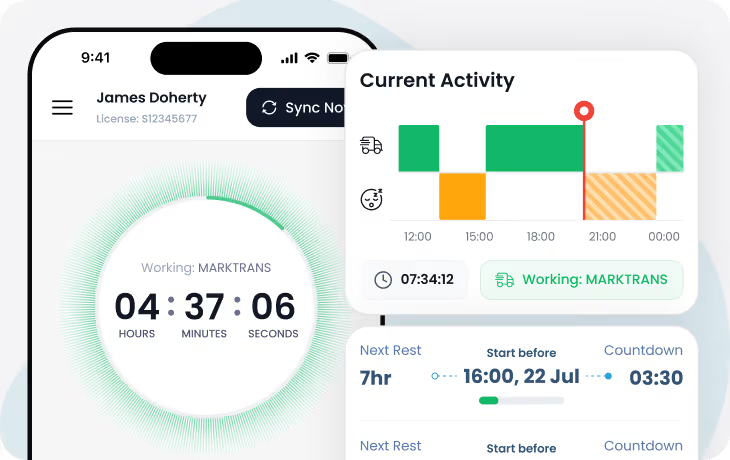
Electronic Work Diary
Digital logbook compliance for drivers, with fatigue rule enforcement and audit-ready shift records
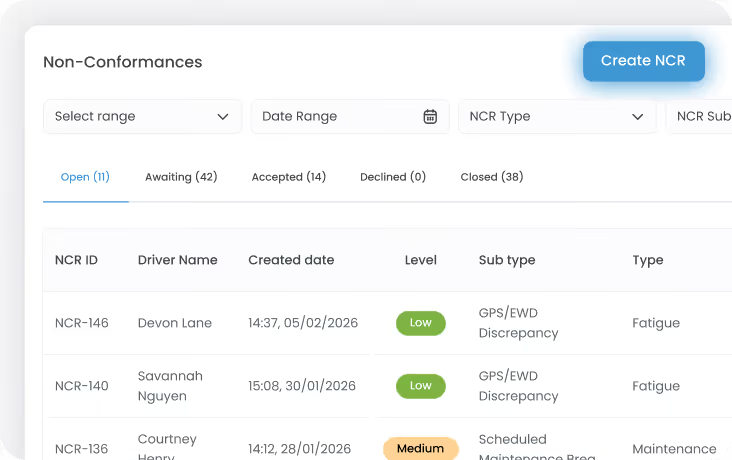
Non-Conformance Reporting
Create and track NCRs from missed or failed pre-start inspections
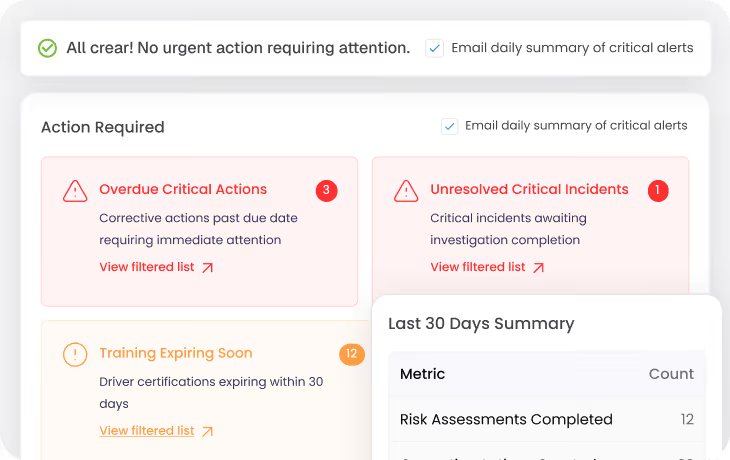
Safety Management System
Complete digital SMS platform covering all five HVNL2 outcome areas
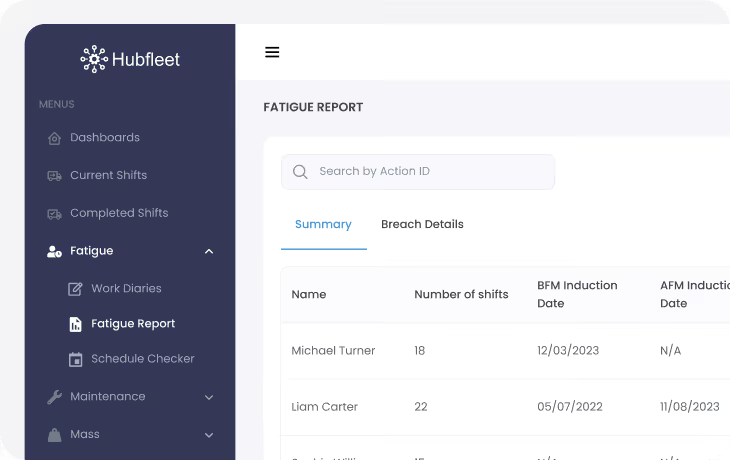
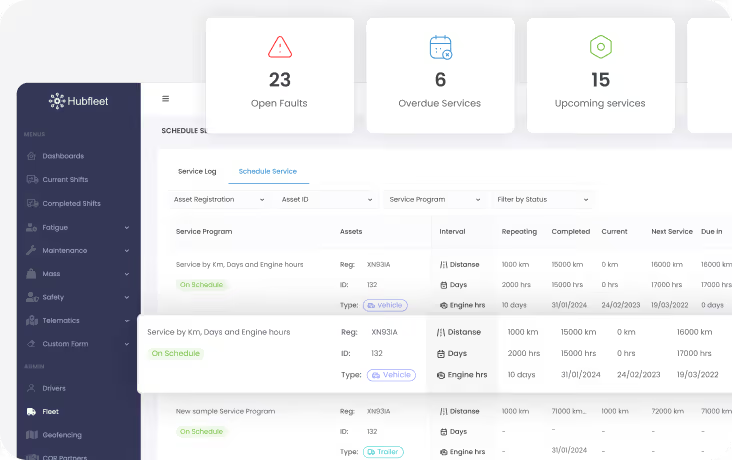
Fatigue Management
Monitor driver fatigue compliance alongside vehicle maintenance readiness
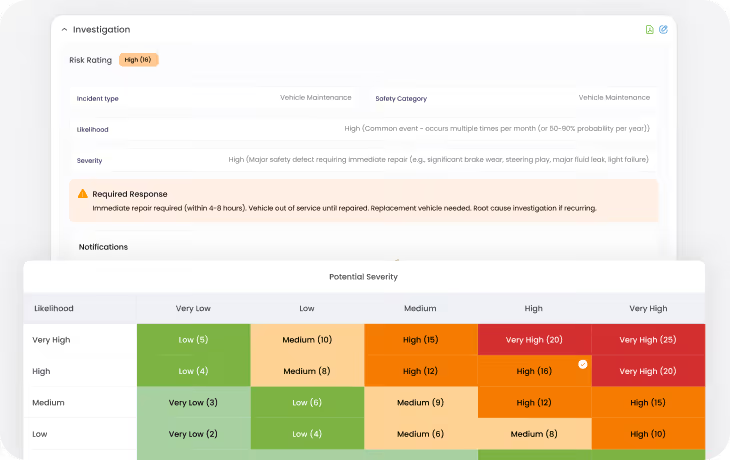
Risk Management
registers, risk assessments, and treatment tracking integrated with maintenance faults
HVNL2 Compliance Guide
Understand how the new Heavy Vehicle National Law affects your maintenance obligations
HVNL2 Compliance Guide
Understand how the new Heavy Vehicle National Law affects your maintenance obligations

HVNL Reform Regulatory Analysis

Fatigue Management Alternative Compliance

HVNL Reform Compliance Guide

Maintenance Management for HVNL Reform

Mass Management & Permit Compliance

Fit for Duty
.avif)
Electronic Work Diary (EWD)

HVNL Reform Implementation Roadmap
Fatigue Management

Safety Management System

HVNL Reform Gap Assessment

PSOE Evidence Framework Guide

HVNL Reform Compliance Checklist
Ready to implement HVNL reforms-ready fatigue management?

Start Free Trial
Recommended for most fleets
Best if you're ready to get drivers logging now and explore Hubfleet at your own pace.

Full platform access — every feature, no limits
Drivers can start on EWD today
Real EWD, SMS, and compliance reporting from day one
No upfront costs · No lock-in contract
Start Free Trial

Book your Demo
Best for larger fleets or complex setups
Best if you've got specific integration questions, multiple sites, or want a tailored walkthrough first.
Tailored to your fleet and use case
30 minutes with a Hubfleet specialist
See the platform mapped against your fleet's compliance obligations
Get HVNL and SMS questions answered live
Book your 30-Minute Demo
Want to see plans first?


500+ Australian operators
NHVR approved
Free trial
Australian-based support