

HVNL SMS Requirements Explained
Understanding the 5 SMS Outcome Areas and How Hubfleet Helps You Comply
The HVNL reforms embed Safety Management Systems (SMS) into the new heavy vehicle accreditation framework, covering 5 outcome areas. Hubfleet's digital SMS platform addresses every requirement with built-in workflows, documentation, and audit-ready evidence.
5 SMS Outcome Areas | Digital Platform | HVNL Reform Ready | Audit Evidence

Free trial available
Complete SMS platform for HVNL Reform compliance
Why Operators Choose Hubfleet for SMS
All 5 SMS outcome areas in one platform
Systematic compliance from day one
PSOE evidence (Present, Suitable, Operating, Effective)
No lock-in contracts — cancel anytime
Be HVNL reform-ready with a digital SMS that's easy to implement and maintain
What are the HVNL SMS requirements?
HVNL reforms (commencing mid-2026) embed Safety Management Systems (SMS) into the new heavy vehicle accreditation framework. The reforms replace NHVAS with a two-tiered system — General Safety Accreditation (GSA) and Alternative Compliance Accreditation (ACA) — with SMS at the core of both tiers. Currently accredited operators have up to three years to transition.
An SMS is a systematic approach to managing safety risks in your transport operation. Under the new SMS Standard, operators must demonstrate their SMS is:

Present
You have documented safety systems and procedures

Suitable
Your systems are appropriate for your operation's size and risk

Operating
You're actively implementing and following your systems

Effective
Your systems are working to prevent incidents and manage risks
Even operators not seeking accreditation benefit from an SMS — it's the most effective way to meet your primary safety duty under the HVNL and demonstrate due diligence in the event of an incident.
The 5 SMS Outcome Areas
The SMS Standard is organised into 5 outcome areas that operators must address:
Out Come 1
1. Leadership & Commitment
Senior management demonstrates active safety leadership and creates a positive safety culture.

What the HVNL reforms require
Organizational Structure
- Document reporting lines and responsibilities
- Assign safety roles to positions
- Senior management safety accountabilities
- Safety manager/coordinator role defined
Safety Policy
- Safety policy documented and signed by senior management
- Policy communicated to all staff
- Commitment to legal compliance
- Commitment to consultation and improvement
Safety Objectives & KPIs
- Safety objectives with measurable targets
- KPIs defined for each SMS outcome area
- Dashboard showing KPI performance
- Quarterly review by senior management
Management Review
- Regular management review cycle (minimum annually)
- Review covers all SMS areas
- Document review outcomes and actions
- Senior management attendance recorded
Resource Allocation
- Budget for safety training and equipment
- Time for staff safety participation
- Digital systems funding
- External consultant support if needed
Safety Culture
- Protection from reprisal policy
- Anonymous hazard reporting available
- Safety culture surveys conducted
- Recognition for safety contributions
How Hubfleet Addresses Outcome Area 1
Organizational Structure
Assign owners to each safety category (Fatigue, Load & Dimension, Maintenance, Safety)
Compliance Manager and escalation contact configuration
Role-based access matching your structure
Safety accountability documented within platform configuration
Safety Policy Management (see Policies & Procedures Management)
Policy library with senior management sign-off workflows
Distribution tracking showing who received policies
Acknowledgment workflows with audit trails
Version control with approval history
Safety Objectives & KPIs
Compliance data captured across all SMS areas to support KPI reporting
Fatigue breach rates, pre-start completion, policy acknowledgment and other key metrics available
Charts and trend reporting coming soon
Export data for management review reporting
Management Review Support
Compliance data and reports available to support management reviews
Export safety metrics across all SMS areas for review meetings
Platform data provides evidence that reviews are informed by current performance
Evidence for Audits
Documented org structure with safety roles
Safety policy with senior management sign-off
Compliance data supporting KPI reporting
Platform data informing management reviews
Out Come 2
2. Risk Management
Senior management demonstrates active safety leadership and creates a positive safety culture.

What the HVNL reforms require
Risk Identification
- Hazard identification and reporting system
- Worker involvement in identifying hazards
- Regular hazard identification processes
- Hazard categorisation and prioritisation
Risk Assessment
- Risk assessment methodology (likelihood × severity)
- Systematic risk matrix with defined levels
- Risk assessment procedure documented
- Staff trained in risk assessment
Risk Register
- Centralised risk register maintained
- All identified risks documented
- Risk owners assigned
- Regular risk reviews conducted
Risk Controls
- Controls identified for all risks
- Hierarchy of controls followed
- Control effectiveness monitored
- Controls linked to specific risks
Incident Investigation
- Investigation procedure documented
- Root cause analysis methodology
- Investigation teams identified
- Corrective actions tracked to closure
Risk Review
- Risk review schedule established
- High risks reviewed more frequently
- Changes trigger risk review
- Trend analysis conducted
How Hubfleet Addresses Outcome Area 2
Hazard Identification & Reporting (see Custom Forms & Data Capture)
Mobile hazard reporting from drivers and staff
Photo and video capture at scene
GPS location and timestamp verification
Hazard categorisation and priority assignment
Risk Assessment Workflows
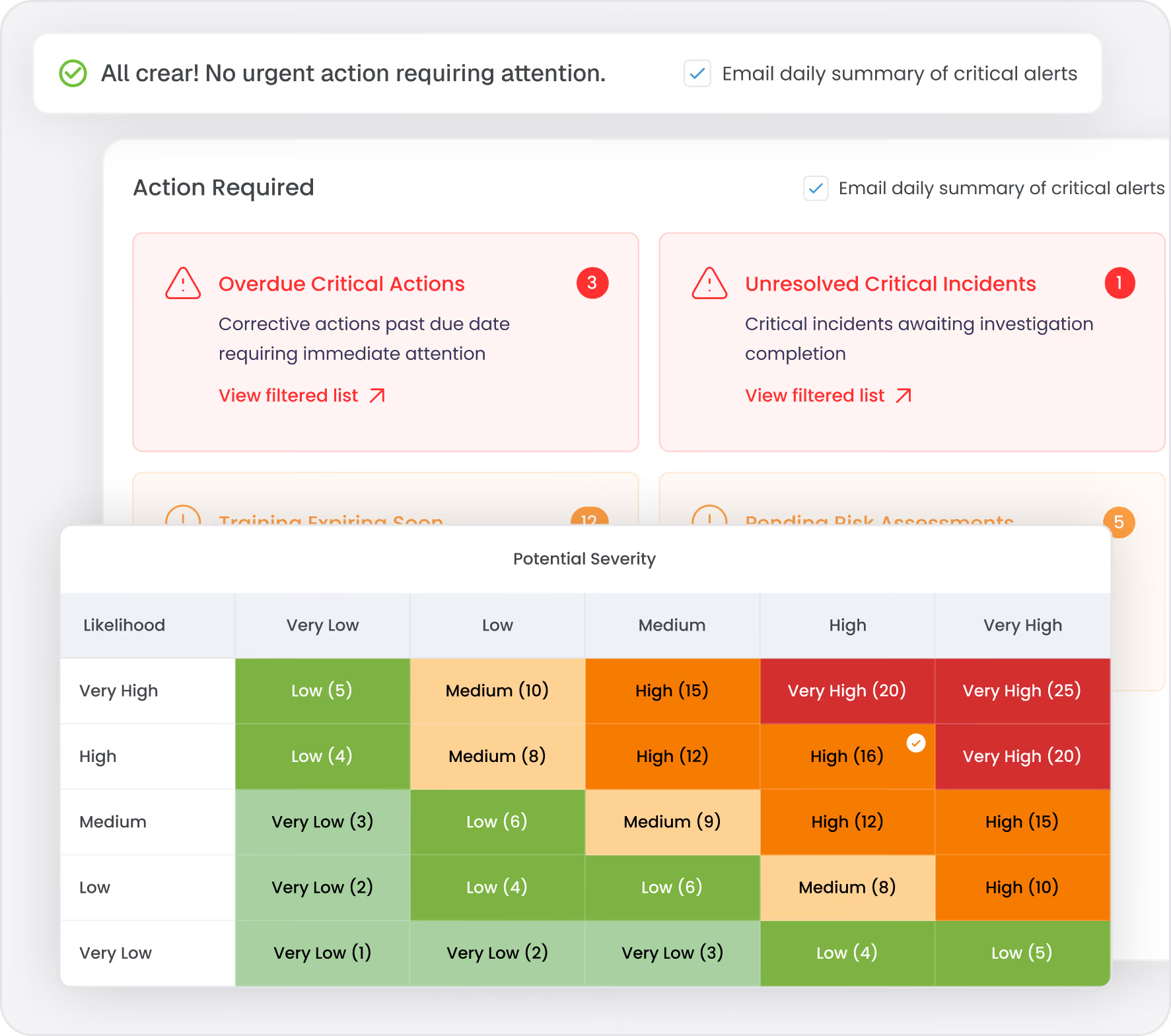
Standardised risk matrix (likelihood × consequence)
Guided risk assessment wizard
Automatic risk rating calculation
Risk register for all identified hazards
Unified Risk Register (see Risk Management)
Single risk register fed by all modules (incidents, hazards, NCRs, faults)
Risk owners assigned with accountability tracking
Control effectiveness monitoring
Complete risk history and trends
Control Management (see Risk Controls)
Link controls to specific risks
Track control implementation status
Monitor control effectiveness
Document hierarchy of controls
Incident Investigation (see Non-Conformance Reporting (NCR)
Incident Investigation (seeNon-Conformance Reporting (NCR))
Root cause analysis templates
Evidence attachment (photos, documents)
Automatic corrective action creation
Evidence for Audits:
Complete hazard register with risk assessments
Documented controls for each risk
Evidence of regular risk reviews
Incident investigations with root cause analysis
Out Come 3
3. People
Competent, fit-for-duty staff who understand their safety responsibilities and have required training.

What the HVNL reforms require
Recruitment & Induction
- Safety competency checks in recruitment
- License verification process
- Induction program covering SMS
- Induction completion tracking
Training Needs Analysis
- Training requirements defined by role
- Annual training needs analysis
- Training matrix (required vs completed)
- Training budget allocation
Training Delivery & Records
- Training programs scheduled and delivered
- Training records maintained
- Training expiry dates tracked
- Training effectiveness assessed
Competency Assessment
- Competency standards defined for roles
- Assessment tools created
- Initial assessments conducted
- Periodic reassessments scheduled
Medical Fitness
- Medical certificate repository
- Medical expiry tracking with reminders
- Process for conditional licenses
- Return-to-work medical clearance
Fitness-for-Duty
- Daily fitness-for-duty check process
- Self-assessment criteria defined
- Supervisor review for marginal assessments
- Daily check records maintained
Communication & Consultation
- Regular safety meetings scheduled
- Meeting attendance tracked
- Safety bulletins distributed
- Staff feedback mechanisms established
How Hubfleet Addresses Outcome Area 3
Competency Management
Define required competencies by role
Link licenses and certifications to drivers
Competency status tracking dashboard
Expiry date monitoring with automatic alerts
Training Tracking
Record training completion with certificates
Upload training documentation
Link training to competency requirements
Training history for each user
Induction Workflows
New employee induction checklists
Policy acknowledgment as part of induction
Site and role-specific inductions
Induction completion verification
Fitness-for-Duty (see Fit for Duty)
Daily fitness-for-duty check workflows
Self-assessment criteria configured
Supervisor review and approval process
Complete fitness-for-duty history
Medical & License Tracking
Certificate repository with uploads
Automatic expiry alerts and reminders
License verification workflows
Medical clearance tracking
Communication Support
Policy distribution and acknowledgment provides a documented communication channel
Custom forms can capture feedback and consultation records
Safety meetings and bulletins managed outside the platform
Evidence for Audits:
Defined competency requirements for all roles
Training records and certificates for all personnel
License and medical certificate verification
Daily fitness-for-duty check records
Out Come 4
4. Assurance, Monitoring and Improvement
Monitoring, measuring, and continuously improving SMS effectiveness through data and reviews.

What the HVNL reforms require
Performance Monitoring
- KPIs defined for all SMS outcome areas
- Data collection systems operational
- KPI dashboard for management visibility
- Regular KPI reviews conducted
KPI Dashboard
- Dashboard displays current performance
- Dashboard accessible to management
- Dashboard updated regularly (monthly minimum)
- Dashboard reviewed in management meetings
Internal Audits
- Internal audit schedule defined
- Audits conducted as scheduled
- Audit findings documented
- Audit reports reviewed by management
Corrective Actions
- Corrective action register maintained
- Actions assigned with due dates
- Completion tracked and verified
- Overdue actions escalated
Management Review
- Annual SMS review scheduled
- Review covers all outcome areas
- Review outcomes documented
- Improvement opportunities identified
Continuous Improvement
- Improvement process documented
- Staff encouraged to suggest improvements
- Staff encouraged to suggest improvements
- Effectiveness of improvements measured
Effectiveness Measurement
- Baseline data collected
- Trend analysis on incident/breach data
- Control effectiveness tracked
- Improvements demonstrated through data
How Hubfleet Addresses Outcome Area 4
Compliance Dashboard
Real-time compliance metrics across all areas
Fatigue breach tracking and trends
Pre-start inspection completion rates
Policy acknowledgment status
Training compliance percentages
KPI Monitoring
Compliance data collected automatically across all modules
Key metrics include fatigue breaches, pre-start completion, incident rates, and policy acknowledgment
Charts and trend reporting coming soon
Export capabilities for management reviews
Internal Audit Support
Non-conformance tracking through NCR workflows
Corrective action documentation feeds into audit evidence
Compliance data and reports available to support internal audits
Dedicated audit scheduling and checklist tools on the roadmap
Corrective Action Register (CAR)
Track all improvement actions
Assign responsibility and due dates
Monitor action completion status
Link actions to incidents, audits, or reviews
Effectiveness verification workflows
Management Review Support
SMS performance data available across all modules
Key safety metrics from across the platform
Historical data available for trend identification
Export reports to support management review meetings
Trend Analysis & Reporting
Incident frequency and severity trends
Hazard identification patterns
Risk assessment outcomes
NCR creation and closure rates
Driver behavior and compliance trends
Evidence for Audits:
KPI dashboard showing systematic monitoring
NCR and corrective action evidence supporting audits
Corrective action register with closures
Platform data and reports informing management reviews
Out Come 5
5. Safety Systems
Documented policies, procedures, and operational systems that embed safety into daily operations.

What the HVNL reforms require
Policy Library
- Core safety policies documented
- Policies cover all risk areas
- Policy review schedule established
- Version control system operational
Operating Procedures
- Standard operating procedures for high-risk tasks
- Loading and restraint procedures
- Fatigue management procedures
- Maintenance procedures documented
Emergency Response
- Emergency response plans documented
- Emergency contact lists maintained
- Emergency drills conducted annually
- Drivers trained on emergency procedures
Chain of Responsibility
- All supply chain parties identified
- Responsibilities allocated and documented
- Contracts include CoR safety obligations
- CoR training delivered to relevant staff
Document Management
- Document register maintained
- Retention schedule defined and followed
- Search and retrieval system implemented
- Backup and disaster recovery established
Integration with Operations
- Safety integrated into planning and scheduling
- Safety considerations in customer quotes
- Safety briefings before complex jobs
- Post-job reviews include safety performance
How Hubfleet Addresses Outcome Area 5
Digital Policy Library (see Policies & Procedures Management)
Centralised policy and procedure repository
Categories for easy navigation
Mobile and web access for all staff
Searchable policy database
Policy Distribution & Acknowledgment
Push policies to specific users or groups
Automatic distribution to new employees
Digital acknowledgment workflows
Reminder notifications for pending acknowledgments
Complete acknowledgment audit trail
Procedure Management
Standard operating procedure documentation
Procedure templates for common tasks
Version control with change tracking
Link procedures to specific risks and controls
Emergency Response
Emergency response plan storage in the policy library
Emergency contact list management
Record drill completion using custom forms
Link emergency procedures to training records
Chain of Responsibility
CoR party identification and documentation
Responsibility allocation tracking
CoR evidence collection
Load documentation and verification
Document Control
Automatic version tracking for all documents
Previous versions archived
Change log for each document
Role-based access permissions
Document review scheduling
Retention policy enforcement
Minimum 3-year retention for NHVR records
Evidence for Audits:
Complete policy library with version control
Procedure documentation for all operations
Emergency response plans and drill records
Chain of Responsibility documentation
Demonstrating PSOE Compliance
NHVR audits assess whether your SMS is Present, Suitable, Operating, and Effective (PSOE). Hubfleet provides evidence for each element:
Present
You have documented SMS systems:
Complete policy and procedure library
Risk register with assessments and controls
Training and competency records
Incident management workflows
Management review processes
Suitable
Your SMS is appropriate for your operation:
Configurable to operation size and complexity
Risk-based approach to safety management
Covers all relevant activities and contexts
Addresses specific operational risks
Scalable as operation grows
Industry best practices built-in
Operating
You're actively implementing your SMS:
Real-time data showing daily use
Driver mobile app usage logs
Policy acknowledgment completion
Hazard and incident reporting activity
Training completion records
Management review documentation
Effective
Your SMS is working to prevent incidents:
Trend analysis showing improvements
Declining incident rates
Reduced fatigue breaches
Increased hazard reporting
Corrective actions preventing recurrence
Continuous improvement evidence
HVNL Reform Compliance Timeline
1 August 2026
HVNL reforms commenced
New accreditation framework replaces NHVAS
SMS embedded into GSA and ACA accreditation
NHVR audits will assess SMS using PSOE methodology
Currently accredited operators have up to 3 years to transition
Now
Build your HVNL reform evidence
Implement digital SMS platform
Document existing safety systems
Train personnel on SMS requirements
Build evidence of PSOE compliance
Implementation Timeline with Hubfleet
Week 1-2
Week 1-2
SMS Setup
- Account configuration
- Organizational structure mapping
- Policy library creation
- Risk register development
- Training materials upload
Week 3-4
Team Training
- Management SMS overview
- Driver mobile app training
- SMS workflow training
- Roles and responsibilities clarification
Week 3-4
Week 5+
Week 5-8
Operating & Evidence Collection
- Daily SMS operations
- Incident and hazard reporting
- Management reviews
- PSOE evidence accumulation
Now that the HVNL reforms are live
Complete SMS implemented and operating
Months of PSOE evidence collected
Audit-ready documentation
Confident HVNL Reform compliance
Get Started in Days, Not Months
Free guides, tools, and frameworks to start preparing for HVNL today — built by Australian compliance specialists and trusted by 500+ fleets.

HVNL Compliance Guide
What HVNL means for your fleet — explained in plain English
- All 5 SMS outcome areas explained
- Implementation timeline & milestones
- Fleet preparation checklist
- Gap assessment framework
- Change summary from current HVNL
Read the Guide

HVNL Compliance Toolkit
Free downloadable templates to start preparing today.
- Gap analysis template (5 outcome areas)
- Pre-audit readiness checklist
- SMS implementation tracker
- PSOE evidence mapping
- Implementation timeline template
Get the Free Toolkit

Audit Preparation Guide
The questions NHVR auditors ask — and where to find your answers.
- Common auditor questions by outcome area
- Direct answers showing where evidence sits in Hubfleet
- PSOE framework explained
- Audit-day preparation checklist
- Real auditor scenarios
Read the Audit Guide

Frequently asked questions
What are the 5 SMS outcome areas?
The 5 SMS outcome areas are: (1) Leadership & Commitment, (2) Risk Management, (3) People, (4) Assurance, Monitoring and Improvement, and (5) Safety Systems. These outcome areas cover all aspects of systematic safety management required under HVNL Reform.
How does Hubfleet address all 5 SMS outcome areas?
Hubfleet provides integrated workflows and documentation for each outcome area: organisational structure and KPI dashboards (Leadership), unified risk register and hazard reporting (Risk Management), training and competency tracking (People), KPI monitoring and internal audits (Assurance, Monitoring and Improvement), and policy library with document control (Safety Systems).
What is PSOE and why does it matter?
PSOE stands for Present, Suitable, Operating, and Effective. NHVR auditors use PSOE to assess SMS compliance. Your SMS must be documented (Present), appropriate for your operation (Suitable), actively implemented (Operating), and demonstrably working to prevent incidents (Effective). Hubfleet provides evidence for all four PSOE elements.
When do HVNL reform SMS requirements take effect?
HVNL reforms are expected to commence mid-2026, replacing NHVAS with the new GSA and ACA accreditation framework. SMS is embedded into both tiers, and currently accredited operators have up to three years to transition. Implementing now ensures you have months of operating evidence and PSOE compliance before your transition date.
Can Hubfleet help with NHVR SMS audits?
Yes. Hubfleet generates audit-ready reports covering all 5 SMS outcome areas, provides complete PSOE evidence, maintains the required documentation and records, and tracks all SMS activities with timestamps and audit trails.
How long does SMS implementation take?
Most operators are fully operational on Hubfleet's SMS platform within 2–3 weeks. Setup and configuration takes 1–2 weeks, team training takes 1–2 weeks, and you begin collecting PSOE evidence immediately. Starting now gives you months of operating evidence before HVNL takes effect.
Is Hubfleet suitable for small operators?
Yes. Hubfleet is designed to be suitable for operations of all sizes. The SMS scales to your operation's size and complexity. Small operators get a systematic SMS without the overhead of complex systems. The platform is configurable to your specific needs and risk profile.
What support is provided for SMS implementation?
Unlimited email and phone support is included. We provide SMS implementation guidance, help with policy and procedure development, train your team on SMS requirements, assist with audit preparation, and provide ongoing support for SMS operations. Our team understands HVNL requirements and how to demonstrate PSOE compliance.
Explore Hubfleet's SMS Modules
Explore how Hubfleet's modules work together for mining transport compliance:


.avif)


Don't wait for HVNL to take effect. Start building your SMS compliance evidence today.

Start Free Trial
Recommended for most fleets
Best if you're ready to get drivers logging now and explore Hubfleet at your own pace.

Full platform access — every feature, no limits
Drivers can start on EWD today
Real EWD, SMS, and compliance reporting from day one
No upfront costs · No lock-in contract
Start Free Trial

Book your Demo
Best for larger fleets or complex setups
Best if you've got specific integration questions, multiple sites, or want a tailored walkthrough first.
Tailored to your fleet and use case
30 minutes with a Hubfleet specialist
See the platform mapped against your fleet's compliance obligations
Get HVNL and SMS questions answered live
Book your 30-Minute Demo
Want to see plans first?
500+ Australian operators
NHVR approved
Free trial
Australian-based support